

Curator
LAN PartyGroup Exhibition
Curator
LAN PartyGroup Exhibition
By enabling players to transcend lived reality, video games have a distinctive power. Through meticulous worldbuilding, intricate character development, and multiplayer camaraderie, they foster mental, emotional, and interpersonal conditions that go beyond pure entertainment. Video games may even enable players to obtain something akin to spirituality.
The passage from play to what we might call console spirituality frees individuals from the laws of physics, and from the expectations of society. As virtual Promised Lands, the worlds in video games allow players to enter alternative realms that provide speculative visions for how life on Earth (or beyond) could be, showing players that there is another, more thrilling and fulfilling way to exist. In these worlds, individuals can experiment with identity, and even ascend to “truer” versions of themselves. Through worldbuilding, fantasy and technostalgia work in opposition to the slick, sanitized, and unquenchable accelerationism of our current technological reality. Crucially, video games can achieve a virtual universe where current hegemonic systems are turned on their head, and artists get to set the laws of the land.
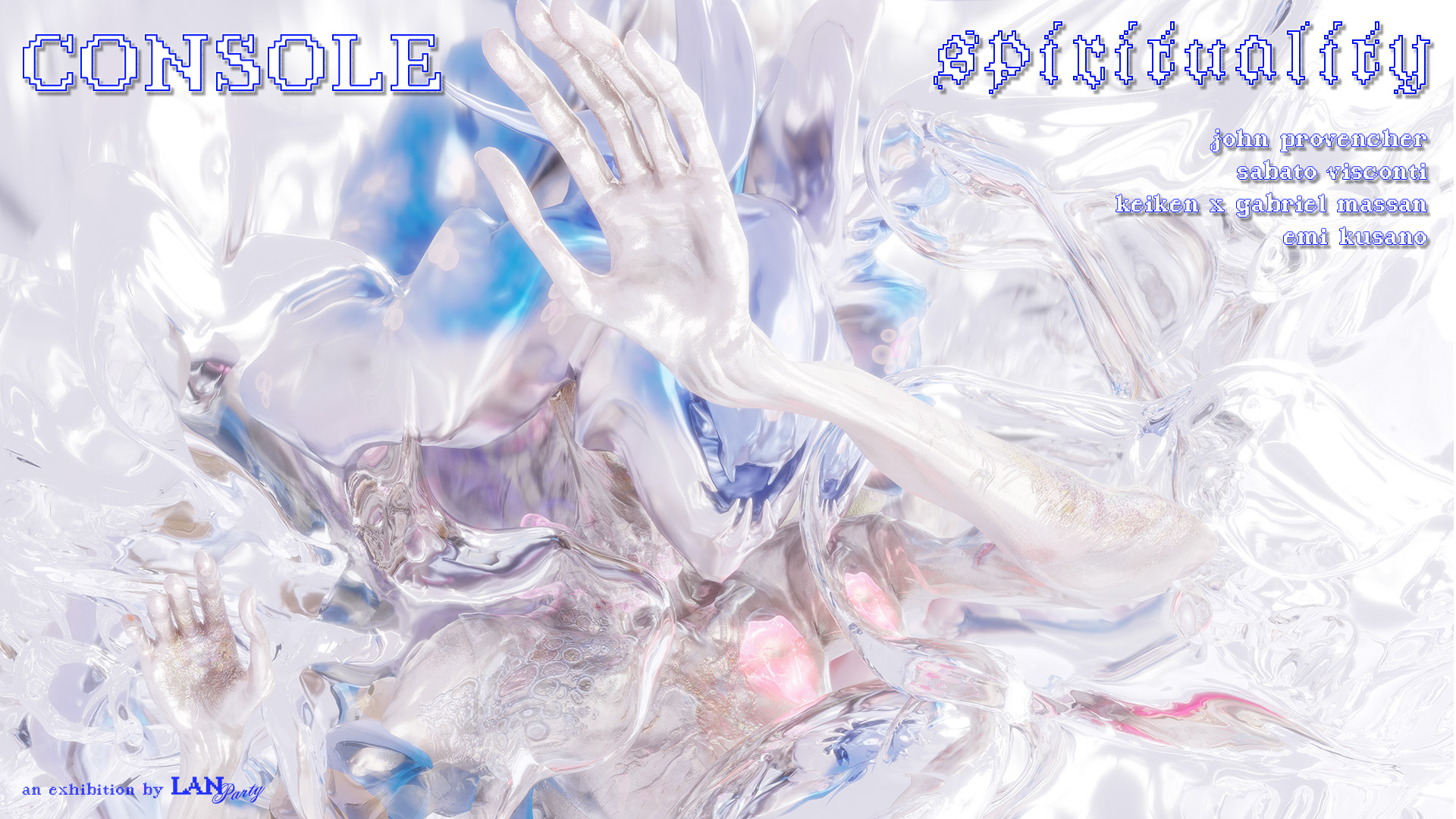
In Console Spirituality, five artists take influence from the world of video games to glitch existing systems, experiment with game logic, and render new deities. Taken together, the works present divine visions of video game-powered worldbuilding.
Structured like a quest, Console Spirituality unfolds in four levels—from the underground maze of Dungeoneer, to the drifting plains of Data Pilgrims, the fractured heavens of Angelcores & Heavenly Sprites, and finally, the transcendent realm of Omoiyari. Each stage deepens the viewer’s journey, offering a symbolic ascent toward virtual enlightenment.
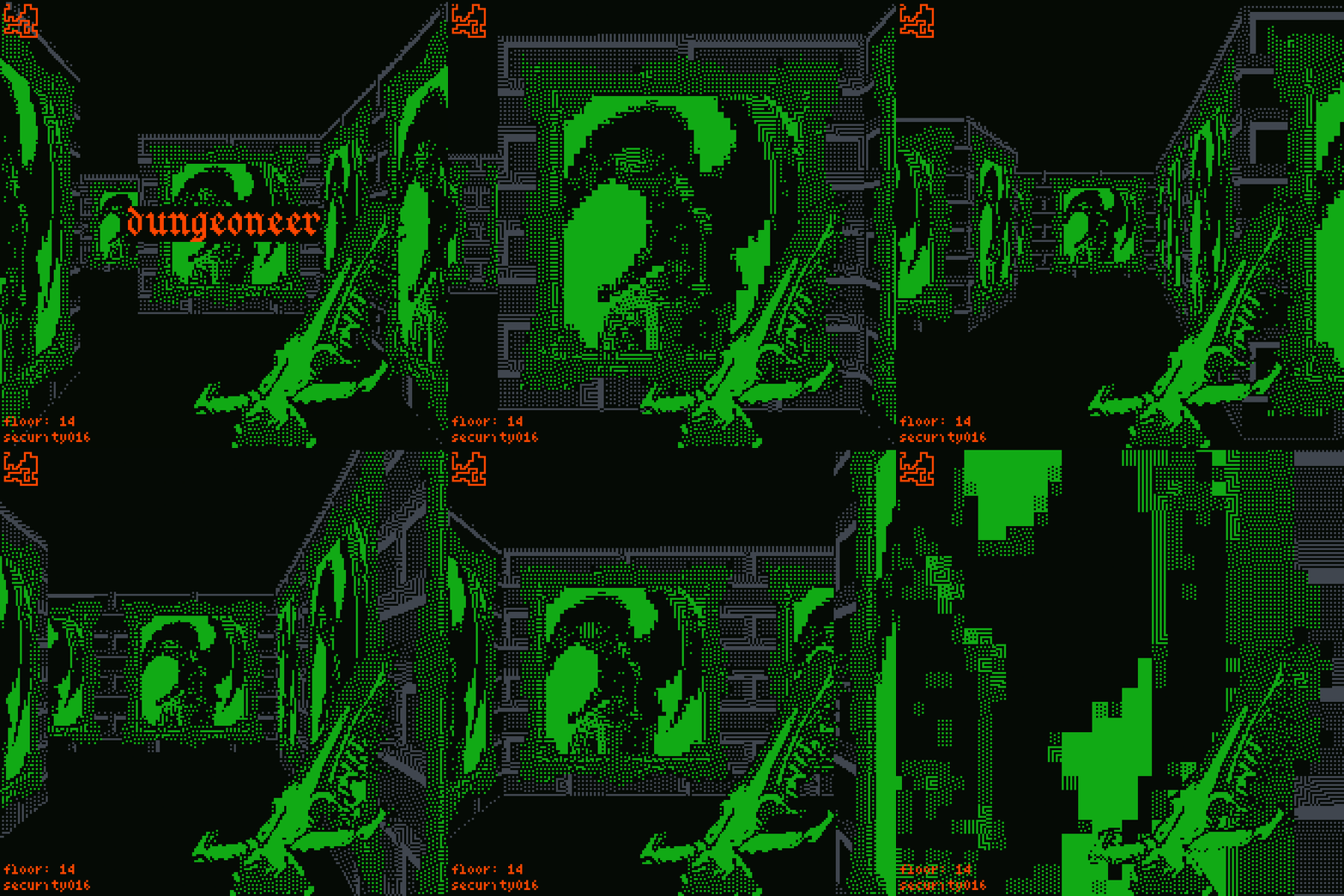
In his series Dungeoneer, John Provencher experiments with gaming systems and logic. Playing upon the popular internet meme, “Can it run Doom?”, the artist creates a generative experience through which collectors can acquire a unique piece that includes a custom map for a Doom dungeon, donned with a skin that displays the collector’s minted artwork. Dungeoneer not only recalls one of the most beloved games in all of gaming history, but, through its blend of gamified collecting and exhibiting, also challenges typical notions of exhibition making, all while activating the tensions of active versus passive viewership.
Data Pilgrims is a series by Emi Kusano that explores digital spirituality through mythological pilgrimages, created in collaboration with AI. In these works, anonymous wanderers journey through contemplative fantastical realms, sometimes in the presence of spirit animals and deities. The atmosphere of the series echoes the aesthetics of walking simulators, i.e. games centered on slow exploration and environmental interaction, where the gameplay itself feels like a procession or ritual. Just as in walking sims, there is no notion of “winning” or “losing” in this world. Instead, all that matters is the space that is provided for reflection, offering a spiritual moment of meditation in the virtual realm—adorned with algorithmic glitches, fragmented landscapes, and prayer reimagined through code.
In Angelcores & Heavenly Sprites, Sabato Visconti seeks the angelic through glitch by embarking on a quest through retro console games like ActRaiser, Legendary Wings, Spiritual Warfare, Chubby Cherub, and Wings of Wor. In these works, artefacts from the glitching process become divine signs (or omens), and game dialogue is scrambled to become cryptic tongue. Angelcores & Heavenly Sprites connects ideas from works such as Legacy Russell’s Glitch Feminism, Bo Ruberg’s concept of “playing to lose,” and Rosa Menkmann’s "Glitch Studies Manifesto.” Visconti’s works also reference the gaming community’s history of modding and hacking to produce a commentary upon glitch’s longstanding position as a means of queering technology and critiquing hegemony, all in the interest of seeking alternative ways of being.
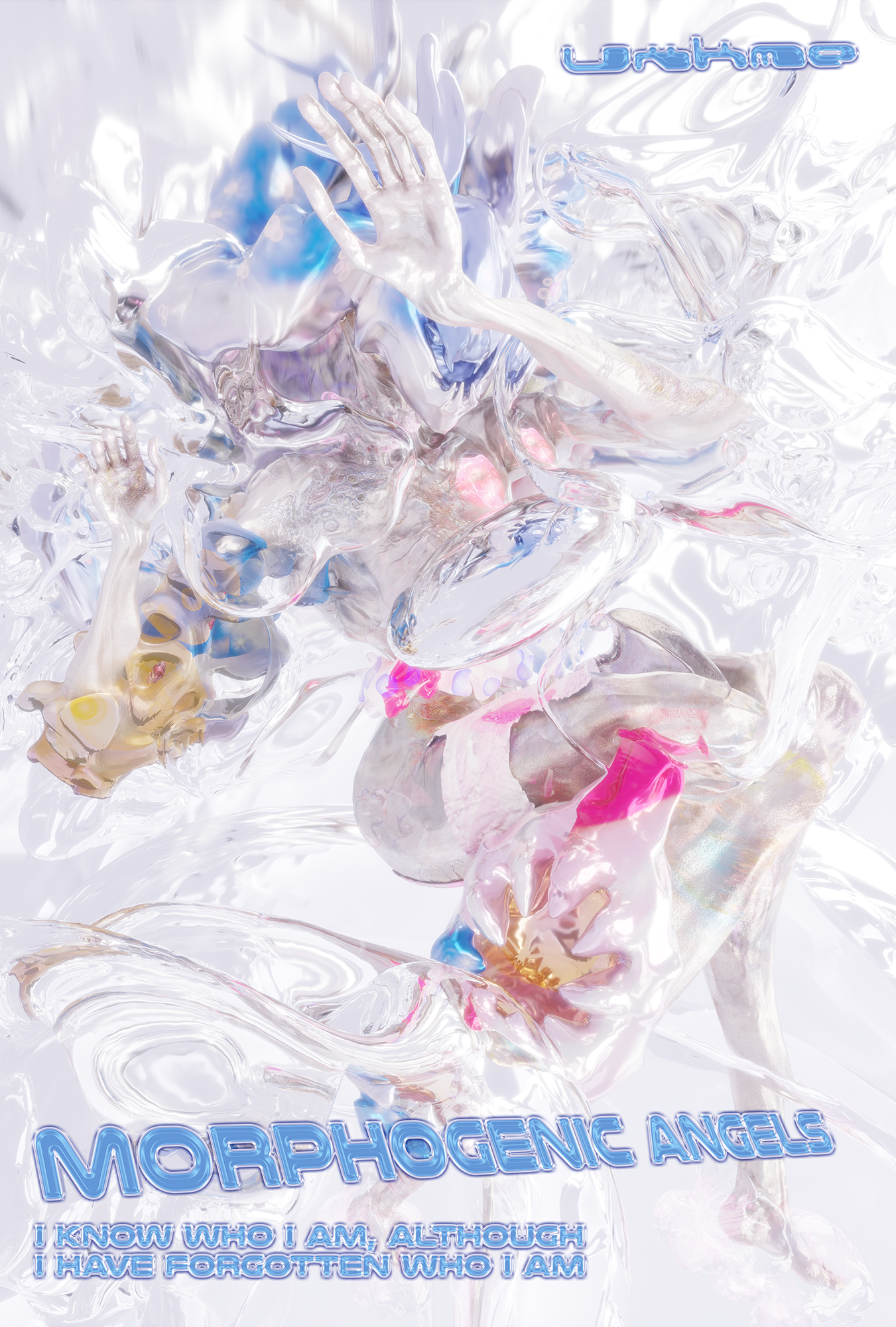
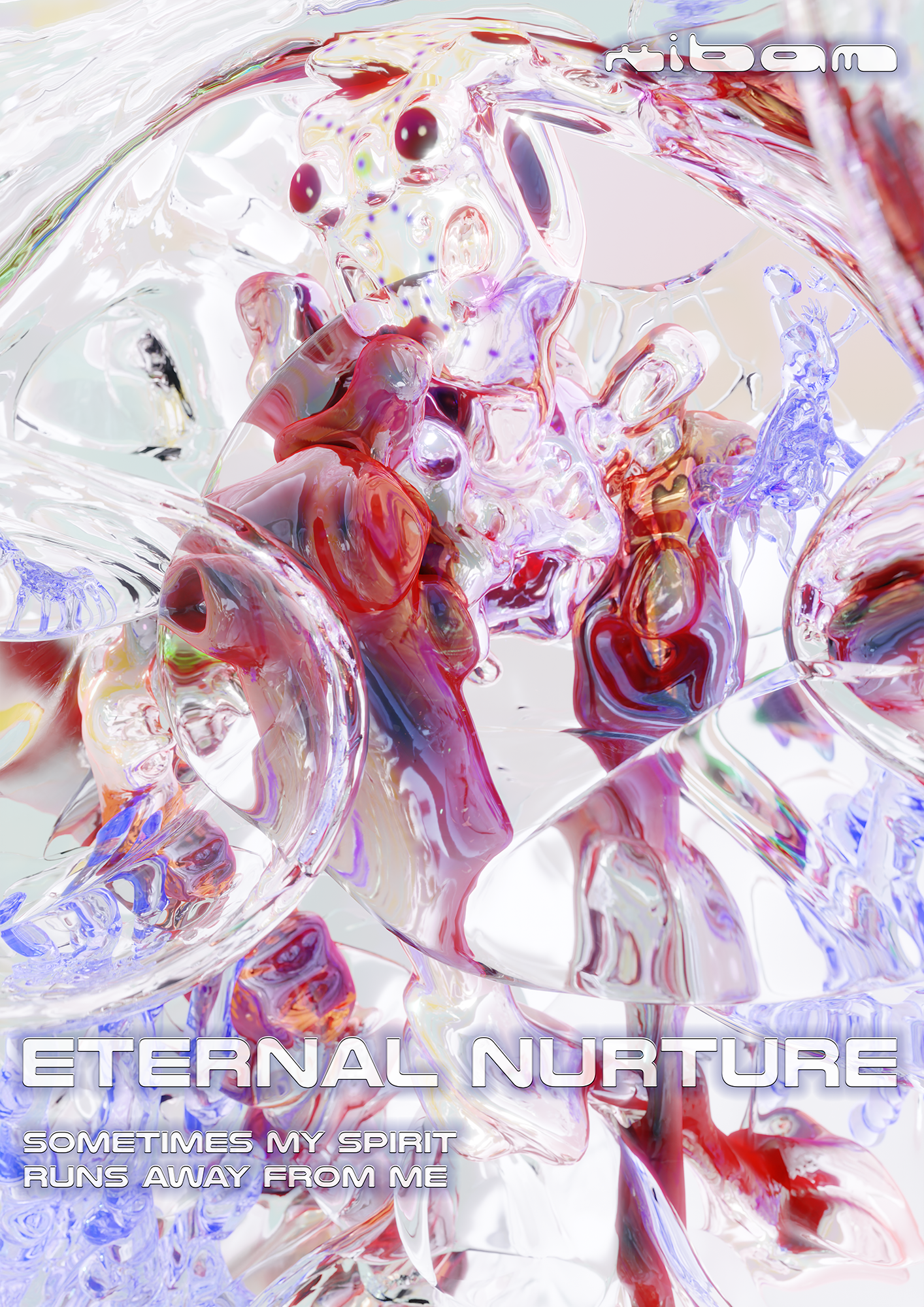
Keiken and Gabriel Massan contribute two works from their collaborative series Omoiyari. The first, Uxkme / Morphogenic Angels: I know who I am, although I have forgotten who I am, features Uxkme, a delicate avatar suspended in time, who is struggling to recall their sense of self while holding onto the muscle memory of their spirit. The second, Xibam / Eternal Nurture: Sometimes my spirit runs away from me, introduces Xibam, a nurturing sibling spirit who is aware of moments when their essence feels distant. Originally shown on the streets of Soho in London at The Photographers’ Gallery (2022), the works appear as AR posters in the style of video game ads. And yet, Omoiyari subverts the aesthetics of commercialism and instead delivers subtle messages that use the language of desire to reflect on spirit, memory, and care. Drawing from the Japanese concept of omoiyari (compassion), the series invites viewers to imagine a speculative world where tenderness challenges the boundaries of lived, politico-economic realities.
Together, the works in Console Spirituality defy reality to evangelize a speculative (enlightened?) way of being. They are also a testament to the deep, emotional connections people can develop with and through video games. Using worldbuilding techniques to include viewers in their artworks as both active agents and NPCs, the artists in Console Spirituality take cues from games to deepen the relationship between artwork and viewer. By playing (and consequently implicating themselves in) the artwork, viewers are absorbed into these artists’ worlds, and are ultimately prompted to contemplate and pursue their own virtual nirvana.

Keiken & Gabriel Massan
Uxkme / Morphogenic Angels: I know who I am, although I have forgotten who I am
Edition of 32
Artist
John ProvencherLocationNew York
John Provencher ( b. 1991 ) is an artist based in NYC.
Artist
Emi KusanoLocationTokyo, Japan
Born in Tokyo in 1990, Emi Kusano uses AI technology to create hyperrealistic representations of collective and individual memories within Japanese society—all to explore universal human nature from a retro-futuristic perspective. In addition to being featured on the cover of WWD Japan, Kusano’s work has been internationally exhibited at venues including M+ Museum (Hong Kong), Saatchi Gallery (London), 21st Century Museum of Contemporary Art, Kanazawa, Grand Palais Immersif (Paris), and Museum Francisco Carolinum (Linz), and shown in over 20 countries worldwide.
Artist
Sabato ViscontiLocationWestern Massachusetts
Sabato Visconti is a Brazilian-born multimedia artist based in Western Massachusetts. Their work interrogates contemporary and historical digital-imaging practices by engaging with the underlying materialities of media production and online distribution. From pixels to glitches, video game errors to AI hallucinations, these visual liminalities serve as foundations for world-building and story-telling. As part of a Brazilian Diaspora, Sabato draws on cultural histories, natural ecologies, and socio-political currents to portray subjects and their environments which are often entangled in systems designed to fail or malfunction
Artist
Keiken & Gabriel MassanLocationLondon and Berlin
Keiken
Founded in 2015 by Tanya Cruz, Hana Omori, and Isabel Ramos, the artist collective Keiken works collaboratively to build and imagine speculative futures. Through filmmaking, gaming, installation, XR, blockchain, and performance, their aim is to test-drive new ways of existing.
Keiken received The Lumen Prize in 2024, and the Chanel Next Prize in 2021). They are currently artists in residence at Somerset House in London. Keiken’s work has been included in exhibitions at Le Cube Garges (FR), Zeppelin Museum (DE), Amos Rex, Helsinki (FL), 21st Century Museum of Contemporary Art, Kanazawa (JP), KANAL–Centre Pompidou, Brussels (BE), Helsinki Biennial (FL), HAU, Berlin (DE) (2023), CO Berlin (DE); Wellcome Collection, London (UK); ARKO Art Centre, Seoul (KR); Julia Stoschek Collection, Dusseldorf (DE); Onassis, Athens (GR) (2022); Thailand Biennale, Korat (TH); HEK, Basel (CH); 17th Venice Architecture Biennale, Venice (IT); Tokyo Photographic Art Museum, Tokyo (JP) (2021); FACT, Liverpool (UK); transmediale, Haus der Kulturen der Welt HKW, Berlin (DE) (2020); ICA, London (UK); Jerwood Arts, London (UK) (2019).
Gabriel Massan
Gabriel Massan (b. 1996, Rio de Janeiro, Brazil) is a Berlin-based, mixed-format digital artist. Combining storytelling and world-building techniques, Massan creates and narrates situations of inequality which are simulated by the live performances of his digital sculptures in a virtual environment. His work includes 3D animation, digital sculpting and painting, single-player games, virtual reality, and augmented reality.
Massan was a 2019 resident at ETOPIA - Center for Art & Technology, an invited artist of the 2020 "IMS Convida" program at Instituto Moreira Salles (IMS), selected for the Circa "Class Of 2021" program in partnership with Dazed, a 2022 commissioned artist by the "Artist World" series at Serpentine Galleries, and a contributor to the "Rotten TV" online research platform supported by The British Council Digital Collaboration Fund.Bold Text
Console Spirituality smart contract:ethereum