

Curator
Casey REASGroup Exhibition
Curator
Casey REASGroup Exhibition
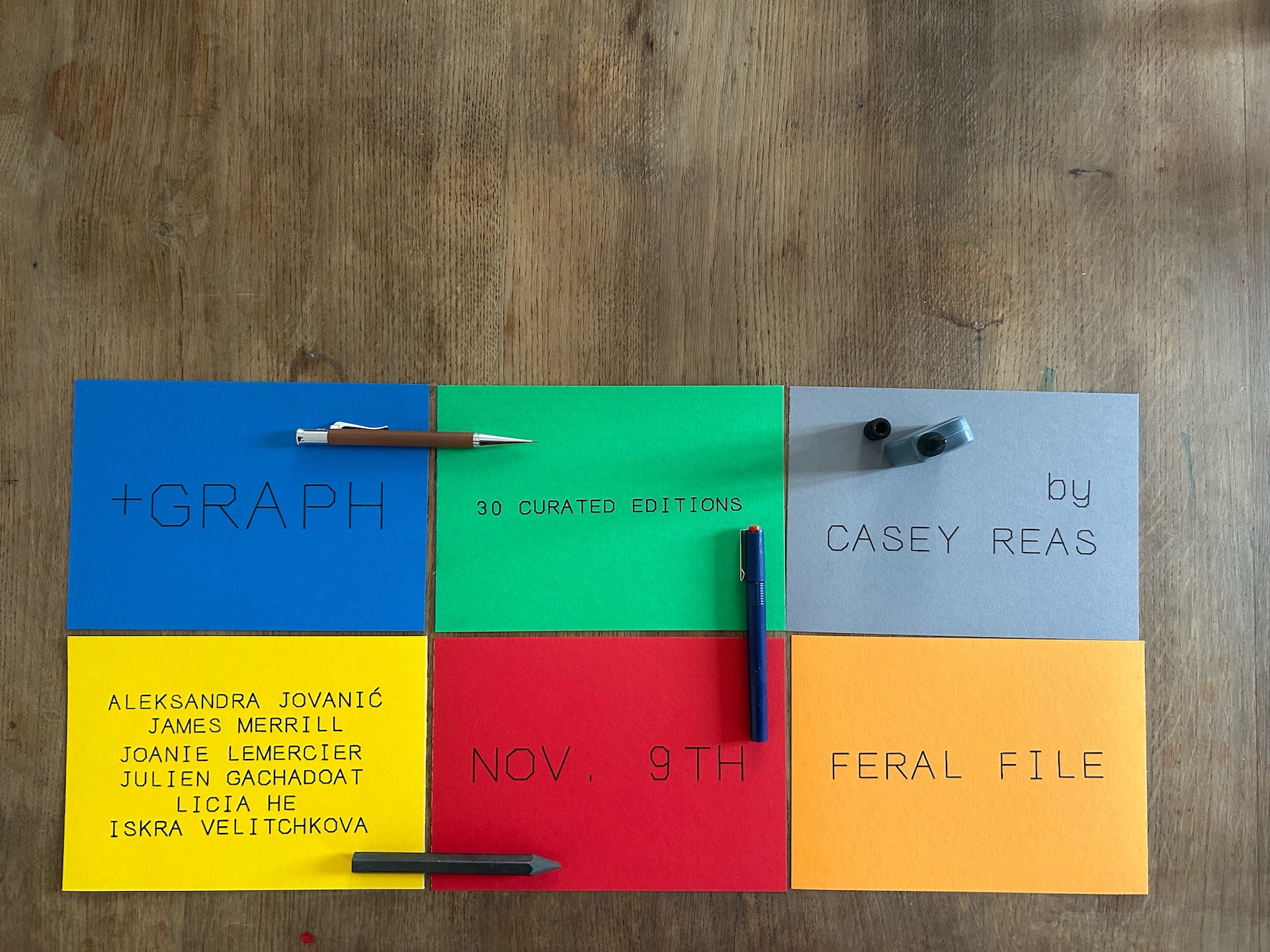
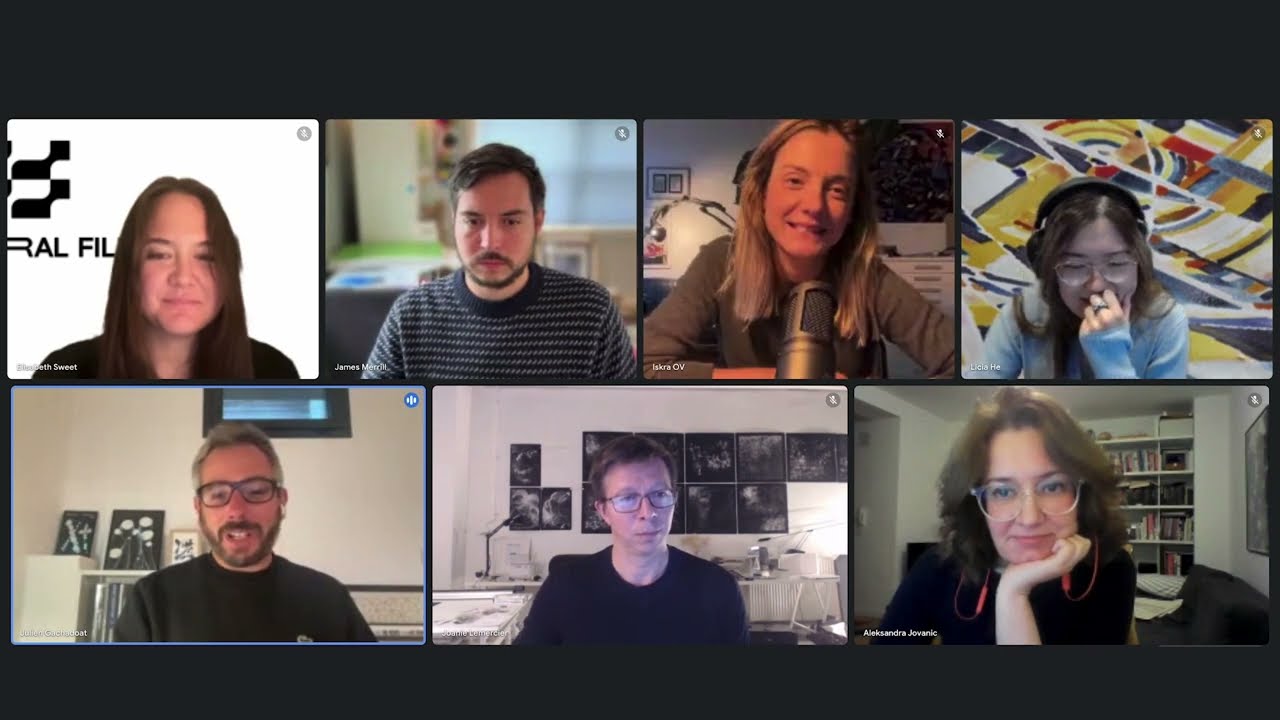
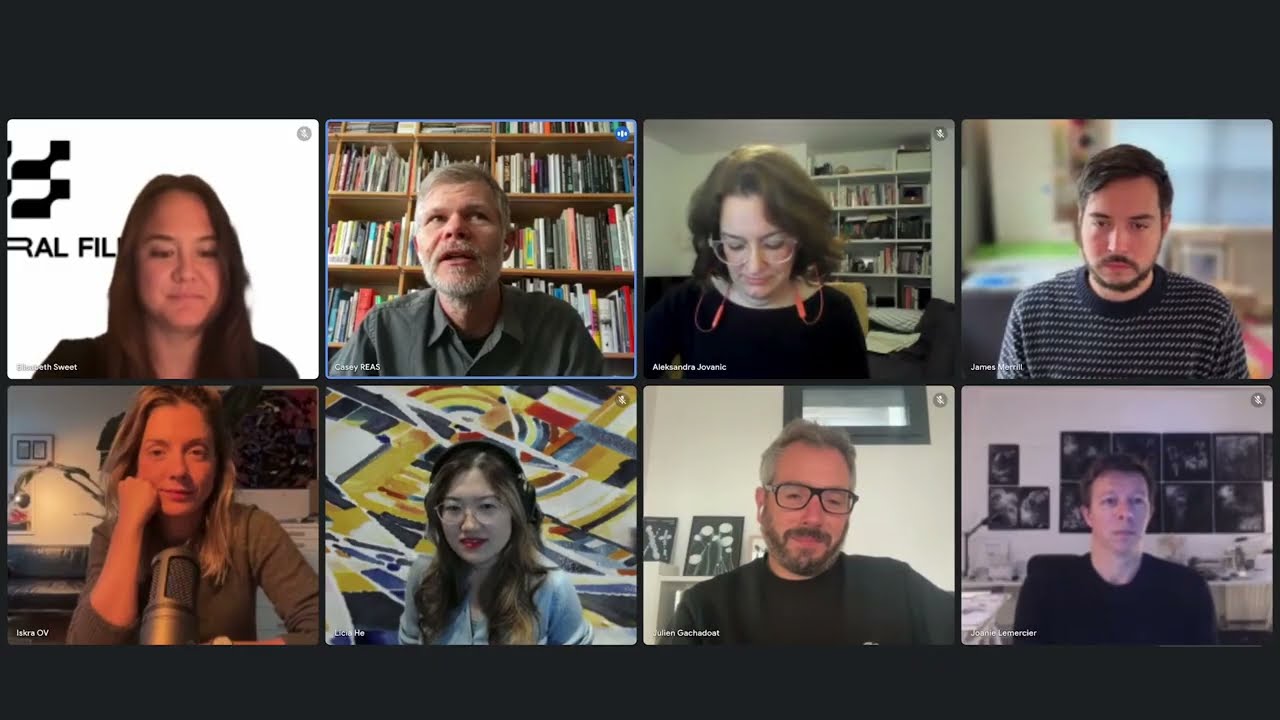
It’s been two years since the opening of –GRAPH, an iconic exhibition held during Feral File’s first year. Today that early exhibition has evolved into a new one called +GRAPH, which, like its predecessor, explores the deep historical connection between coding and drawing and brings together artists who engage with both. Each artist in +GRAPH created generative software that is capable of making limitless new drawings, and has selected 30 of these variations to render as physical works. Five artists from the original exhibition — Iskra Velitchkova, Licia He, Aleksandra Jovanić, Julien Gachadoat, and James Merrill — are back for +GRAPH, and we’re thrilled to welcome the addition of Joanie Lemercier this time around.
These six artists all share a love of working with visual systems and writing code, and transforming how the code is rendered through drawing machines. For +GRAPH, each of them has created one software artwork that creates 30 unique physical drawings. Every drawing in this exhibition is a 1/1 artwork, meaning only one will ever be created. Along with each of these unique drawings, there are millions of other compositions that are embedded in the original code.
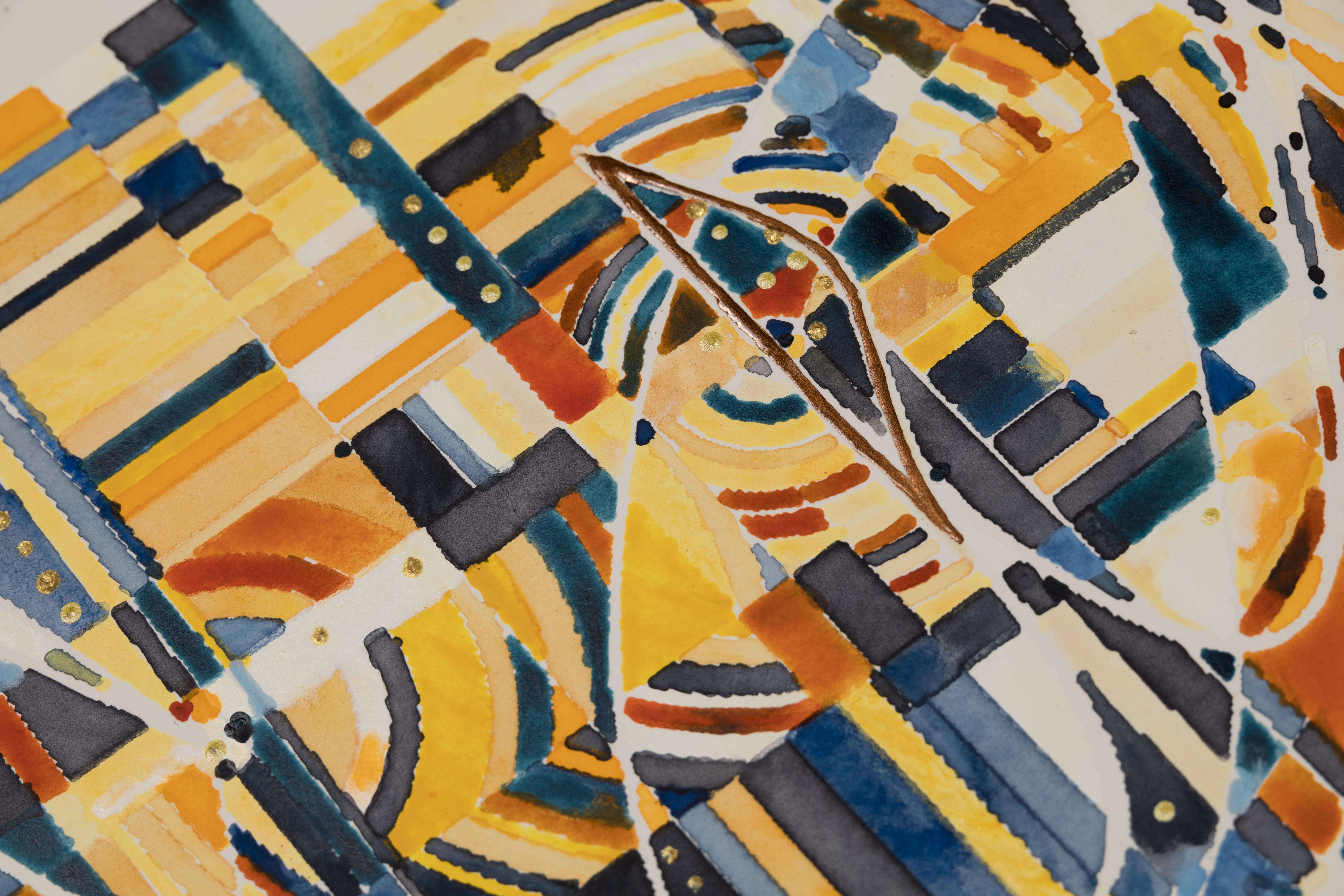
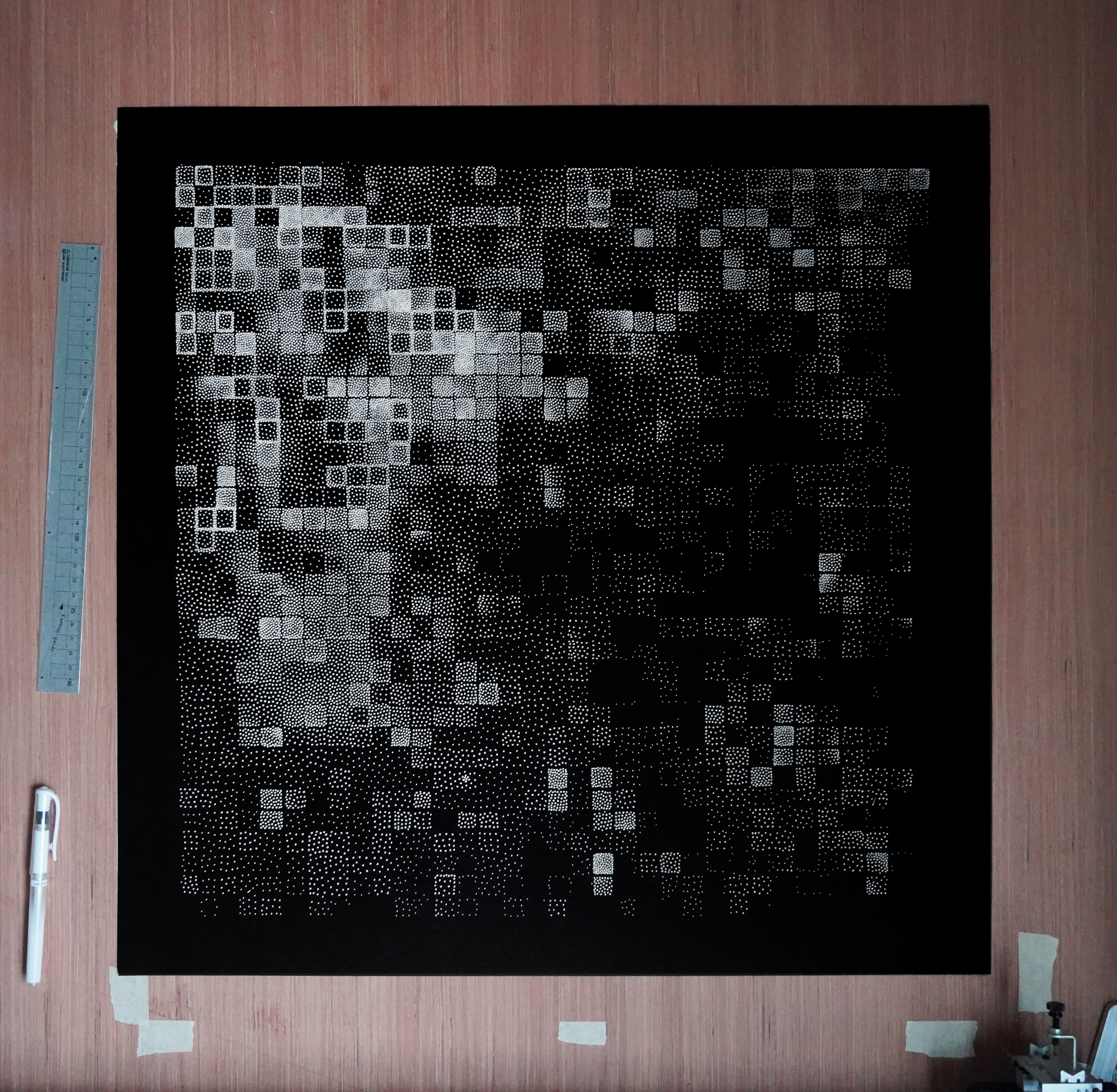
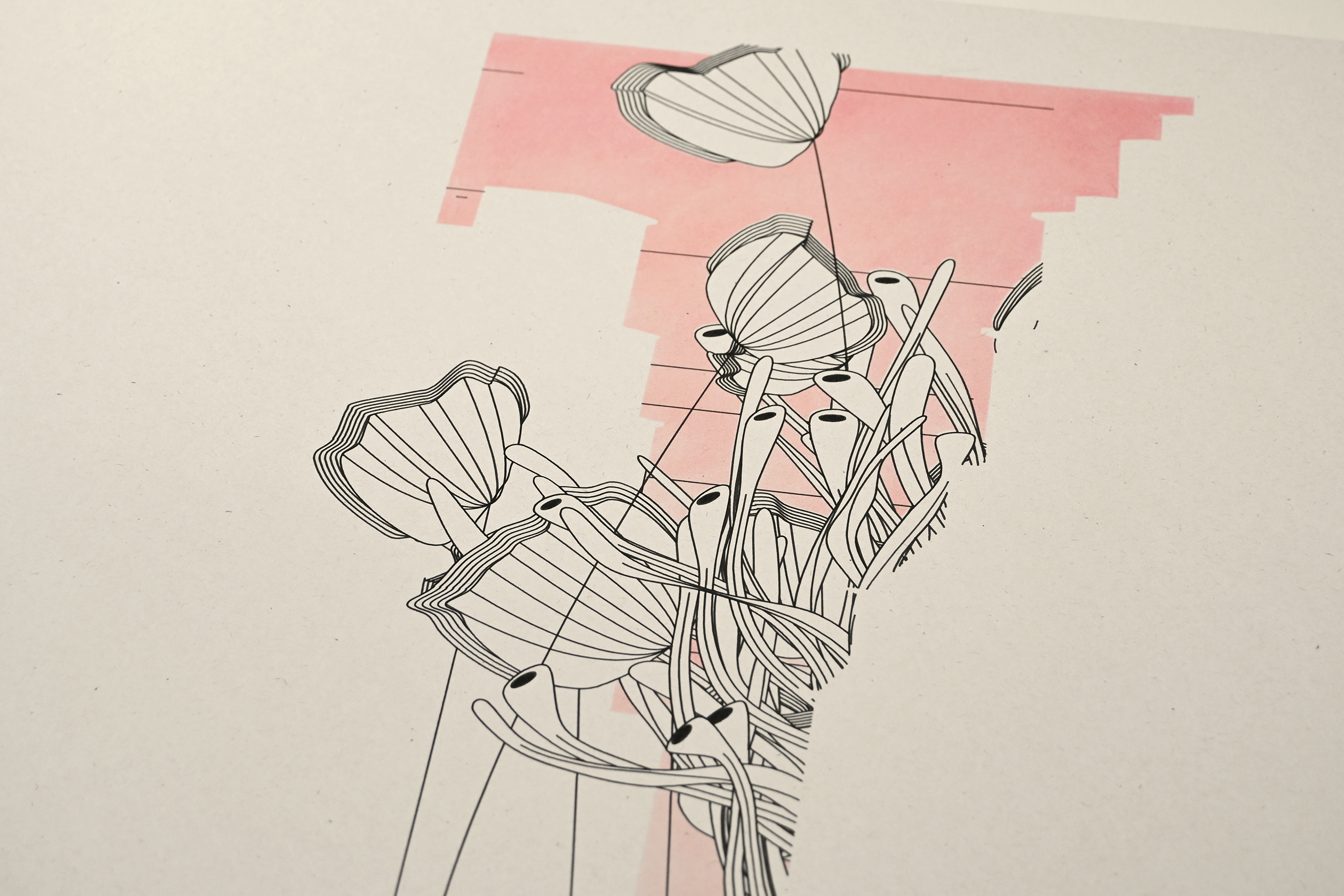
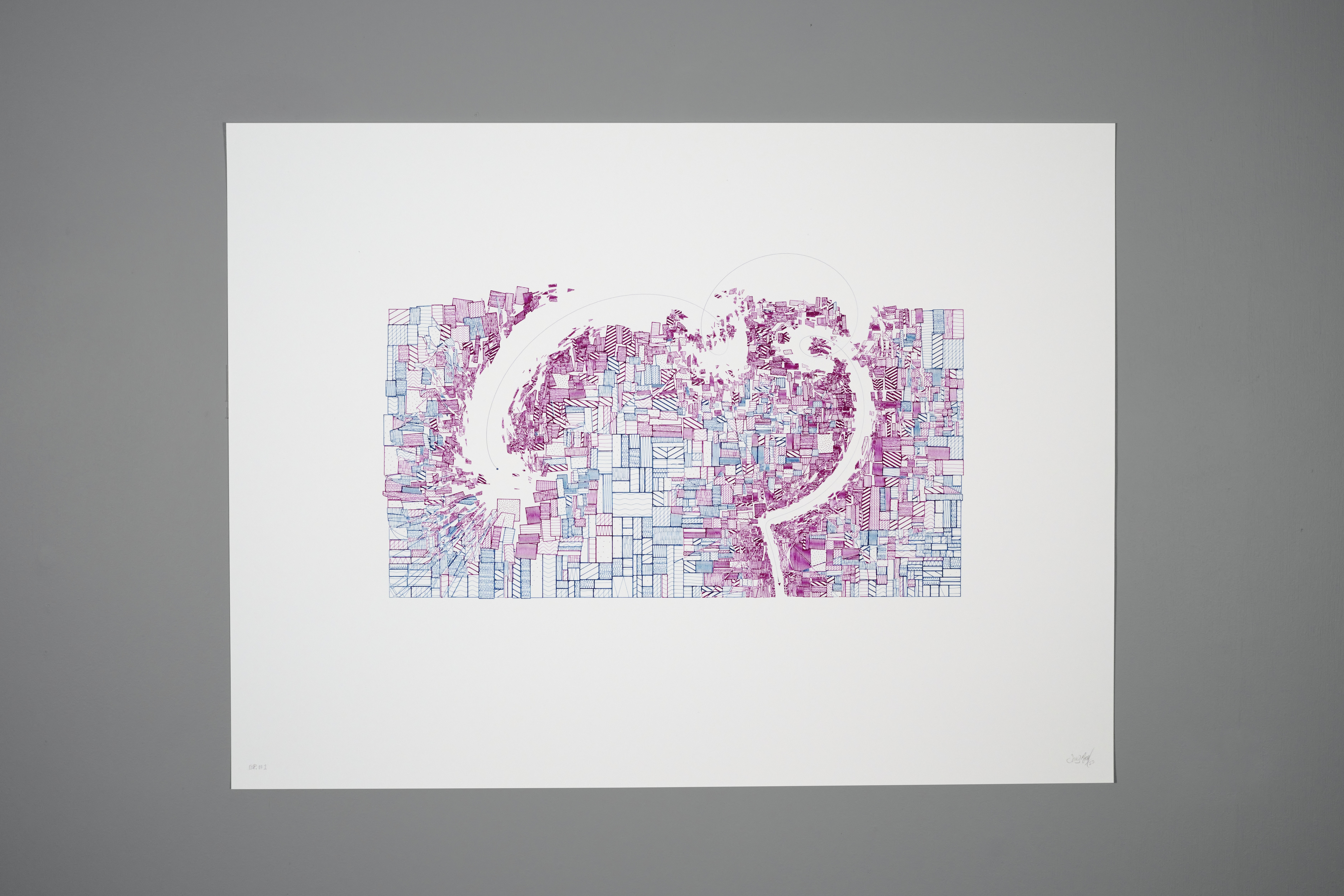
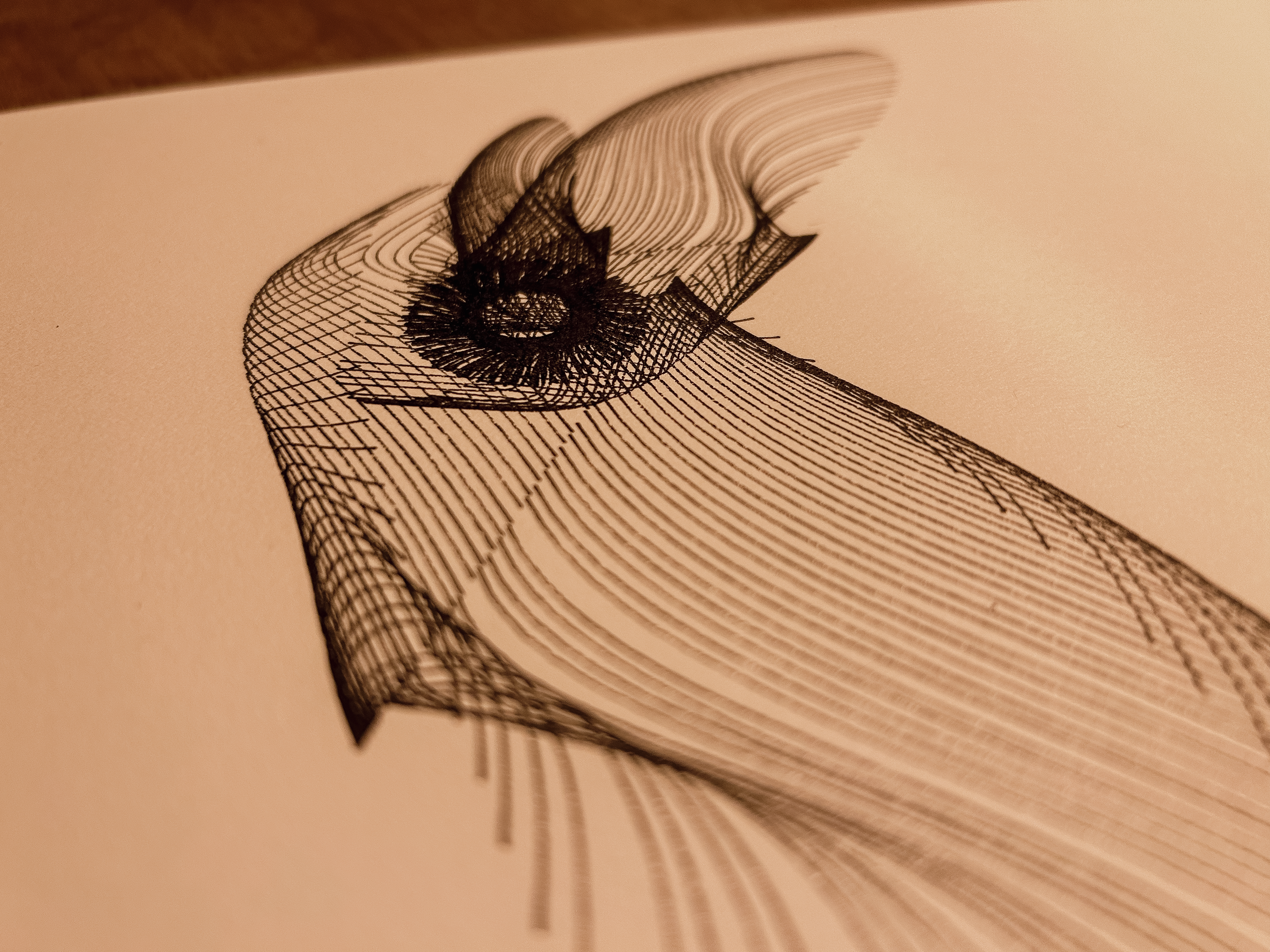
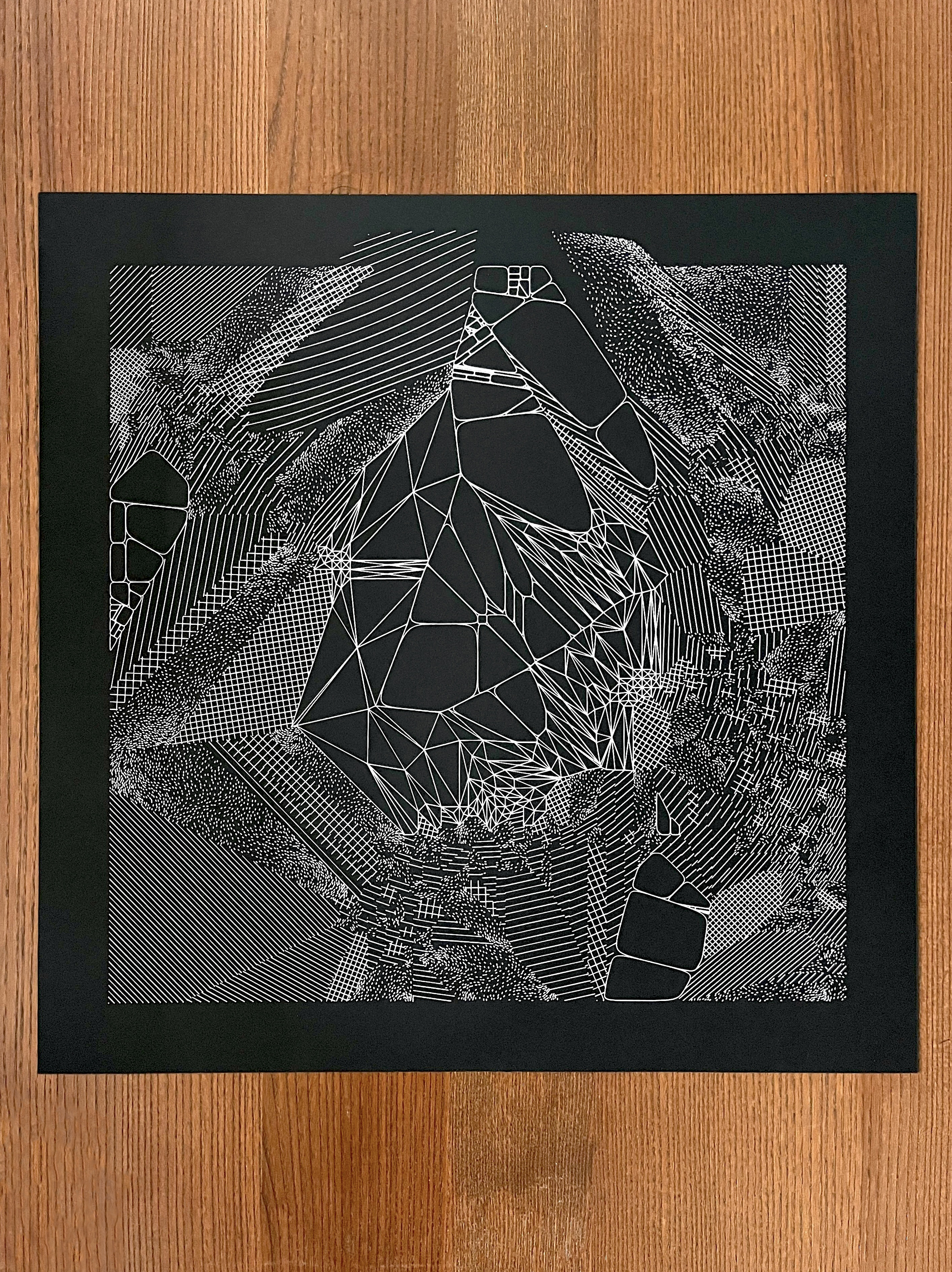
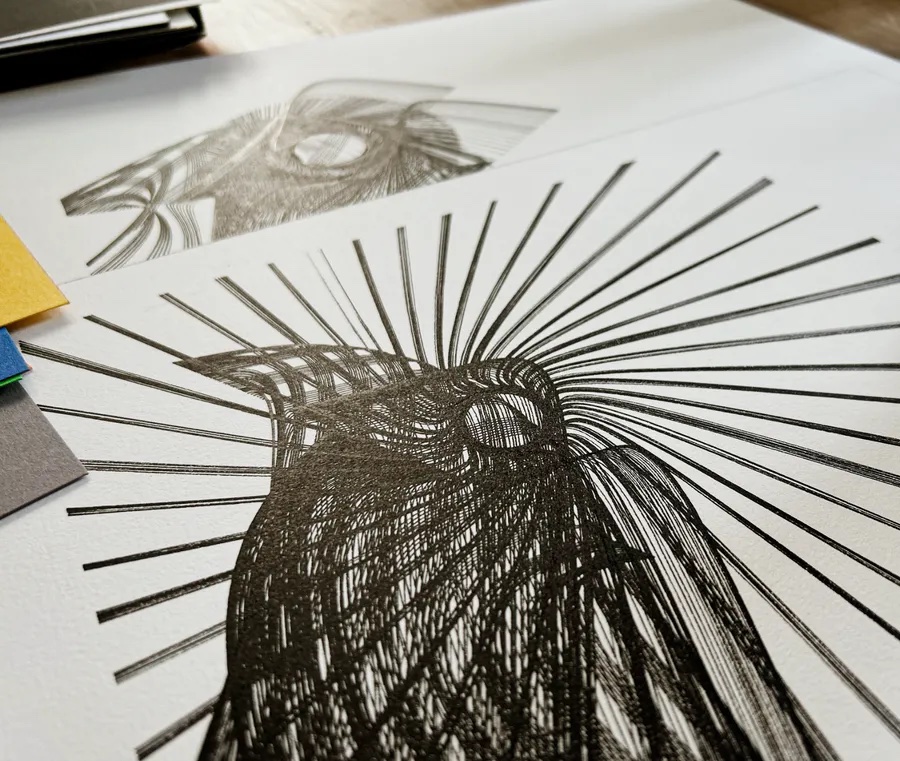
The work in +GRAPH makes a strong reference to the history of generative art. Today, we most often experience generative art on screens and projectors of all sizes. If the work is transformed into a “physical,” it’s usually as a digital print, and most often an inkjet print (a.k.a archival pigment print.) Sixty years ago, when generative art created with code was first evolving, it was all very different. Color screens and printing weren’t options. The majority of work from this time was created and experienced as physical drawings produced with a machine called a “plotter.” A plotter is a physical drawing machine that holds a pen or other drawing tool and physically moves it across a sheet of paper. Over the years, plotters evolved from massive room-sized machines to objects that are small enough and accessible enough for artists to bring them into their studios. All of the plotter drawings created for +GRAPH are produced with great care by the artists in their own studios.
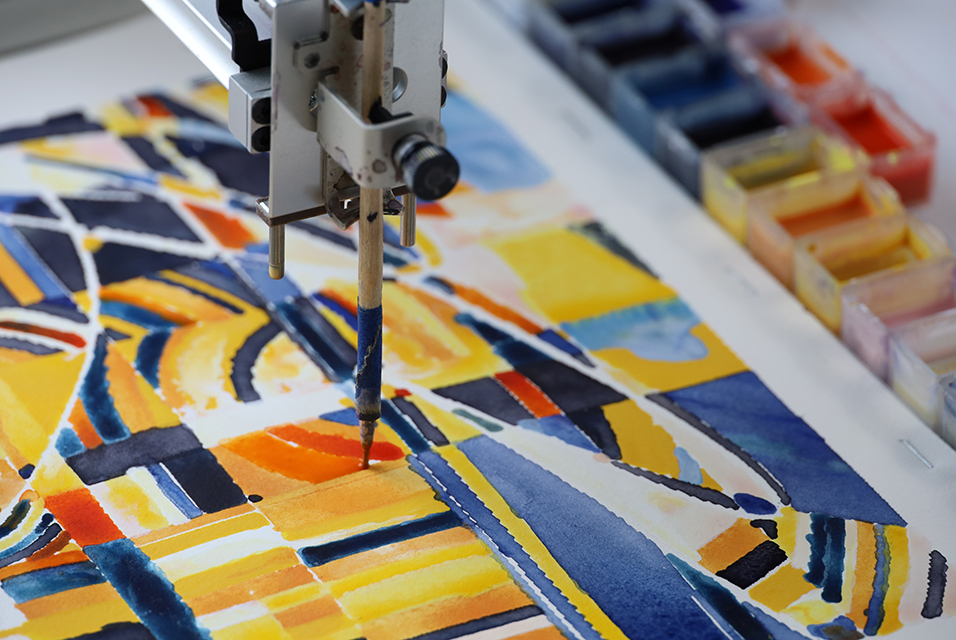
Because they have been made with plotter machines, the drawings created for +GRAPH are a very different kind of physical artifact from a digital print. A plotter drawing can use a wide range of different paints, inks, and drawing tools. A plotter machine can draw onto a larger range of papers than a digital print. The artists in +GRAPH are pushing these differences as far as they can. They are using papers of all textures and pigmentation. They have tested and are using specialized inks and hybrid mixtures of watercolors and acrylic paint. Licia He, for example, is using sixteen separate colors for each drawing. Her custom software moves a brush from the paint and dips it in, then moves the brush to the paper to make a mark, and back to saturate the brush with color again. Each drawing takes about 20 hours to render; they are precious physical objects. Licia has been developing these tools for years and is pushing them to new levels for +GRAPH. Every artist in this exhibition has similarly pushed into new territory.
The artists in +GRAPH share a commitment for code, drawing, and materials, but each approaches it in a singular way. Licia is creating a mood and emotion through compositions of color and form. Aleksandra is reacting to her lived experience in Belgrade, to the feeling of moving in the city. James is deep into simulation and exploring that through deconstructing geometry. Joanie is focusing on climate science and the changes to his environment through rendering fragments of clouds. Julien is engaging with ideas of artificial life and rendering the traces of unfolding simulated ecologies. Iskra works with minimal geometry through laying and transparency to construct images that lead toward introspection.
Since –GRAPH in 2021, I’ve seen these artists form even stronger connections with each other. They have shared work-in-progress with each other over the last months and have supported each other with great generosity. It has been a unique and special experience to engage with them and to see the work evolve. As I’ve gotten to know them over the last few years, I see these artists so clearly in their work. I hope you will get to know them as well, through the incredible new work they’ve created for +GRAPH.
— Casey Reas, November 2023
Artist
Licia HeLocationLondon, UK
Shiqing (Licia) He is a generative artist and a human-computer interaction researcher dedicated to creating artistic expressions through technological innovations. With a Ph.D. in Information Science and a Bachelor of Science degree in Studio Art and Computer Science, Licia currently resides in London, UK, as a full-time artist, focusing on capturing and presenting information around her through visual art. Fascinated by the possibilities of human-machine collaboration, Licia's explorations led her to combine generative art with robots, bridging her digital and physical painting practices through pen plotters.
Artist
Joanie LemercierLocationBrussels
Joanie Lemercier is a French visual artist and environmental activist whose work explores human perception through the manipulation of light in space. Working primarily with light projection and computer programming, Lemercier transforms the appearance of everyday objects and forms, bending reality to his imagination. His work transcends the flat surface, extending dimensionality through the interplay of light and shadow on materials such as wood, glass, paper, ceramics, textiles, and water. Lemercier was first introduced to the process of creating art on a computer at age five by attending classes on pattern design for fabrics that were taught by his mother. This early education grounded his interest in physical structures: geometry, patterns, and minimalist forms. As Lemercier’s work evolved, he began to explore these elements through the physics and philosophy of how light can be used to alter perceived reality.
Artist
Aleksandra JovanićLocationBelgrade, Serbia
Aleksandra Jovanić is an artist and programmer from Belgrade, Serbia. She holds a doctorate in Digital Arts and a BSc in Computer Science. In her research and artistic practice she combines various media, mainly in the field of interactive art, art games, and generative art. Jovanić’s recent works focus on the aesthetic of data visualization and optical illusions, as well as explorations of accepted concepts of truth and reality. Her work has been exhibited internationally in exhibitions at Unit London, VerticalCrypto Art, Feral File, Vellum LA, and ArtBasel. As an assistant professor, she currently teaches at all three levels of study, at the Faculty of Fine Arts in Belgrade, at master studies of the Faculty of Applied Arts, and at art doctoral studies at the University of Arts in Belgrade.
Artist
James MerrillLocationVermont, U.S.
James Merrill is a multidisciplinary digital artist who explores abstract visualizations. He resides in a small town in rural Vermont and enjoys all things outdoors. As a third generation artist, his initial interest in geometric artwork was origami. His life changed in 2003 when he obtained a copy of Macromedia Flash and began teaching himself programming and digital art techniques. He contributed to digital art groups such as EvokeOne and Depthcore and became life-long friends with many emerging artists in the scene. The interplay between mathematics, simulations, and aesthetics are the primary strands that connect the many different mediums that James has explored his career. His interests in programming and art naturally coalesced around generative art, and the introduction of a physical medium in plotter art captured his full attention. He now dedicates his time creating algorithmic artwork for plotters and 3D simulations.
Artist
Iskra VelitchkovaLocationMadrid, Spain
Iskra Velitchkova is an artist currently based in Madrid. Her work explores the present and potential interactions between humans and machines, and how instead of making technology more human, this relationship can push us to better understand our limits. She believes that roots and tradition can nurture her work with greater truth. After a stint in the tech and artificial intelligence industry as a visual thinker, Iskra decided to apply her knowledge and experience to her own research using art as a medium for generative explorations. Her work is based on mixed techniques: both digital and physical.
Artist
Julien GachadoatJulien Gachadoat has been exploring generative drawing for many years, creating unique art with algorithms. He works with the emergence of abstract form, combining monochrome and geometric shapes, playing with repetition, and using random operations to generate an element of surprise. Developing his own tools of creation based on simple graphic rules, Julien Gachadoat uses the computer—“this unique performer” (Vera Molnár)—to explore the formal possibilities that ensue. It is through the process of printing these unique pieces, using a plotter (AxiDraw), that he creates a link between text and code. He brings together, on paper, the computer and the pencil, the rigor of code and the poetry of art. Julien grew up in the ’90s with the demo-scene, making visuals with code. Ever since then, programming languages have been his creative tools.
14 November 2023
News
14 November 2023
News
The Power of the Plotter
by Alex Estorick for Right Click Save
14 November 2023
Event
14 November 2023
Event
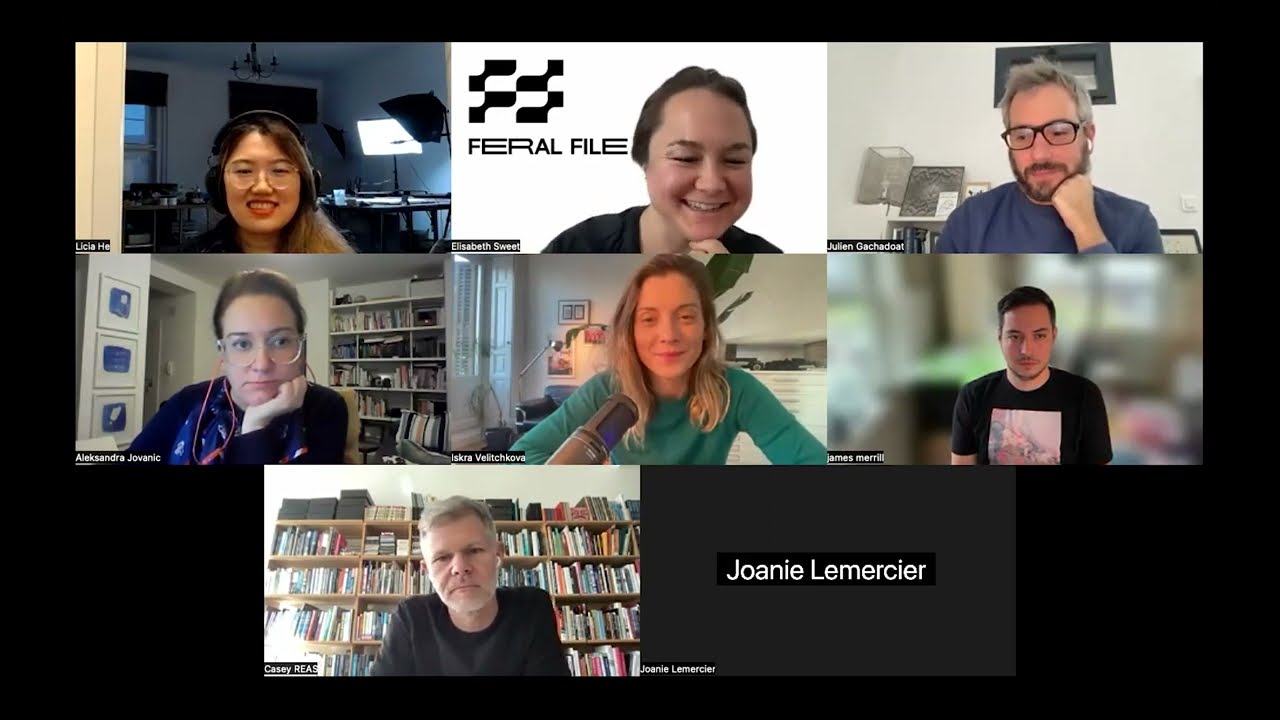
+GRAPH Exhibition Walkthrough
09 November 2023
News
09 November 2023
News
Machine Art, +GRAPH explores the deep historical connection between coding and drawing
by ArtDaily
07 November 2023
Event
07 November 2023
Event
+GRAPH Exhibition Notes
07 November 2023
Event
07 November 2023
Event
+GRAPH Trailer
03 November 2023
News
03 November 2023
News
The +GRAPH Exhibition: Exploring the Art of Code
by Lidia Yadlos for Blockster
+GRAPH smart contract:ethereum