Feral File logoFeral File logo

Instructions Follow - Art exhibition on Feral File

Curator’s Note

Pau Waelder avatar

Pau Waelder

09 September 2021

READ THIS TEXT BEFORE YOU CONTINUE

Over the last year, our daily environment has taken the shape of a video game tutorial: everywhere, lines of security tape delimit the spaces we can go to, or where we can sit. Arrows show the directions to follow in corridors and entrances, and protocols are put in place to establish what we must do in public spaces. At the same time, disembodied synthetic female voices emanate from home speakers and smartphones, providing us with information and instructions. Smart objects remind us to walk more, sit up straight, drink water, meditate, or learn a new language. We are increasingly used to following instructions—not only those given to us by the authorities, but also by those written on signs, and by the constant reminders from apps we’ve signed up for. The pandemic has only increased our need to be told what to do. While we navigate a changing environment, looking for directions and adapting to the circumstances, we try to improve, to learn something new, to keep calm, to do more exercise. Meanwhile, the platforms and apps we use apply the algorithms designed by their developers to cater to our needs, customize our experiences, and gently influence our behavior. Instructions follow: As we move into the future, there will continue to be more indications, regulations, and control placed over us. Some of these will be as obvious as road signs, while others will surreptitiously infiltrate our everyday activities, online or on the street. The artworks in Instructions Follow explore our relationships with digital devices and information systems from the perspectives of both humans and machines as a way to reflect on how our present time is governed by codes, regulations, and defaults. Inspired by the interactions with voice assistants and artificially intelligent agents, Lauren Lee McCarthy and Thierry Fournier both create experiences of otherness in which the viewer is confronted with a digital clone of the artist’s voice (McCarthy) or an automated system that seems to question their humanity (Fournier). These artworks allude to the fear of being replaced by a machine, or of having to adapt to increasingly inhuman and profit-oriented technological systems. In turn, these systems are criticized by Joana Moll and Guido Segni, both of whose work exposes the authoritarian undertones of techno-solutionism (Moll) and the unequal labor conditions of cloudworkers (Segni). Conversely, the works of Alba G. Corral, Disnovation.org, and Martin John Callanan all address the forms of creativity enabled by software, and the open possibilities of algorithmic serendipity. In one instance, a generative visual composition explores the concept of emergence (Corral), incorporating the program as a co-author of the piece, while in another work, a bot creates descriptions of artworks using keywords extracted from online news articles (Disnovation.org). Finally, a log of every action carried out in the image editing program Photoshop over the course of 15 years is presented as a diary of the artist’s creative process (Callanan). Instructions and codes have always been a part of our societies. The current gamification of our daily habits is but another example of how we have always followed explicit or unspoken rules to behave in the company of others. Alix Desaubliaux and Antoine Schmitt direct our attention to these rules using the language of games, either by connecting the notion of the “Magic Circle” to physical environments (Desaubliaux), or by developing an interactive game in which we experience the world as an invisible maze (Schmitt). Desaubliaux’s work also connects with the occult and the belief that we can shape reality through incantations, just as programming code can shape virtual worlds. Similarly, Solimán López, Irma Marco, and Varvara & Mar tackle the connection between digital technologies and ancient rituals by playfully addressing the supernatural. Images posted on Instagram by the Brazilian beauty blogger Camila Coelho are transformed into a futuristic altar piece, suggesting her condition as a modern-day pagan deity (López). An incongruous dialogue between voice assistants Cortana and Siri is staged in a setting that is reminiscent of late night TV fortune tellers (Marco), while a crazed golden idol representing our Wi-Fi connection (Varvara & Mar) reminds us it knows every bit of information we have ever shared, and tells us it wants more. These are the times we are living in. Average reading time: 3 minutes, 21 seconds. Your reading time: 4 minutes, 16 seconds. Thank you.
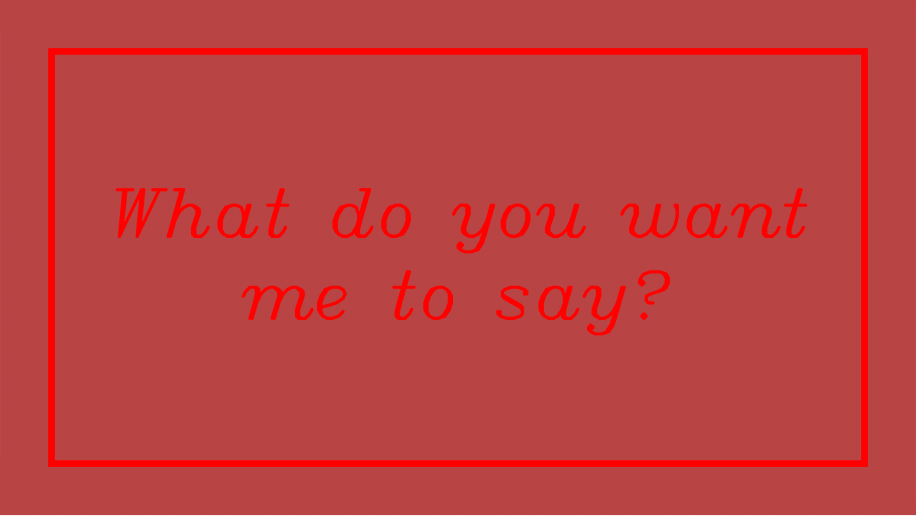
What do you want me to say? by Lauren Lee McCarthy

Lauren Lee McCarthy

What do you want me to say?

Edition of 75

Just in case by Thierry Fournier

Thierry Fournier

Just in case

Edition of 75

Ultimate Solvers by Joana Moll

Joana Moll

Ultimate Solvers

Edition of 75

24/7 by Guido Segni

Guido Segni

24/7

Edition of 75

Emergence by Alba G. Corral

Alba G. Corral

Emergence

Edition of 75

Predictive Art Bot by Disnovation.org

Disnovation.org

Predictive Art Bot

Edition of 75

Each and Every Command by Martin John Callanan

Martin John Callanan

Each and Every Command

Edition of 75

Minos by Antoine Schmitt

Antoine Schmitt

Minos

Edition of 75

Sigils by Alix Desaubliaux

Alix Desaubliaux

Sigils

Edition of 75

Neonumens by Soliman Lopez

Soliman Lopez

Neonumens

Edition of 75

Are Smart Machines Alive? by Irma Marco

Irma Marco

Are Smart Machines Alive?

Edition of 75

Signal of the World by Varvara & Mar

Varvara & Mar

Signal of the World

Edition of 75

Lauren Lee McCarthy avatar
Lauren Lee McCarthy is an artist examining social relationships in the midst of surveillance, automation, and algorithmic living. She is a 2021 United States Artist Fellow, 2020 Sundance New Frontier Story Lab Fellow, 2020 Eyebeam Rapid Response Fellow, 2019 Creative Capital Grantee, and has been a resident at Eyebeam, ZERO1, CMU STUDIO for Creative Inquiry, Autodesk, NYU ITP, and Ars Electronica. Her work SOMEONE was awarded the Ars Electronica Golden Nica and the Japan Media Arts Social Impact Award, and her work LAUREN was awarded the IDFA DocLab Award for Immersive Non-Fiction. Lauren's work has been exhibited internationally at places such as the Barbican Centre, Fotomuseum Winterthur, Haus der elektronischen Künste, SIGGRAPH, Onassis Cultural Center, IDFA DocLab, Seoul Museum of Art, and the Japan Media Arts Festival. She is the creator of p5.js, an open source programming language for learning creative expression through code online. She helps direct the Processing Foundation, a non-profit whose mission is to promote software literacy within the visual arts, and visual literacy within technology-related fields—and to make these fields accessible to diverse communities. Lauren is an Associate Professor at UCLA Design Media Arts.
View Full Profile
Thierry Fournier avatar

LocationParis, France

Thierry Fournier is a French visual artist living and working in Paris. A graduate of the École nationale supérieure d’Architecture de Lyon, he is also an independent curator, editor, and teacher. Through installations, objects, online works, videos, prints, and performances, his work addresses questions of otherness both in an anthropological and societal sense. His recent solo and group shows include exhibitions as the University of Montpellier III in 2020 and 2019, Aperto Montpellier 2020, Villa Henry Nice 2018, Lux Scène nationale de Valence 2015, Cermodern Gallery, Ankara 2021, Depo Gallery Istanbul 2019, Variation Art Fair Paris 2017, 2018, Thessaloniki Biennale 2017, and ZKM Karlsruhe, 2013 and 2017 to 2019. Thierry Fournier has also developed a professional trajectory as a curator of contemporary art exhibitions, with recent curatorial projects at Mécènes du sud Montpellier 2020 (with Pau Waelder), Mori Tower and Tokyo French Institute 2019, Cité Internationale des Arts Paris 2018, and Centre Pompidou 2011. Fournier is head of The Exercise of the Gaze, the contemporary art workshop at Sciences Po Paris. Until recently, he was co-head of two curating research studios at EnsadLab Paris and Ensad Nancy, and a guest artist-professor at Le Fresnoy. He is also co-head and artistic director of antiAtlas Journal, a free online art-science journal.
View Full Profile
Joana Moll avatar

LocationBarcelona, Spain Berlin, Germany

Joana Moll is an artist and researcher based in Barcelona and Berlin. Her work critically explores the way techno-capitalist narratives affect the alphabetization of machines, humans, and ecosystems. Her major research topics include internet materiality, surveillance, social profiling, and interfaces. She has presented her work in renowned institutions, museums, universities, and festivals around the world, such as Venice Biennale, MAXXI, MMOMA, Laboral, CCCB, ZKM, Bozar, The Natural History Museum in Berlin, Austrian Museum of Applied Arts (MAK), Ars Electronica, HEK, Photographer’s Gallery, Korean Cultural Foundation Center, Chronus Art Center, New York University, Georgetown University, Rutgers University, University of Cambridge, Goldsmiths University of London, University of Illinois, Concordia University, Universitat Autònoma de Barcelona, ETH Zürich, École d'Art d'Aix en Provence, British Computer Society, The New School, CPDP 2019, Transmediale, FILE, and ISEA, among many others. Her work has been featured extensively on international media including The Financial Times, Der Spiegel, National Geographic, Quartz, Wired, Vice, The New Inquiry, Netzpolitk, El Mundo, O’Globo, La Reppublica, Fast Company, CBC, NBC, and MIT Press. She is the co-founder of the Critical Interface Politics Research Group at HANGAR [Barcelona] and co-founder of The Institute for the Advancement of Popular Automatisms. Moll is currently a visiting lecturer at Universität Potsdam and Escola Elisava (Barcelona).
View Full Profile
Guido Segni avatar

LocationSomewhere

Guido Segni is the alias of an artist who works in hacktivism, net art, and video art. He lives and works somewhere, online and offline, playing with art, internet culture, and data hallucinations. Mainly focused on the daily (ab)use of the internet, his work uses technology as a way to create subtle gestures and tweaks, and to combine conceptual approaches with a traditional hacker attitude in the creation of odd, useless, and dysfunctional things. Co-founder of Les Liens Invisibles, he has exhibited in galleries, museums (MAXXI Rome, New School of New York, KUMU Art Museum of Tallinn), and international contemporary and digital art festivals (International Venice Biennale, Piemonte SHARE Festival, Transmediale). Recently he was shortlisted for the art division of the 20th Japan Media Arts Festival (2017), was a finalist at Prize Arte Laguna (2016), and got an honorary mention at Transmediale (2011) with Les Liens Invisibles. Currently, he's in the middle of his “laziness five-year plan,” an ongoing project in which he delegates his artistic production to an AI program that learns from his moments of idleness. In his spare time, he co-directs the Green Cube Gallery, teaches at the Accademia di Belle Arti of Carrara, and directs the imaginary REFRAMED lab.
View Full Profile
Alba G. Corral avatar

LocationSant Carles de la Ràpita, Spain

Alba G. Corral is a visual artist, code developer, and teacher. With a background in computer engineering, Corral has been creating art using software for the past decade. Her practice includes video, digital media, and installation projects. Through her varied artistic practices, Corral explores abstract narratives and has become known for her live audiovisual performances, in which she integrates coding and making in collaboration with musicians in real time. By combining generative systems with improvised drawing techniques, her organic digital language creates mesmerizing digital landscapes. Corral also teaches visual programming and creative coding with free software tools (Processing) for designers and artists through lectures and workshops. Currently she is also a curator at the Eufònic festival.
View Full Profile
Disnovation.org avatar

LocationParis, France Berlin, Germany

DISNOVATION.ORG is a group working at the intersection of contemporary art, research, and hacking. They develop situations of disruption, speculation, and debate as a way to question dominant techno-positivist ideologies and to stimulate post-growth narratives. Their practice includes artworks, curation, research, and the creation of publications (including “The Pirate Book,” an anthology on media piracy edited by the group). In 2018, they received a Design Trust Grant (Hong Kong) for a research project about China’s Shanzhai culture. They are visiting researchers at the University of California, Irvine, and the group currently includes three members: Maria Roszkowska, Nicolas Maigret, and Baruch Gottlieb. DISNOVATION.ORG’s work has been presented internationally, including at Centre Pompidou (Paris), Transmediale (Berlin), the Museum of Art and Design (New York), Palais de Tokyo (Paris), FILE (Sao Paulo), ZKM (Karlsruhe), Strelka Institute (Moscow), ISEA (Hong Kong), Elektra (Montreal), China Museum of Digital Arts (Beijing), and the Chaos Computer Congress (Hamburg). Their work has been featured in Forbes, Vice, Wired, Motherboard, Libération, Die Zeit, Arte TV, Next Nature, Hyperallergic, Le Temps, Neural.it, Digicult, Gizmodo, Seattle Weekly, torrentfreak.com, and Filmmaker Magazine, among others. They have received many awards, including: Research Fellowship at ArTeC - University Paris 8 (2021-24); Fellowship at UCL Louvain, BE (2021-22); Fellowship at the University of California, Irvine (2019); The WRO Biennale Awards (Critics and Art Editors), Wroclaw (2019); Design Trust Grant, Hong Kong (2018); Fellowship at V2_ Lab for the Unstable Media, Rotterdam (2018-2020); Fellowship at UCL Louvain (2018); First Prize for Digital Arts from Arte Laguna (2016), and Award for Artistic Technology Research, Vienna (2015).
View Full Profile
Martin John Callanan avatar

LocationFife, Scotland

Martin John Callanan is an artist researching an individual's place within systems. He graduated with a BA (Hons) in Visual Communication (Photography) from Birmingham City University in 2003 and an MFA in Fine Art Media from the Slade School of Fine Art, London in 2005, where, between 2007-2019 he was Teaching Fellow in Fine Art Media and a member of Slade Centre for Electronic Media in Fine Art (SCEMFA). Callanan’s artwork has been exhibited and published internationally. He was awarded the prestigious triennial Philip Leverhulme Prize in Visual Art 2014-17 for his outstanding research, and was an artist in residence at the Bank of England around the same time. In September of 2015 he was awarded the title of Alumnus of the Year for Excellence in Arts by Birmingham City University. Recent solo exhibitions include shows at Noshowspace, Horrach Moya, Casal Solleric, Baltic 39, and Or Gallery, Berlin. His work has been shown at White Cube, Galerie Christian Ehrentraut, V2, Arts Santa Mònica, James Cohan Gallery, Es Baluard Modern and Contemporary Art Museum, Whitechapel Gallery, ZKM Karlsruhe, Ars Electronic Centre, ISEA, FutureEverything, Art Exchange, LIFT 2014, Battersea Arts Centre, Kunstverein Springhornhof, Riga Centre for New Media Culture, Whitstable Biennale, Imperial War Museum North, and published by Book Works.
View Full Profile
Antoine Schmitt avatar

LocationParis, France

Antoine Schmitt is an artist who creates objects, installations, and situations to address the processes of movement in all of their modalities. Inspired by kinetic art and cybernetic art, and nourished by metaphysical science-fiction, Schmitt endlessly interrogates the dynamic interactions between human nature and the nature of reality. Originally a programming engineer in human computer relations and artificial intelligence, he places the program at the core of most of his artworks as a way to reveal and literally manipulate the forces at stake. In his work, Schmitt has collaborated with professionals from the fields of architecture, music, dance, cinema, and literature, including Franck Vigroux, Atau Tanaka, Vincent Epplay, Jean-Jacques Birgé, Delphine Doukhan, K.Danse, Patrice Belin, Don Nino, Cubenx, Alberto Sorbelli, Matthew Bourne, and Hortense Gauthier. As theoretician, speaker, and editor of the gratin.org portal, Antoine Schmitt explores the field of programmed art. Schmitt’s work has received several awards in international festivals such as transmediale (Berlin, second prize 2007, honorary 2001), Ars Electronica (Linz, second prize 2009), UNESCO International Festival of Video-Dance (Paris, first prize online 2002), Vida 5.0 (Madrid, honorary 2002), and CYNETart (Dresden, honorary 2004). His work has also been exhibited at the Centre Georges Pompidou (Paris), Sonar (Barcelona), and Ars Electronica (Linz), and in several Nuits Blanches (Paris, Amiens, Metz, Bruxelles, and Madrid).
View Full Profile
Alix Desaubliaux avatar

LocationRennes, France

Alix Desaubliaux is an artist based in Rennes, France, who has been a part of the Vivarium workshop since January 2021. In parallel to her artistic practice, she carries out research with the collective with "3G" (Annie Abrahams, Pascale Barret, and Alice Lenay)—with whom she explores performative and experimental formats via online encounters—as well as with the research group WMAN, which brings together six artists and curators working in video games. She also teaches in several art schools (ENSAD Nancy, ESACM Clermont-Ferrand, ENSBA Lyon, ESAM Caen, ESBAN N”mes), where she organizes workshops, interventions, conferences, and seminars. Desaubliaux’s work has been presented in several exhibitions, events, and platforms such as Jeune Création fair in 2015 at the Thaddaeus Ropac gallery; Digital Arts Biennial at the Cité Internationale des Arts, Domaine Pommery; Ars Electronica Festival in Linz; Mécènes du Sud Montpellier-Sète; and Glassbox, among others.
View Full Profile
Soliman Lopez avatar

LocationParis, France Valencia, Spain Madrid, Spain

Solimán López pursues his artistic production between his studio in Paris, France (UAS, Updated Art Studio) and ESAT LAB, an innovation department that he runs at ESAT, Escuela Superior de Arte y Tecnología de Valencia, Spain. In 2014, he founded the Harddiskmuseum, a museum that exists inside a portable hard drive. López’s work is focused on the meaning and nature of digital archives, with a strong interest in how human presence has impacted communication and digitalization in our current era. Technically, his works are achieved through the combination of 3D techniques, electronics, software programming, artificial intelligence, virtual and augmented reality, and digital synchronization. López’s career has developed through his participation in festivals, biennials, art centers, events, and museums all over the world, with highlights at Biennial of Digital Art (Sao Paulo), Biennial Nemo and Variations Art Fair (Paris), Chronus Art Center (Shanghai), ISEA 2019 (Montreal), ZKM Karlsruhe, Arts Santa Mònica (Barcelona), CCCC (Valencia), IVAM (Valencia), Etopia (Zaragoza), CAB Burgos, CAC Málaga, Es Baluard Museum (Palma), and the Nuit Blanche of Paris 2019.
View Full Profile
Irma Marco avatar

LocationBarcelona, Spain

Irma Marco is an artist, researcher, and teacher. She holds a master's degree in Fine Arts from the UPV, is currently pursuing her doctorate at the University of Barcelona, and is a resident at the Fàbrica de Creació Fabra i Coats (Barcelona). She is also a consulting lecturer at the UOC and teaches at institutions such as MACBA and Escola Massana. Marco works from pre-existing elements (such as sounds, images, discourses, or particular contexts), looking for new meanings and contents within materials that already have a past and a presence. She is interested in the plurality with which events are narrated and recorded, and she relies on noise, appropriation, collaboration, and exchange as strategies to open up a space of possibility from which to create meaning. Her practice encompasses sound experimentation, installation, actions, and interventions in physical spaces as well as virtual environments and publications. Marco has exhibited and intervened in the Centro de Desarrollo de las Artes Visuales (Havana), Museo de Arte Moderno de Santo Domingo, INJUVE, Matadero, CA2M, Fundación Telefónica, Galería Blanca Soto (Madrid), CCCC Centre del Carme, Espai Tactel (Valencia), Bòlit Centre d'Art Contemporani (Girona), MAC (Mataró), MACBA, Espai Souvenir, SWAB Art Fair, Tangent Projects, Influencers-CCCB, Festival Sónar, Cinema Zumzeig, Arts Santa Mónica, and Primavera Pro (Barcelona), among others.
View Full Profile
Varvara & Mar avatar

LocationTallinn, Estonia

Varvara & Mar is an artist duo formed by Varvara Guljajeva and Mar Canet in 2009. Varvara (born in Tartu, Estonia), has a PhD in art from the Estonian Academy of Arts, a master’s degree in digital media from ISNM in Germany, and a bachelor’s degree in IT from Estonian IT College. She is also an Assistant Professor in Computational Media and Arts at HKUST(GZ). Mar (born in Barcelona) has two degrees, one in art and design from ESDI in Barcelona, and one in computer game development from University Central Lancashire in UK. He also has a master’s degree from Interface Cultures at the University of Art and Design in Linz. Currently, he is a PhD candidate in BFM at Tallinn university and a research fellow at Cudan Open Lab. In their practice, the artists confront the social changes brought on by the development of digital technologies. The main topics in their work are artificial intelligence, kinetics, participation, and digital fabrication. Varvara & Mar have exhibited their work at MAD in New York, FACT in Liverpool, Santa Monica in Barcelona, Barbican and V&A Museum in London, Onassis Cultural Centre in Athens, Ars Electronica museum in Linz, and ZKM in Karlsruhe, among others. They have also completed various commissions, such as Neuronal Landscapes (2018) for the Estonian History Museum, and Wishing Wall (2014) for Google, which was presented in the exhibition Digital Revolution at the Barbican.
View Full Profile

Instructions Follow smart contract:ethereum