I’ve always been a little bit afraid of plants. I love them, of course, but on some ancient instinct, I have a dreadful respect for their vegetable will. This might be because of
The Man Whom The Trees Loved, a horror story I read at an impressionable age, by the British gothic writer Algernon Blackwood. In the story, a young man senses a murky intelligence deep beneath the bark of a cedar. This special living “something” in the tree excites him; it feels almost animal-like. He can’t shake it, and the obsession becomes overwhelming, ecstatic. He fantasizes that the forest might someday “engulf human vitality into the immense whirlpool of its own vast dreaming life.” The monstrous forest at the edge of his ordered cottage garden creeps closer and closer, until it claims him whole.
Blackwood’s story stirs something deep in me. When the tendrils of ivy creeping along my back fence touch the ground, I rush to cut them back, lest they take me away too. On a whim I recently Googled “dendrophobia,” the fear of trees. In the years-spanning comments section of an online phobia dictionary — a place I consider to be the Deep Internet, almost primevally online — I read about a man stricken to paralysis by the gnarled roots of banyan trees “haphazardly touching the ground in one strangling embrace.” The whooshing sound of leaves in the wind is a common trigger. Another account, from a young mother: her preschooler noticed a tree near his playground for the first time, and, convinced it wasn’t there yesterday, is now inconsolable.
The toddler isn’t wrong; plants are always watching us. They’re alive, and even though they can appear static, they’re always on the move, especially, it seems, when we’re not paying attention. As the botanist Jack Schultz writes, plants are “
just very slow animals.” Forests migrate across great distances, racing against climate change; time-lapse photography reveals the snaking, foraging movements of vines, the way seedlings “circumnutate,” swirling around in giddy, searching ellipses. We are in the midst of a revolution in thought regarding plant intelligence, with recent research suggesting that plants can anticipate pain, warn one another of danger, recognize their own kin, and learn. It can be disorienting, and yes, even frightening, to encounter an agency so different from our own. Acknowledging the intelligence of plants requires decentering our own, and it has moral weight, too: if the whole world can feel, then the whole world is screaming in pain. It’s a horrorshow!
Indeed, horror — along with folklore and science fiction — has long exploited the unsettling implications of plant motility and intelligence, from stories of medieval mandrake roots and deadly upas trees to John Wyndham’s alien
triffids, H.G. Wells’ “
strange orchid,” and, of course, Audrey II, the bloodthirsty succulent from
Little Shop of Horrors. With every new piece of plant intelligence research, it feels more than ever like the old stories are true, like Blackwood’s special living “something” really is something, waiting to be known. The fiddle-leaf fig in your living room: it’s watching you.
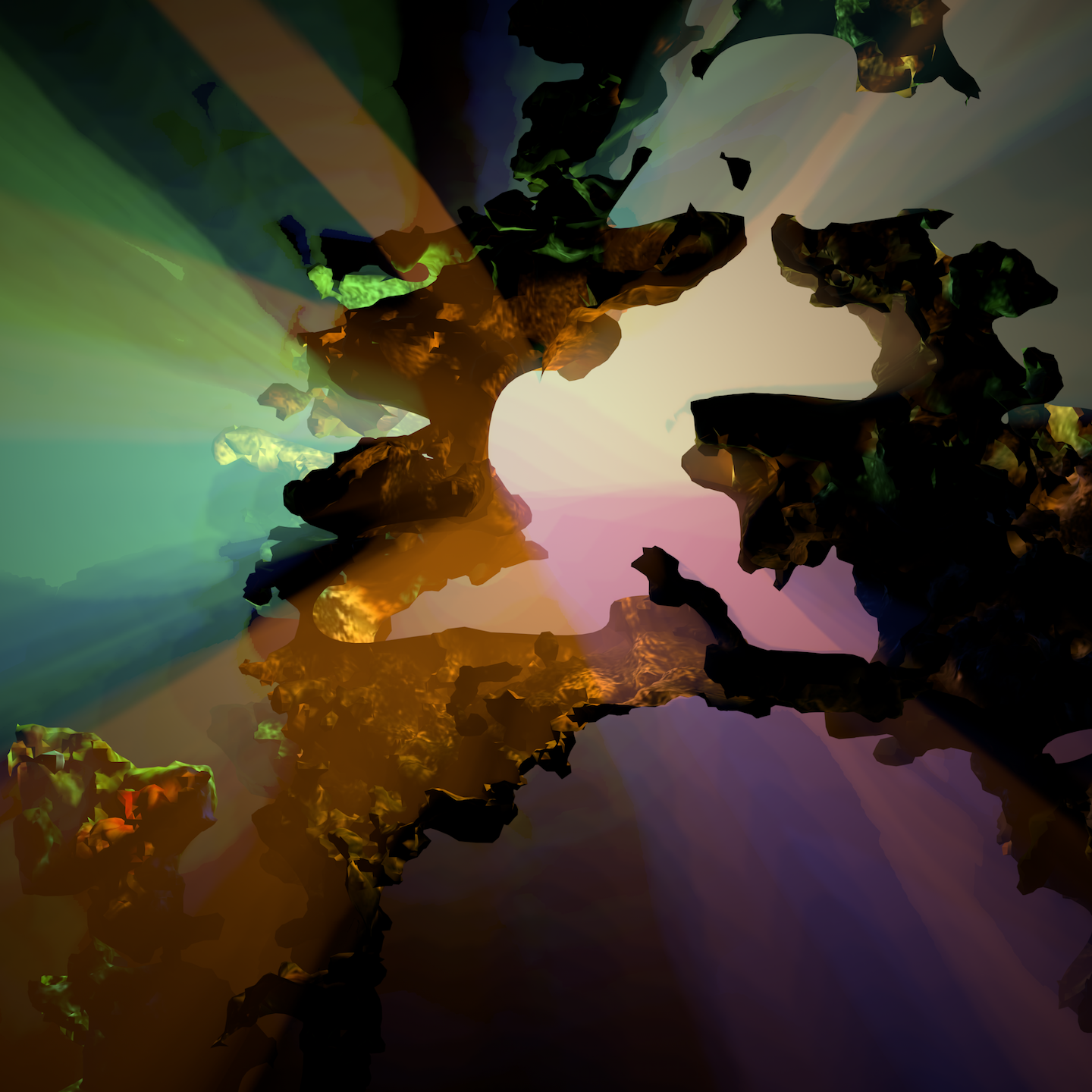
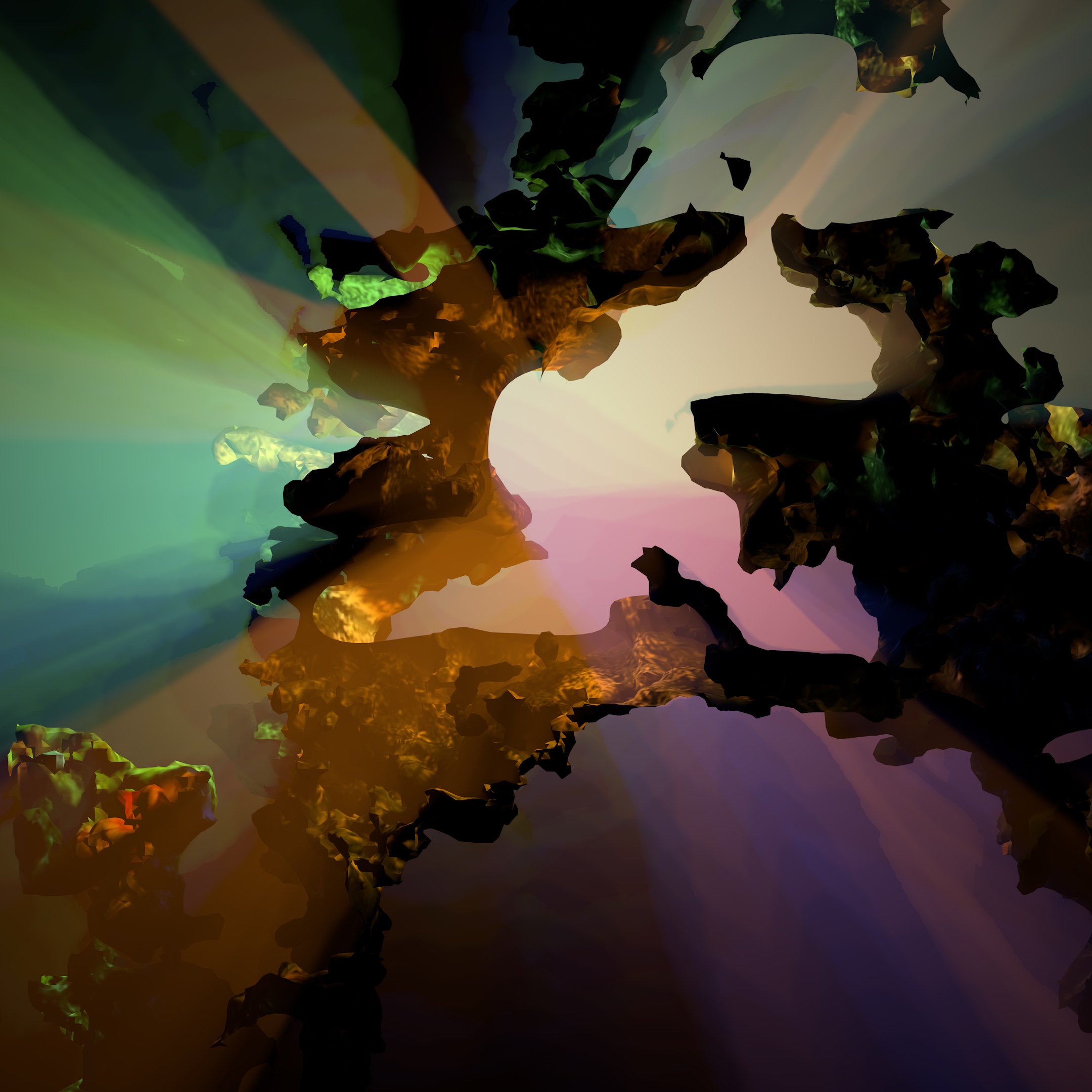
None of this is to say that I find Rick Silva’s work scary, or malevolent. Rather, that I’m sensitive to the fact that there is a profound feeling in plants, and that this feeling is not made any less legitimate or considerable by its total alien difference from human experience. Plants have agency whether or not we grant it to them. I think Silva is sensitive to this too. He has to be. Nobody 3D scans hundreds of blooming plants — in the loamy depths of the Coastal Redwoods, in special collection greenhouses, across the Cascade Mountains and in the arid high deserts of Eastern Oregon — without developing a deep awareness of the nature of their presence. I firmly believe this about all living things: the more you look at them, the more they allow you to see (as Gaston Bachelard writes, “attention by itself is an enlarging glass”).
In their excellent book on ecological intelligence,
Ways of Being, James Bridle writes about the perceptual disconnect between life at human speed and life at plant-speed. “We humans live in such a narrow slice of time and space that we are incapable of thinking of, or thinking at, the pace and scale of the world,” they write. “Our given minds are insufficient to the task — but we do have tools to hand.” Bridle is suggesting that technology, should we elect to use it wisely, can work to bridge the gap, but art is another powerful tool, of course. Just as time-lapse cameras make visible the secret life of plants, so, too, does the kind of dutiful attention that Silva brings to his field work. And although his subjects have been altered by their grafting into virtual space, they are still real plants, and as such they maintain their aura of furtive awareness, their dark agency.
In Silva’s
BLOOMCORE, we encounter beings familiar, yet unknown, and unknowable. Lush rhododendrons, broad-leaved ferns, rare roses, denizens of deep forests: scanned in the spring of 2022, they are each presented in full bloom, at the height of their lives and thus also on the brink of death. As I write these words, most of the real-life plants Silva has volumetrically captured are almost certainly dead, but they’ll remain preserved in perpetuity, on the blockchain, like museum specimens. To me this is profoundly gothic — these blooms hanging outside of time in the radiant computational darkness, promising transcendence, concealing poison (Silva has even included a few poisonous pitcher plants in this collection, vegetal carnivores with alluring, vaselike forms). In this he is like Algernon Blackwood, summoning the “vast dreaming life” of plants, their hidden, distributed way of knowing, their collective ancientness, and the slow, halting way they move across the world. I am not afraid of them, but I wouldn’t turn my back on them, either. Wait — did you hear that whisper of wind in the leaves? Isn’t the forest closer than it was yesterday? We better go out and take a look.