Feral File logoFeral File logo

Chain Reaction - Art exhibition on Feral File

Curator’s Note

Christiane Paul avatar

Christiane Paul

07 March 2023

NFTs as Catalysts and Proof of Action

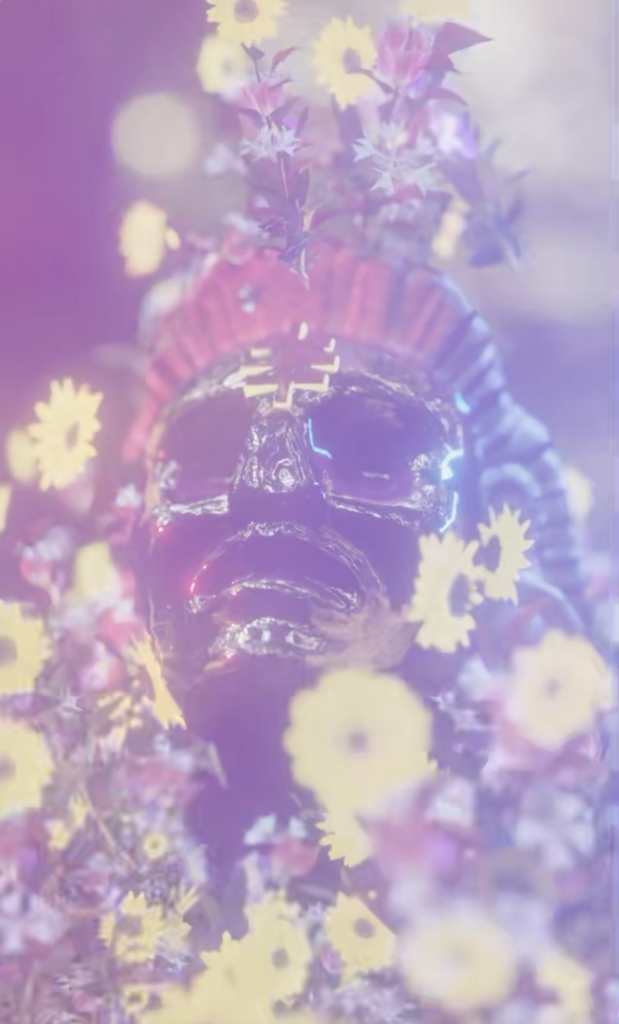
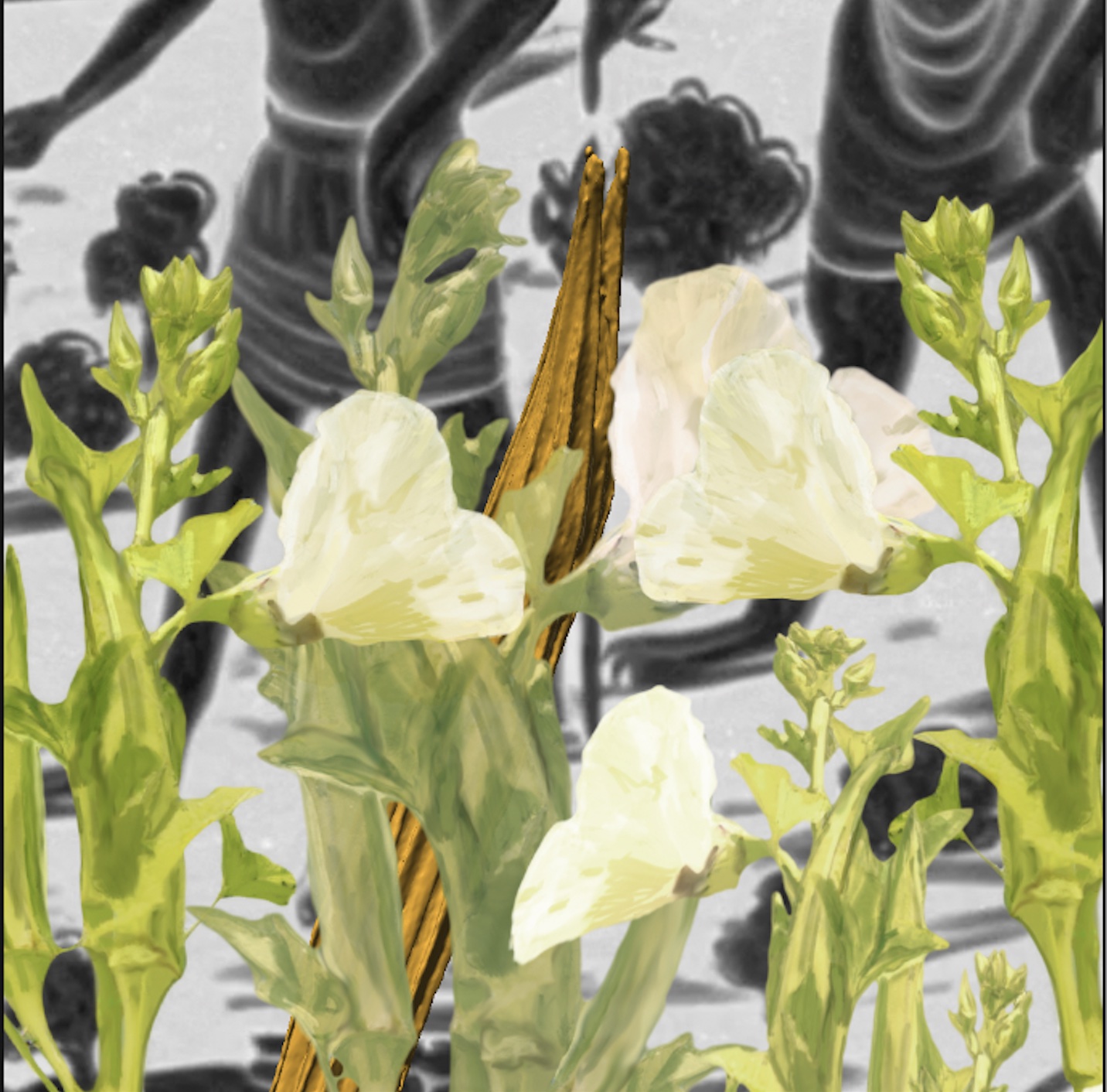
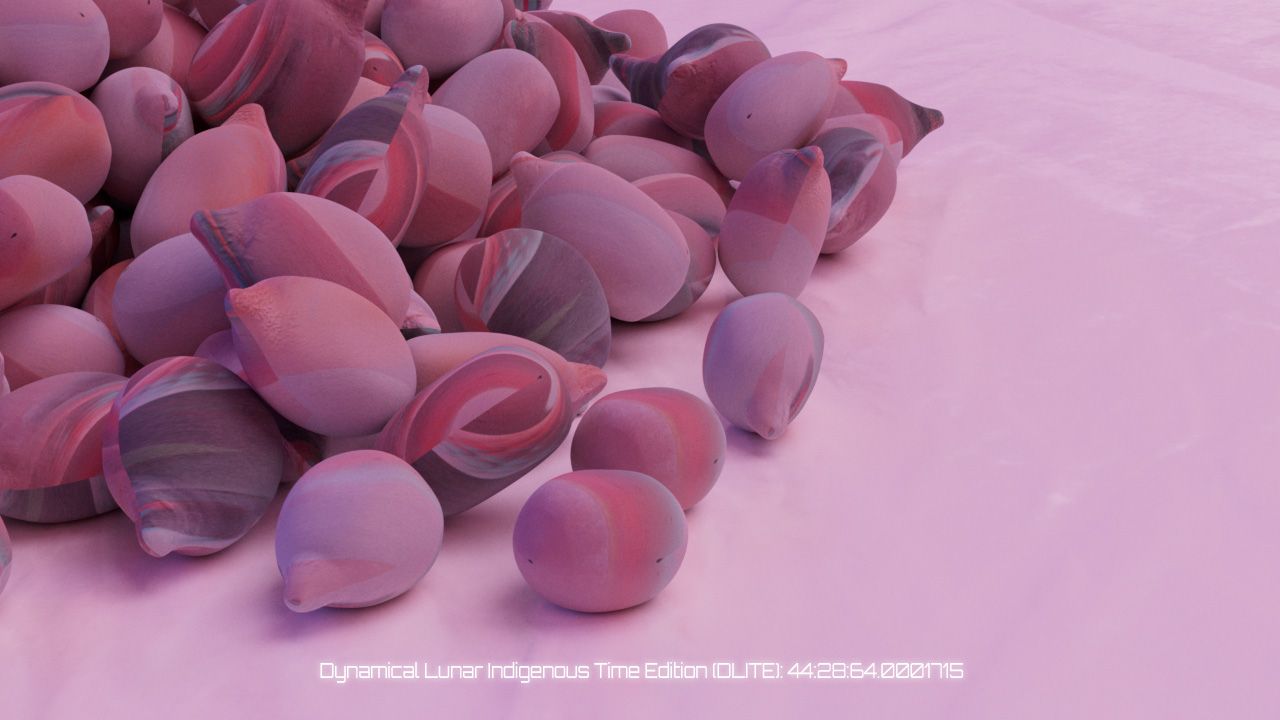
The exhibition Chain Reaction strives to underscore the inherent connections between the blockchain as a list of data blocks facilitating the recording of transactions and tracking of assets, and the generative social, aesthetic, and environmental contexts and networks in which these assets are embedded. The works in this exhibition explore their existence as “tokens” beyond just being technological records of a transaction: they function as catalysts in precipitating events or actions, from environmental preservation and sustainability of a creative process to aesthetic choices. NFTs are functionally defined by their non-fungible status. They are capable of encapsulating and proving ownership of digital artworks that are often characterized by malleable, generative, untraceable, or imperceptible qualities. The artworks in Chain Reaction highlight the porous boundaries between NFTs as a mechanism for unique identification, on the one hand, and as a common “keepsake” of a social contract and commitment, or collective action, on the other. Jennifer and Kevin McCoy’s “Public View / Private View” opens up the artistic process of creation to a group of donors and art supporters connected to them and makes participants in the “art ecosystem” a formal part of the art. In her work “Synchronicities,” Sara Ludy plays with transient moments by asking collectors to take a leap of faith and purchase time codes associated with video clips, excerpted from a 24-hour video, that will appear in their wallets upon purchase. The collected clips reveal themselves on a website in a grid-like structure, a space collectively shaped by the owners. Stephanie Dinkins’ “The Okra Continuum” equally invites collectors to make a purchase sight unseen, creating the journey of an okra pod, symbolizing its journey east with Africans in pre-slavery times towards an uninhibited future. Projection into the future is also at the core of Amelia Winger-Bearskin’s “Seed Protocol - Dynamical Lunar Indigenous Time (DLITE) 43:28:22.0004124.” The edition consists of 100 variations of a pile of corn seeds that imagine the texture of future generations of corn and asks collectors to commit to engagement with seed banks to keep ancestral seeds strong. Ira Greenberg and Marina Zurkow’s “The Dorises - Oystercraft from silicon to saltwater” allows people to collect digital NFT oysters, each of them with unique generative features and a password that gives access to a reef website on which the oysters are placed. The reef of owners collectively votes on distributing funds to real-world oyster conservation projects. Collectors of Alfredo Salazar-Caro’s “Silva Ex Machina,” a flora created from generative geometry nodes, support reforestation in the Amazon rainforest through their purchase, potentially creating a small forest of their own. The tokenized visual art brought together in Chain Reaction emphasizes the concept, process, and capacity to trigger events. It focuses on the promotion or acceleration of reactions, on self-sustaining fission, or series of actions, and tries to raise questions about “linked” communities. The artworks take the form of inventive experimental gestures that set in motion a course of action in various forms: in “The Dorises,” an algorithmic generative process shapes each asset in the edition and places it in a shared environment; in “Synchronicities,” an “edition” of video clips requires a community of collectors to come together to set in motion and complete a process; three of the projects allocate resources to environmental causes and sustainability. The artworks in Chain Reaction are a reminder that the attraction of NFTs ultimately resides in a network of people that collect and trade, be they driven by financial gain, the gaming aspects of a competitive environment, or the support of arts and creativity. Every tokenized asset on the blockchain is a testament to a human investment — time, money, or effort. The potential to activate collective human action may be the blockchain’s biggest asset.
Seed Protocol - Dynamical Lunar Indigenous Time (DLITE) 43:28:22.0004124 by Amelia Winger-Bearskin

Amelia Winger-Bearskin

Seed Protocol - Dynamical Lunar Indigenous Time (DLITE) 43:28:22.0004124

Series of 93 works

The Dorises - Oystercraft from silicon to saltwater by Ira Greenberg and Marina Zurkow

Ira Greenberg and Marina Zurkow

The Dorises - Oystercraft from silicon to saltwater

Series of 93 works

Silva Ex Machina by Alfredo Salazar-Caro

Alfredo Salazar-Caro

Silva Ex Machina

Edition of 93

Okra Continuum by Stephanie Dinkins

Stephanie Dinkins

Okra Continuum

Series of 93 works

Synchronicities by Sara Ludy

Sara Ludy

Synchronicities

Series of 93 works

Public View / Private View by Jennifer and Kevin McCoy

Jennifer and Kevin McCoy

Public View / Private View

Edition of 93

Amelia Winger-Bearskin avatar

LocationFlorida, United States

Amelia Winger-Bearskin is a Banks Family Preeminence Endowed Chair and Associate Professor of Artificial Intelligence and the Arts at the Digital Worlds Institute at the University of Florida. She is also the founder of the AI Climate Justice Lab, the Talk To Me About Water Collective, and the Stupid Hackathon. In 2022 she was awarded a MacArthur Foundation Award as part of the Sundance AOP Fellowship cohort for her project CLOUD WORLD / SKYWORLD, which was part of The Whitney’s Sunrise/Sunset series. In 2021 she was a fellow at Stanford University as their artist and technologist in residence, made possible by the Stanford Visiting Artist Fund in Honor of Roberta Bowman Denning (VAF). In 2020 she founded Wampum Codes, an award-winning podcast and an ethical framework for software development based on indigenous values of co-creation. In 2019 she was a delegate at the Summit on Fostering Universal Ethics and Compassion for His Holiness, The 14th Dalai Lama, at his World Headquarters in Dharmsala, India. In 2018 she was awarded the 100k Alternative Realities Prize for her Virtual Reality Project: Your Hands Are Feet from Engadget and Verizon Media. This was also the year that nonprofit IDEA New Rochelle won the $1 Million Bloomberg Mayor’s Challenge for their VR/AR Citizen toolkit to help the community co-design their city. Amelia is an enrolled member of the Seneca-Cayuga Nation of Oklahoma, Deer Clan on her mother’s side; her late father was Jewish/Baha'i.
View Full Profile
Ira Greenberg and Marina Zurkow avatar

LocationNew York, United States & Texas, United States

Marina Zurkow Marina Zurkow is a media and participatory practice artist who connects people to nature-culture tensions and environmental messes, offering new ways of knowing, connecting, and feeling. Using research and technologies including software, animation, food, and other biomaterials, she fosters intimate multispecies and geophysical connections. Zurkow works as a founding member of several collaborative initiatives, including Investing in Futures, Dear Climate, and Climoji. Her recent solo exhibitions include Bitforms gallery, New York; Google (Hudson River campus); ICA San Diego; New York City’s MTA Arts & Design; and Borusan Contemporary, Istanbul. Her work has been featured at Storm King Art Center, New York; the 7th Moscow Biennale; Smithsonian American Art Museum, Washington D.C.; Sundance Film Festival, Utah; and the Seoul Media City Biennial, Korea, among others. Her public art engagements include work with Creative Time, New York; The New Museum’s Ideas City, New York; Northern Lights.mn, Minneapolis; 01SJ Biennial, San Jose, California; and Rice University, Houston. Zurkow was a 2022 fellow at the Environmental Media Lab, Princeton University. She is a 2011 Guggenheim Fellow and received grants from Rice University, NYFA, NYSCA, the Rockefeller Foundation, and Creative Capital. She is represented by Bitforms gallery and resides in the Hudson Valley, New York. Ira Greenberg Ira Greenberg is director of the Center of Creative Computation and professor at SMU (Dallas, Texas) with a joint appointment in the Meadows School of the Arts and the Lyle School of Engineering. His research and teaching interests include generative NFTs, drawing and painting, aesthetics and computation, expressive programming, emergent forms, net-based art, artificial intelligence (and stupidity), physical computing and computer art pedagogy. Greenberg has been a painter, 2D and 3D animator, print designer, web and interactive designer/developer, programmer, art director, creative director, managing director, art and computer science professor, and author. He wrote the first major language reference on the Processing programming language, Processing: Creative Coding and Computational Art, (Berkeley, CA: friends of ED, 2007) and two subsequent creative coding texts. Greenberg holds a B.F.A. from Cornell University and a M.F.A. from the University of Pennsylvania. He has steadily exhibited his work, consulted within the industry, and lectured widely.
View Full Profile
Alfredo Salazar-Caro avatar
Alfredo Salazar-Caro is a creator living and working between Mexico City, NYC, and Online. His works are an amalgamation of portraiture, installation, sculpture, documentary, video, and VR/AR. Salazar-Caro is co-creator and creative director of DiMoDA (Digital Museum of Digital Art), a groundbreaking project that functions as a VR institution and exhibition platform dedicated to the development of XR Art. His work has been exhibited internationally at festivals and venues including Tribeca Film Festival; Whitney Museum (Dreamlands: Immersive Cinema and Art 1905-2016); The Wrong Biennale, São Paulo, Brazil; New Normal, Beirut/Istanbul; HEK (The Unframed World), Basel, Switzerland; SIGGRAPH Asia, Bangkok, Thailand; and 1Mes1Artista, Mexico City, among others. His work has been featured in publications such as Leonardo, Cultured Magazine, Vice Magazine, and Creators Project.
View Full Profile
Stephanie Dinkins avatar

LocationNew York, United States

Stephanie Dinkins is a transmedia artist who creates experiences that spark dialog about race, gender, aging, and our future histories. Her work in AI and other mediums uses emerging technologies and social collaboration to work toward technological ecosystems based on care and social equity. Dinkins’ experiences with and explorations of artificial intelligence have led to a deep interest in how algorithmic systems impact communities of color, in particular, and all of our futures more generally. Dinkins is a 2022 Sundance Art of Practice Fellow, 2021 United States Artist Fellow and Knight Arts & Tech Fellow. Previous fellowships, residencies, and support include the Artist Fellow of the Berggruen Institute and Lucas Artists Fellow in Visual Arts at Montalvo Art Center, CA; Onassis Foundation; Stanford Institute for Human-Centered Artificial Intelligence; Creative Capital; The Laundromat Project; Santa Fe Art Institute, and Art/Omi. The New York Times featured Dinkins in its pages as an AI influencer. Wired, Art in America, Artsy, Art21, Hyperallergic, the BBC, Wilson Quarterly, and a host of popular podcasts have highlighted Dinkins’ art and ideas. Dinkins teaches at Stony Brook University where she holds the Kusama Endowed Chair in Art.
View Full Profile
Sara Ludy avatar

Artist

Sara Ludy

LocationNew Mexico, United States

Sara Ludy is an American artist and composer working in a wide range of media including digital painting, animation, VR, websites, installation, and sound. Through an interdisciplinary practice, Ludy generates hybrid forms from the confluence of nature and simulation to explore notions of immateriality and being. Ludy’s work has been exhibited at institutions including the Museum of Contemporary Art Chicago, Vancouver Art Gallery, Whitney Museum of American Art, Berkeley Art Museum, and Künstlerhaus Bethanien. Her work has been featured in Modern Painters, The New York Times, Artforum, Art in America, and Cultured Magazine. Sara lives and works in Placitas, New Mexico.
View Full Profile
Jennifer and Kevin McCoy avatar

LocationNew York, United States

Jennifer and Kevin McCoy are media artists whose works extends from film and video to installation and generative software. Their work often seeks to situate new technologies within our culture, using contemporary tools and questioning their impact both on the individual and on the collective culture. Recent work includes generative software that uses blockchain technology to create long-form ecosystems for images to change and evolve. The McCoys’ work has been widely exhibited at venues including the Pompidou Center, Paris; the Museum of Modern Art, New York; British Film Institute – Southbank, London; the Nevada Art Museum; The San Jose Museum of Art; The Addison Museum of American Art; The Sundance Film Festival, and many other venues in the US, Europe, and Asia. Their work is in the collections of the Museum of Modern Art; The Metropolitan Museum of Art; the Museum of Fine Arts, Houston; the Milwaukee Art Museum; the 21C Museum; and the Speed Museum. They received a Creative Capital award in 2003, the Wired Rave Award for Art in 2005, a Guggenheim Fellowship in 2011, and a Headlands Alumni Award in 2014. In 2022 Kevin received a Webby Lifetime Achievement Award from the International Academy of Digital Arts and Sciences for co-developing the technology that eventually became known as the NFT. Their work is represented by Postmasters Gallery in New York.
View Full Profile

Chain Reaction smart contract:ethereum