
The Blockchain as Social Space
07 March 2023
The Blockchain as Social Space
On the occasion of the exhibition Chain Reaction, curator Christiane Paul in conversation with artists Stephanie Dinkins, Ira Greenberg and Marina Zurkow, Sara Ludy, Jennifer and Kevin McCoy, Alfredo Salazar-Caro, and Amelia Winger-Bearskin.
Christiane Paul: The artworks in the Chain Reaction exhibition explore the threshold between NFTs as a mechanism for unique identification, on the one hand, and as a common “keepsake” of a social contract and commitment or collective action, on the other. All of you have experience working in the NFT space, some of you even since its inception.
In your opinion, how does the art world of the blockchain differ from that of the traditional gallery space or the web as a platform for creating art? The presentation, reception, and collection of art always is a social environment based on human interactions. How does the blockchain engender these relations and what are its strengths and constraints as a “social” environment for art?
Jennifer and Kevin McCoy: The most striking thing about blockchains as an environment for art making is that they are extremely arid. Almost all of the elements that we think of when talking about art — the work itself, its material history, the lived context of artists, the politics of institutions and collectors — are add-ons and metadata that are external to the ledger’s role as a verified chain of unique transactions. However, as more and more spheres of life become fully digital, the ideas used to describe this system capture people’s imagination. Uniqueness, immutability, and decentralization are formal concepts associated with blockchains, but their ultimate significance is purely social. Bringing art to a blockchain has a double effect of reducing it to a bare referential minimum while at the same time defining it completely by social contexts that form around that metadata. Whether good or bad, this effect is unique to blockchain-based art.
Alfredo Salazar-Caro: The NFT Art space somehow feels like an extreme, uber-accelerated, hyper-capitalist version of the regular art world. Look at how Yuga Labs, the company behind the Bored Ape NFT series, is being sued in a class action lawsuit for having people invest millions of dollars in ape collectibles only to lose their entire investment. These non-artist tech entrepreneurs created procedurally generated cartoon apes, and almost immediately outperformed any contemporary digital artist in this so-called “NFT Art Market.” People bought the collectibles not because they cared about them or were in any way dedicated to the digital art world, but because they were endorsed by celebrities and came with the promise that their value would triple with each passing day. This may of course be the same reason why some people buy works by many top contemporary artists — they represent an investment and an appreciating asset. But it traditionally takes much longer to both establish the work as an asset, and for that asset to appreciate in the first place. It may take decades, it may take the artist’s entire lifetime. By contrast, the “NFT Art World” allowed entrepreneurs to become the hottest “artists” and sell appreciating assets over night. In the end, committed artists will create great works of art regardless of the platform on which they exist.
Ira Greenberg and Marina Zurkow: Web art has a nearly 30-year history, becoming an active area of artistic practice well before most of the art world, artists, the media, and general public gave it much thought. In the early years of creative coding/generative art, the impulse driving much of the work was pure experimentation and excitement of a new emerging medium. Selling, or even exhibiting, the work was not a primary concern. There were also very few learning resources. The community was spread thinly around the globe, with limited communication technology. Online forums, like the Processing discussion board, were central hubs for the community, where artists shared their work and knowledge.
Public awareness of the generative art space has arisen primarily through the hype surrounding NFTs. Grossly overpriced projects and auction prices, driven by speculators and meme culture, have brought widespread media attention and money into the space. Though much of this development has been greed-based and unsustainable, a positive has been the creation of projects such as Feral File, charting a much different path. Other platforms as well, such as Art Blocks, fxhash, and EmProps, are providing creative venues and marketplaces empowering individual artists, with supportive communities where the artists often are also collectors.
CP: Jennifer and Kevin, your piece “Public View / Private View” is specifically focused on your network of supporters — collectors, friends, people affiliated with art organizations. It asked them to submit images to you that you then reinterpreted through code and compiled into an animated composite. Do you think that the blockchain has unique potential to stimulate or support these networked relationships, or is it just another vehicle for exploring them? Have you done work before that asked your network to participate in the creation process?
JKM: The blockchain promises transparency so that the participants can follow our artworks in a way that is more streamlined than keeping in touch with the studio or gallery over the long term. That said, we find the concept of chain-reaction is a useful metaphor for the different mechanisms art uses to circulate in society. What we are interested in here with our project is the idea that, like a book or an exhibition, “Public View/Private View” links together various artists and participants in time around a specific gesture. We have other examples in our work of inviting participation. In “Cleaner” (2018) we used the Kickstarter platform to not only fund, but cast a large party scene in filming a sequence for an experimental narrative film. And in our exhibition I'll Replace You (2009), scores of actors and participants replaced us in a series of video and photo works.
CP: Sara and Stephanie, both of you are asking your collectors for an act of trust in that they are purchasing an NFT sight unseen yet collectively constructing a narrative in the process of doing so.
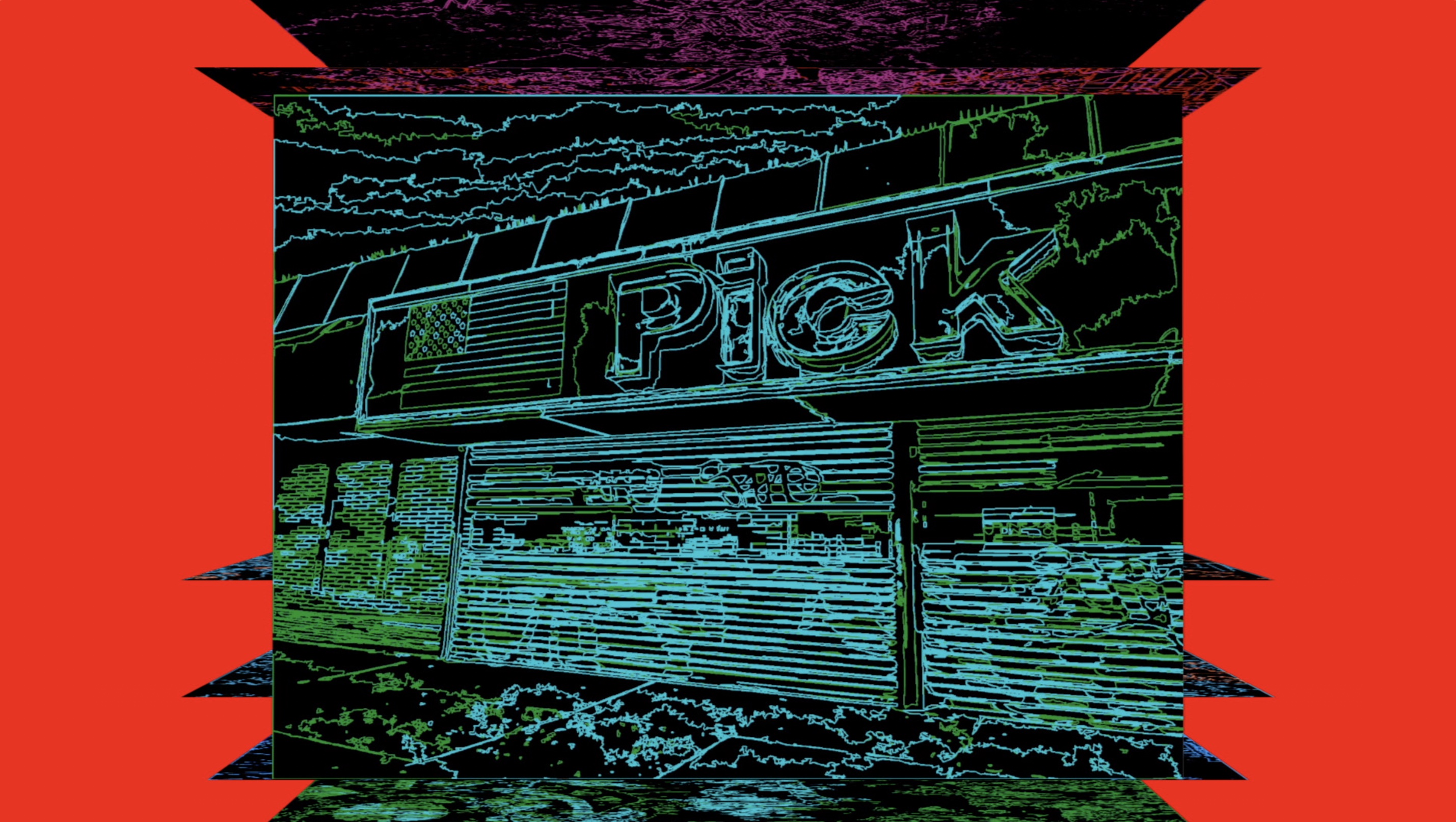
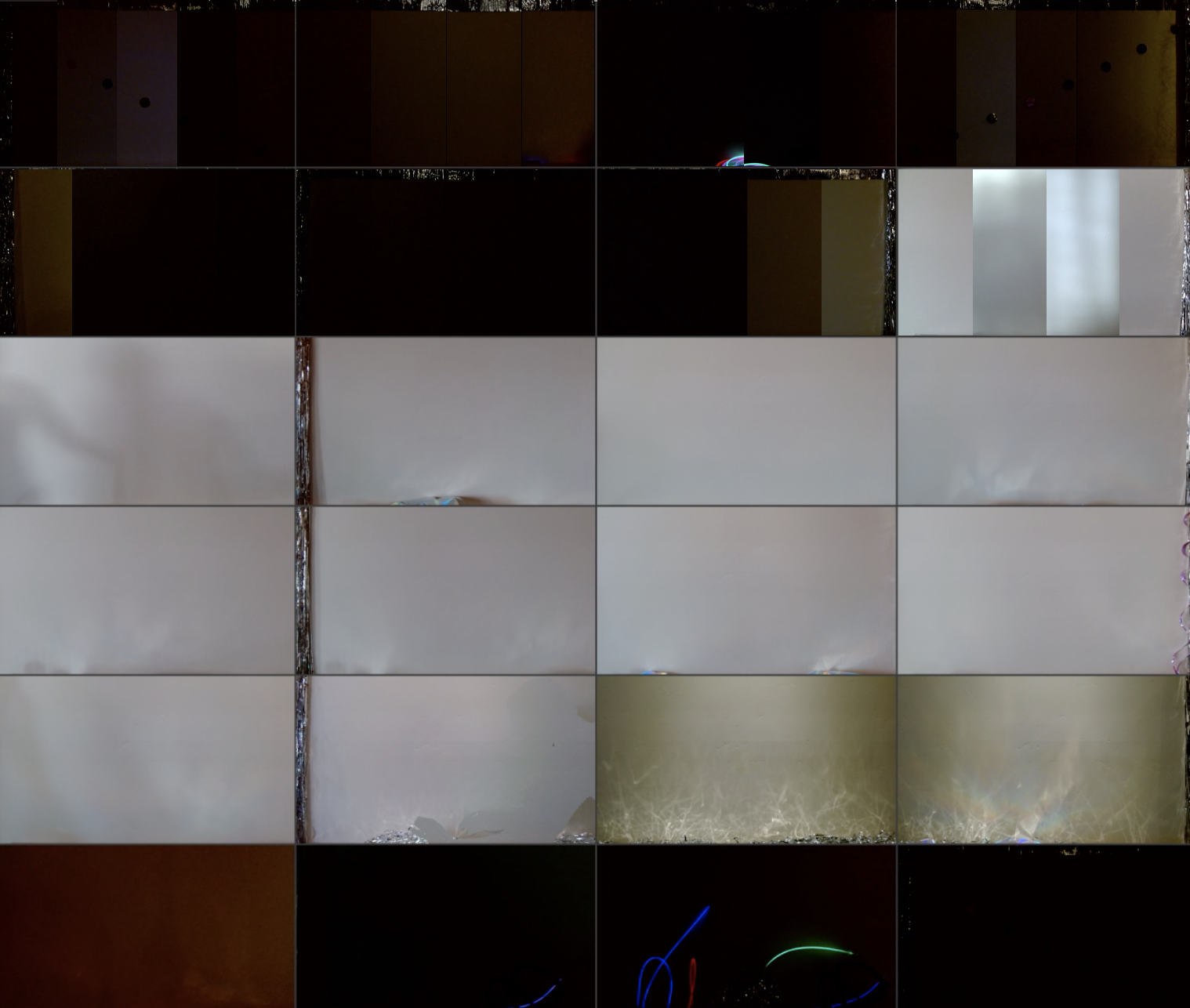
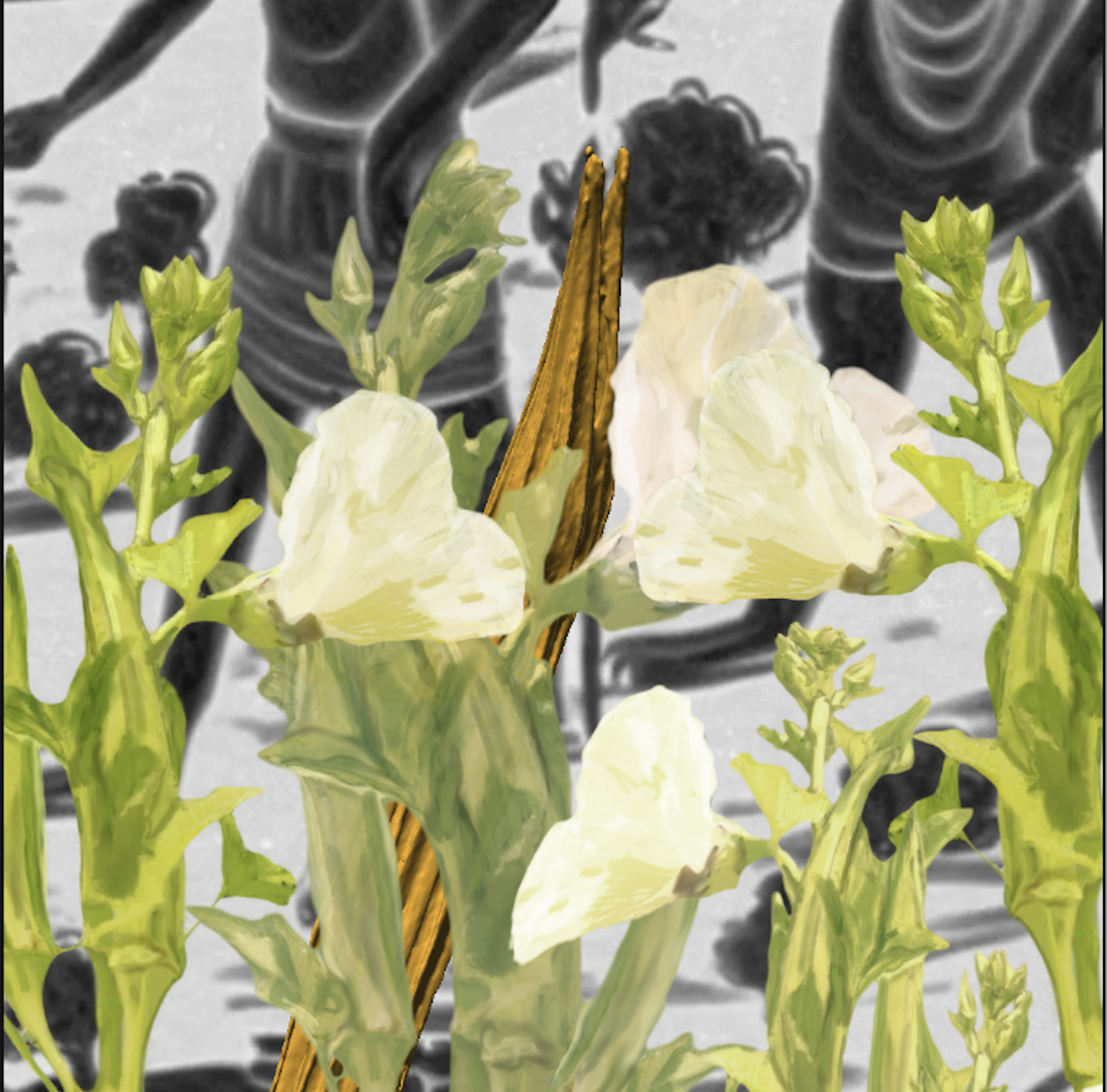
In your case, Sara, collectors are buying time codes for video clips that are part of a 24-hour performance you filmed. The purchased clips appear on a website in a cube-like environment, and collectors construct a visual space together. Stephanie, you created an image serial that depicts the travels of an okra pod through space and time, evoking the Africans with whom it traveled east and continuing the pod’s path in virtual space. Collectors are revealing the past, present, and future of the narrative. What drew both of you to taking this approach and asking collectors for an act of faith and collective “storytelling” in an environment that thrives so much on the proof of ownership of specific images?
Sara Ludy: While blockchain technology asserts provenance and permanence and the NFT art world hypes tech processes and tools, I’ve been seeking ways to counter and extend beyond those frameworks and trends. In 2021, I created “Plants are everywhere you can’t see them,” a Fluxus-inspired set of instructions that prompts viewers to collectively imagine a space filled with plants. As a conceptual space, it can be accessed anywhere at any time outside any media, allowing the artwork to escape its perceived blockchain boundary. “Synchronicities” also exists in this realm, where not only do collectors build and share a vision together, they are asked to engage in an act of faith in themselves and inner vision. Without this, the piece cannot be activated nor unfold. The work is reliant upon the act of minting, as the piece itself is about connecting inner and outer realities.
Stephanie Dinkins: Whenever I engage in a new, or new-to-me technology, my efforts are explorations to try to get to know what the technology is capable of and how a given system operates. Working with a system materially is a way of understanding and thinking through its opportunities and implications for myself, the communities I hold dear, and society at large. By creating a loose NFT narrative featuring people and ways of being that are often depreciated or depicted from a singular, often detrimental point of view, I am requesting the cooperation and care of a particular community in which I reluctantly participate and of which I am part only peripherally. Instead of engaging the “what is” of the NFT ecosystem, which often seems to echo some of our most banal capitalist tendencies, I seek alternative uses of the space. “Okra Continuum” requires participation, respect, openness, risk, and curiosity to become whole. Each purchase requires an act of altruism and faith by the collector. That to me is a metaphor for a small step toward repair of the collective American, perhaps even global, psyche.
CP: Alfredo, Amelia, Marina and Ira, in different ways your works all relate to environmental conservation — of seeds, the rainforest, and oyster reefs, respectively. Do you think that the blockchain, if used in environmentally conscious ways, has untapped potential for supporting environmental causes? Or is it just a convenient vehicle at this moment when so much attention is focused on it? (Getting the elephant off the chain, the carbon footprint of NFTs rightfully has been discussed extensively, and all of you are committed to minting with the lowest possible carbon footprint, using proof-of-stake minting. We also need to acknowledge that most exhibitions, digital or not, take their toll on the environment — from creating to crating, shipping, installing, and presenting work, artist travel etc.)
ASC: To me, the blockchain feels like a vehicle for making the best out of a system that doesn’t benefit nature. By extension, this applies to the entirety of capitalistic thought and society. I love the saying “There is no ethical consumption under capitalism…” For me the blockchain is another opportunity to use my creations to benefit a cause I care about. I find it fascinating that we have somehow tricked ourselves into believing that the files and programs in our computers don’t actually have any presence in the IRL world. Many people are convinced that Digital=Ethereal while, in reality, it has an enormous impact on earth as a whole. The internet exists physically, entangling the vast majority of the planet, its tentacles are thousands of miles of submarine cables. It’s an interesting phenomenon that the question of computers and the digital world being damaging to our environment is flaring up so much more with NFTs than before. In other words, the digital world has always posed a threat to the natural world. One of the ways in which I can reconcile these extremely contrasting realities is to use the NFT world to somehow nourish the natural world.
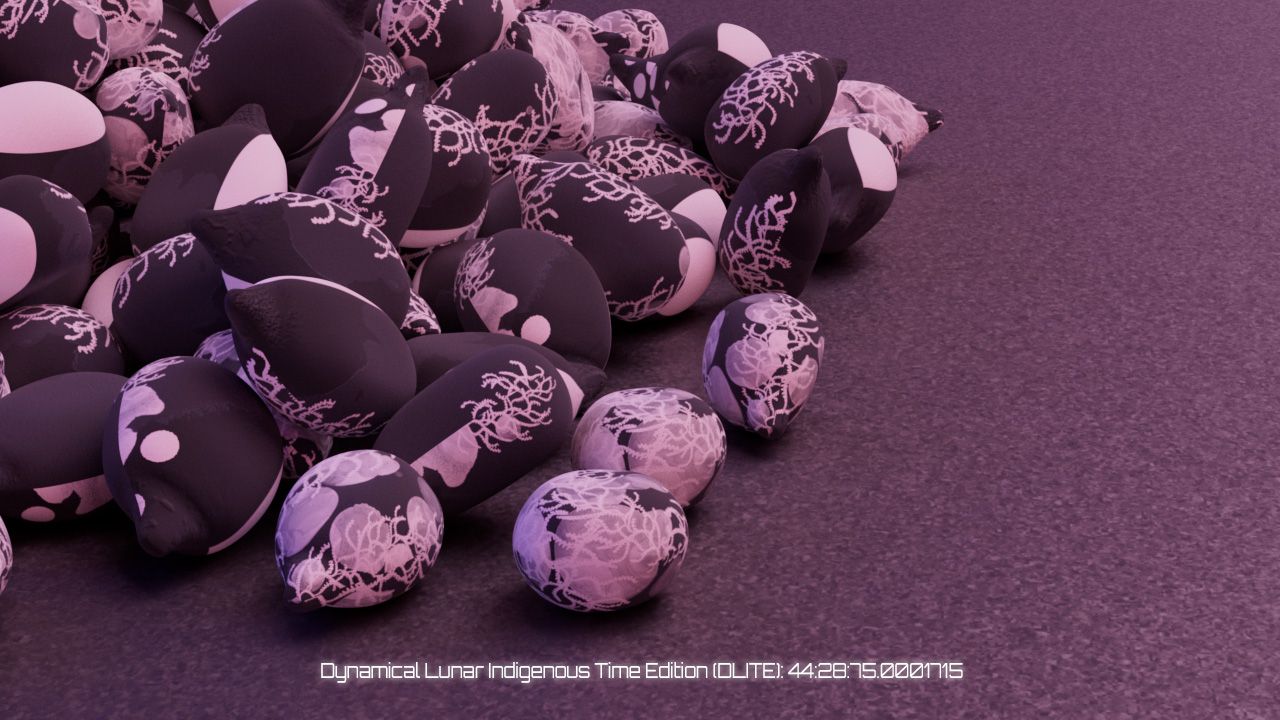
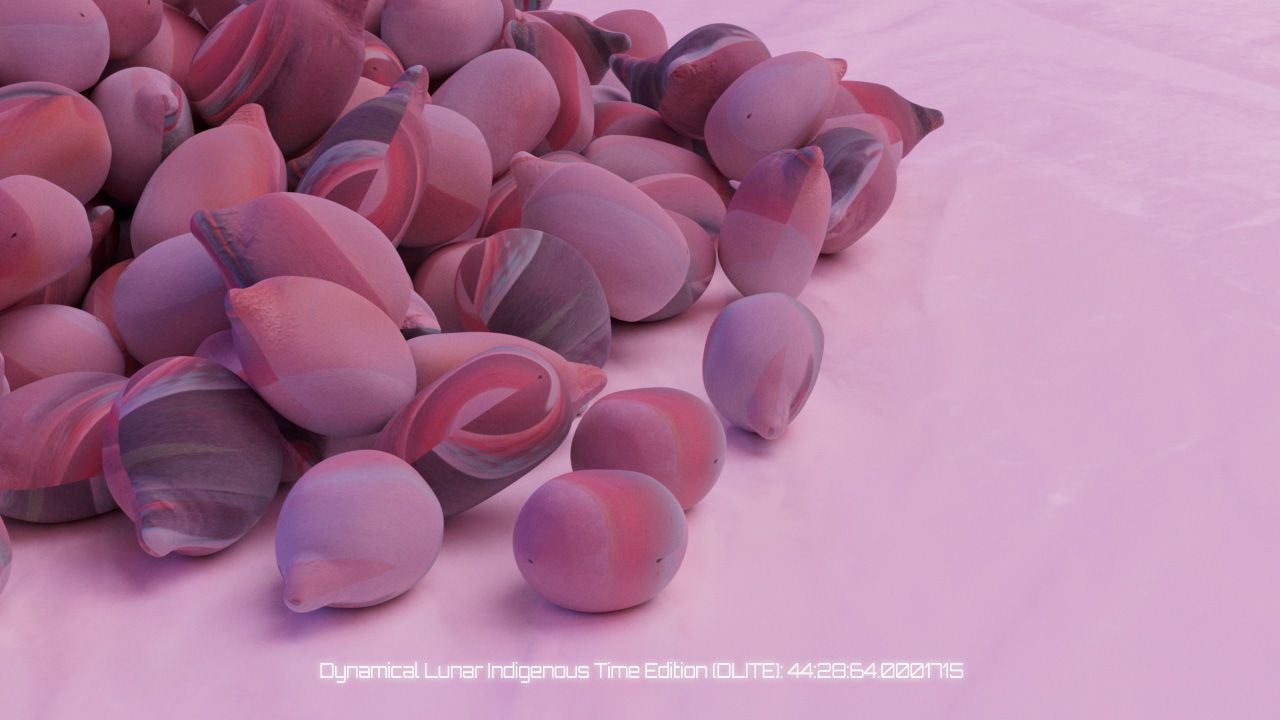
Amelia Winger-Bearskin: My “Seed Protocol” images are inspired by lunar botany and the pioneering work of plant molecular biologists Robert Ferl and Anna-Lisa Paul, who lead a team at the UF Space Plant Lab focused on growing plants in space. I met Dr. Paul through a friend who is a fellow affiliate faculty of the UF Water Institute, which was the first affiliation I pursued after accepting my role as an Endowed Chair in AI & The Arts at UF. I have a strong affinity for “water people” (water science is a broad field), and “water people” possess a unique and passionate approach to their work. As an artist, I feel most at home with fellow artists, musicians, and water scientists.
I’ve created a collective focused on science storytelling around the global water crisis: Talk to Me About Water, which includes my sister, a computer scientist at the USGS specializing in water data publication, and other artists, philosophers, coders, AI researchers, and musicians. I consider myself a “water person” as it is currently my primary area of ecological research. Dr. Anna-Lisa Paul is the first botanist I have worked with, and her research has become an obsession for me. We met while collaborating on a grant application, and she opened my mind to incredible research around lunar botany that she has championed. We discussed the moon as a place and a framework for botany, stories, values, and the future of botanical relationships with humans.
As someone who believes in the seven generations principle, which holds that our actions today will have a lasting impact on the next seven generations, lunar botany is a powerful way to consider the future and the protocols we need for plants and water. People all over the world have diverse approaches to seed-keeping, and there are many groups dedicated to ancestral seed practices, including heirloom seed Facebook groups, seed libraries, and indigenous seed-keeping non-profits. Dr. Anna-Lisa Paul shares this commitment to preserving seeds and explores how the moon can be a part of this story.
The moon is special in my cultural stories as a member of the Seneca-Cayuga Nation of Oklahoma. The moon is grandmother moon, and it is part of the celestial ocean on which we drift. I find it intriguing that the research project that takes Dr. Paul’s seeds to the moon is called Artemis, the sister of Apollo, the moon. I too explore the future of plants and water with my own sister.
For the past three decades, the prevailing explanation for the moon’s origin was that it resulted from the collision of two protoplanets or embryonic worlds. One was the newborn Earth, and the other was a Mars-sized rock nicknamed Theia, after the mother of the moon in Greek myth. However, recent studies have challenged this theory and opened up new possibilities for understanding the origins of the earth and the moon. As science continues to evolve, so does our understanding of the stories we inherit and pass down through the generations and the role we choose to take as protectors, defenders, and caretakers of an important family member: our seeds.
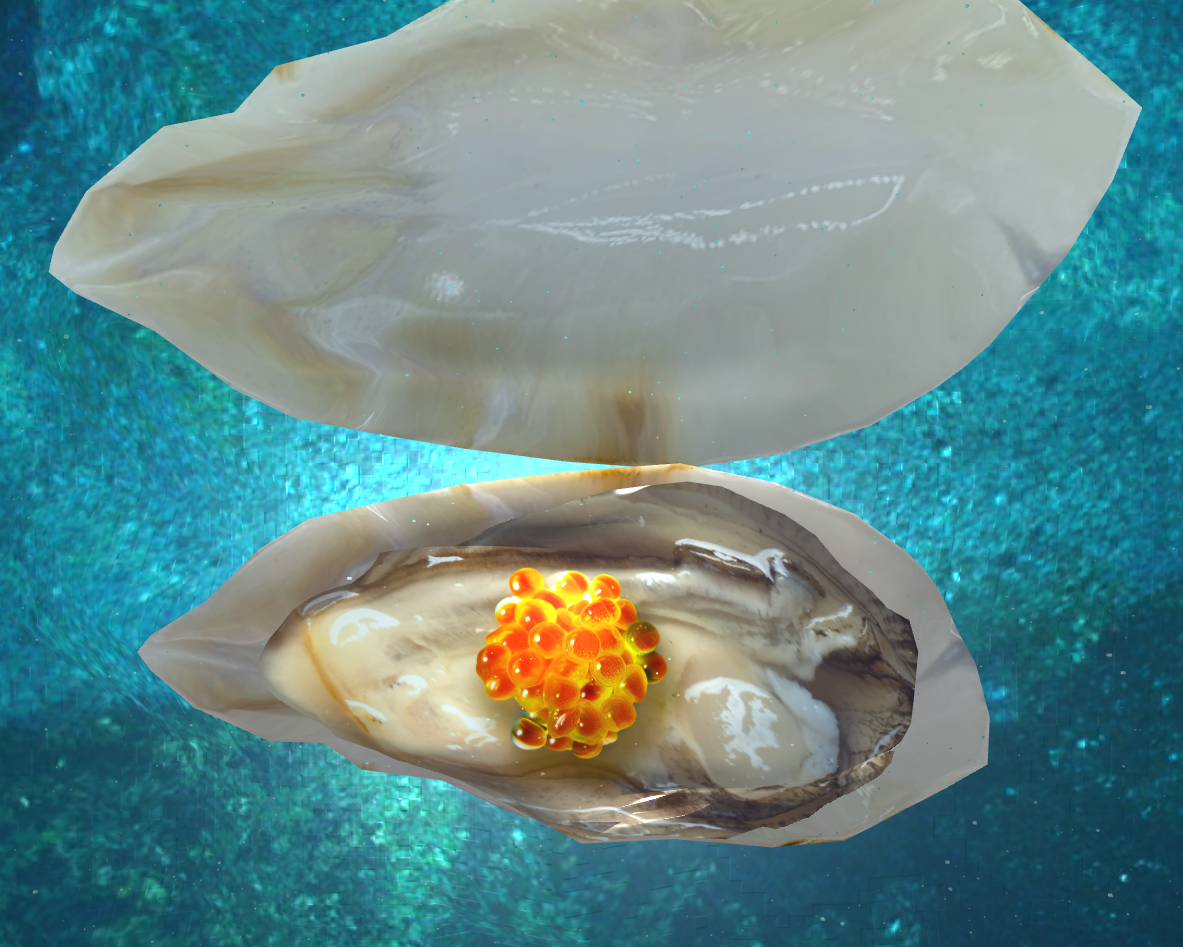
IR/MZ: For us, there is a powerful metaphoric opportunity here to connect the oceanic nature of digital worlds and the real oceans’ planetary force and ecosystems. One complaint we’ve had as makers and teachers is the absence of a “cradle to grave” consciousness when it comes to perceiving digital media, the internet, etc. The work seems to begin and end inside of the computer, despite the strong awareness (in some sectors) of the great expenditure of energy on minting. (And, as Christiane said, all art, not to mention gaming, requires great expenditures of extracted resources — even renewables, which require materials to run.) We are using “The Dorises” as a prototype, to assess if we can engage in a much larger philanthropic venture (more oysters/cheaper baseline, or a diverse coral reef structure). Our thinking was to create a platform akin to a mini-DAO, where the collectors become stakeholders who co-determine where funds are distributed and do some decision-making together on behalf of ocean projects, be they awareness, farming, or conservation. This voting schema is premised on some U.S. city governments’ adoption of participatory budgeting as a way to empower the populace/stakeholders.
CP: Alfredo, Stephanie,Marina and Ira, all of you used AI as a tool for generating elements of your NFTs. Can you talk a bit more about the process and what the use of AI conceptually means for your project? Obviously, AI is used as a tool and medium in many digital art projects right now, but does it connect in any particular way to the NFT space, which prompts the creation of serial image sequences?
ASC: I actually only used AI to generate some of the geometry nodes in my piece, meaning it was mostly a tool, and not a conceptual part of the project. In the end I shifted from creating 100 unique versions of the edition — which would have involved AI more conceptually — to a unique render. I may still make more versions of the piece with AI later on…
SD: I prompted a text-to-video stable diffusion model with detailed narrative descriptions and time signatures to create short videos based on a fictional narrative. I then mined these videos for the stills that form the sequential background for my NFTs. A flying okra pod was added to each still “by hand,” if you will, using Photoshop. So, here I am partnering with the AI to create something I could not do otherwise. Conceptually, AI is tangential to this work. It did, however, extend my ability to quickly meet some demands — speed, quantity, and uniqueness — of the NFT space.
IR/MZ: Using AI for many of the elements of “The Dorises” made conceptual sense to us, in thinking about the collective body of knowledge available through the AI text-to-image databases (highly problematic issues of attribution aside).
CP: Since its introduction in 2008, the blockchain has seen various ups and downs, particularly in its intersection with cryptocurrencies. In your opinion, what will be the future of the blockchain as a “social space,” meaning an environment tied to human inter- and transactions? Is the blockchain here to stay as a medium for art? What does it mean to create art in an environment that has increasing dependencies on technological and commercial infrastructures that are beyond an artist’s control?
ASC: Commercial infrastructures and technological dependencies have in a way always been beyond the artist's control. That’s not to say there haven’t been times when artists have taken full control of how they produce and show their oeuvre. I think that makes the Blockchain/Crypto/NFT worlds not much different from the previous power structures in the art world. I do believe that these new structures are here to stay and will be the new standards for anyone who engages in the socioeconomic world of the digital — the metaverse, etc.
SL: I have a hard time imagining a future where artists are fired up about the blockchain as a medium and an easy time imagining a future where artists have adopted post-digital practices. Climate change adaptability is and will become much more real, and the ideas and aesthetics of permanence and stability that blockchain technology wants to promise are at odds with that.



