Feral File logoFeral File logo

Peer to Peer - Art exhibition on Feral File

Curator’s Note

Tina Rivers Ryan avatar

Tina Rivers Ryan

21 November 2022

On the Museum as Cultural Protocol

One of the most-discussed cultural shifts of the past two years is the unprecedented surge of interest in digital art. Although galleries, museums, and festivals have been publicly exhibiting digital art for decades, its sudden popularity is tied to the relatively new phenomenon of trading digital assets (including artworks and also cryptocurrencies, collectibles, and memes) via blockchains, or distributed ledgers of digital records secured by cryptography. Formerly known as “computer art,” digital art first emerged in the 1960s, when artists and technologists began using computers to create novel aesthetic forms, such as algorithmically-generated abstract compositions. Today, it is a diverse field that includes not only digital images, videos, and 3D printed sculptures, but also networked, interactive experiences ranging from websites to virtual worlds, online games, and social media performances. Despite their technological novelty, many of these works explore the same themes that recur throughout modern and contemporary art, including the relationship between abstraction and figuration, the creativity of the unconscious mind, and the definition of art as a conceptual system. Inarguably, blockchains have helped create new markets and audiences for digital art; in rarer cases, blockchains have become a new medium, as some digital artists use blockchain-based tokens and smart contracts just as painters use canvas or sculptors use marble. Since its founding in 1862 as one of the world’s first museums devoted to the art of the present, the Buffalo AKG Art Museum (formerly the Albright-Knox Art Gallery) has helped define artistic movements as they emerge. For example, the AKG presented the first major museum survey of photography in 1910 (organized by Alfred Stieglitz’s Photo-Secession), helping to legitimate these new images as examples of fine art that deserve to be displayed alongside paintings and sculptures. As digital technologies increasingly influence every aspect of our lives, the AKG has an important opportunity — and even responsibility, given its mandate to operate in the public trust — to help identify the artists who are creatively and critically exploring the aesthetic potentials and social consequences of these powerful new tools. Museums regularly organize group exhibitions to map the terrain at the cutting edge of art; singling out key digital artists from the broad field of those who have experimented with blockchains amplifies those approaches that are shaping the evolution of not only art markets, but also art history. Many of these artists are even shaping technology itself, whether by pioneering new applications or questioning its supposed “neutrality.” Building on its history and mission, the AKG has organized Peer to Peer, an exhibition of new artworks made by 13 of the leading artists who are exploring the impact of blockchains on the production and distribution of digital art and the future of the internet. Mirroring the global networks of digital art since the 1990s and blockchains since the 2010s, these artists are from not only North America and Europe, but also Central America, South America, the Middle East, and Africa. Their works similarly exemplify the rich diversity of digital art: they were produced with a variety of technologies and applications, from Artificial Intelligence to 3D modeling and Microsoft Word to Processing. The resulting works exist in a range of formats, from PDFs and PNGs to GIFs, MOVs, software applications, and smart contracts. Importantly, the artists in this show approach their respective tools and mediums as productive constraints, thereby drawing our attention to their capabilities. At the same time as they contribute to a larger conversation about technology, the works in Peer to Peer also update or expand our notion of different artistic genres and aesthetic strategies. For example, one might classify roughly a third of the works as figurative (Mitchell Chan, Amir Fallah, Auriea Harvey, Osinachi, Sarah Zucker); another third as generative (Entangled Others, Casey Reas, Itzel Yard/Ix Shells, Anne Spalter); and a final third as conceptual works dealing with blockchains and the metaverse (LaTurbo Avedon, Simon Denny, Sarah Friend, Rhea Myers). But they also prompt a reevaluation of those art-historical paradigms: what does it mean to make “figurative” art after processes like photogrammetry have transformed how we model volumes in space, “generative” art after algorithms have infiltrated every moment of our lives, or “conceptual” art after the dematerializations of the information economy? To foreground these questions, Peer to Peer stages an exchange between these artists and their historical “peers,” pairing each new work with an existing work in the AKG’s renowned collection of modern and contemporary art. The new works are less digital recreations of their analog antecedents than responses that speak in more or less direct ways to their concepts or composition. Of course, the practice of citing other artists is itself a time-honored tradition in art, as each generation works through (and defines itself against) the achievements of its peers and predecessors. The collection artworks selected by the artists in Peer to Peer are as varied as their homages, including a genre painting by Winslow Homer; neo-classical caryatids by Augustus Saint-Gaudens; a Surrealist landscape by René Magritte; an abstract composition by Mark Rothko; and a language-based work by Joseph Kosuth. The exhibition thereby celebrates both the continued relevance of the historical “peers” to our contemporary moment and the contributions of the new “peers” to art’s ever-expanding network of ideas. The exhibition also highlights the important role of the museum as a facilitator of encounters between artists over generations, thanks to its commitment to conserving cultural heritage. Peer to Peer is an online exhibition presented in partnership with Feral File, which has emerged as a leading platform for curated exhibitions of file-based artworks. Although it has an end date, it will in fact remain viewable on the Feral File website — a new model for making museum exhibitions more accessible. After the first week, the works in the show will be offered for purchase as limited editions sustainably registered on the Ethereum blockchain. Half the proceeds from the sales will benefit the museum, which reopens in 2023 with a state-of-the-art gallery dedicated to media art and a hands-on digital technology lab. As the Buffalo AKG’s first fully-online exhibition and fundraiser, Peer to Peer is an experiment in how the museum might adopt (or adapt) new technologies to continue supporting those artists whose practices expand the practice of art, as well as art’s audiences. In computing, “peer to peer” networks decentralize file-sharing, allowing users to send and receive files directly between computers, without relying on a centralized database that is controlled by a single authority. The exhibition’s title is thus also a provocation about the future of museums: how might our institutions change if we imagine them not only as centralized repositories, but also as a kind of cultural protocol facilitating the open exchange of ideas between artists and their contemporary peers, historical predecessors, cultural workers, and public audiences? We may then also want to ask the inverse about the future of technology: how might blockchains change if we imagine them not simply as autonomous agents of decentralization that will make existing institutions obsolete, but also as public infrastructures embedded within — and accountable to — the larger social sphere?

1. Peer to Peer itself pays homage to A2P, or “Artist to Peer,” a project initiated by Feral File founder Casey Reas, in which artists were invited to swap free editions of their work with each other via the Bitmark blockchain. The first edition (V1) was curated by Reas with Addie Wagenknecht, Rick Silva, and exonemo, and transpired in Fall 2019; the second edition (V2) was curated by Reas with Iris Long and Carol Sabbadini, and transpired in Spring 2020.

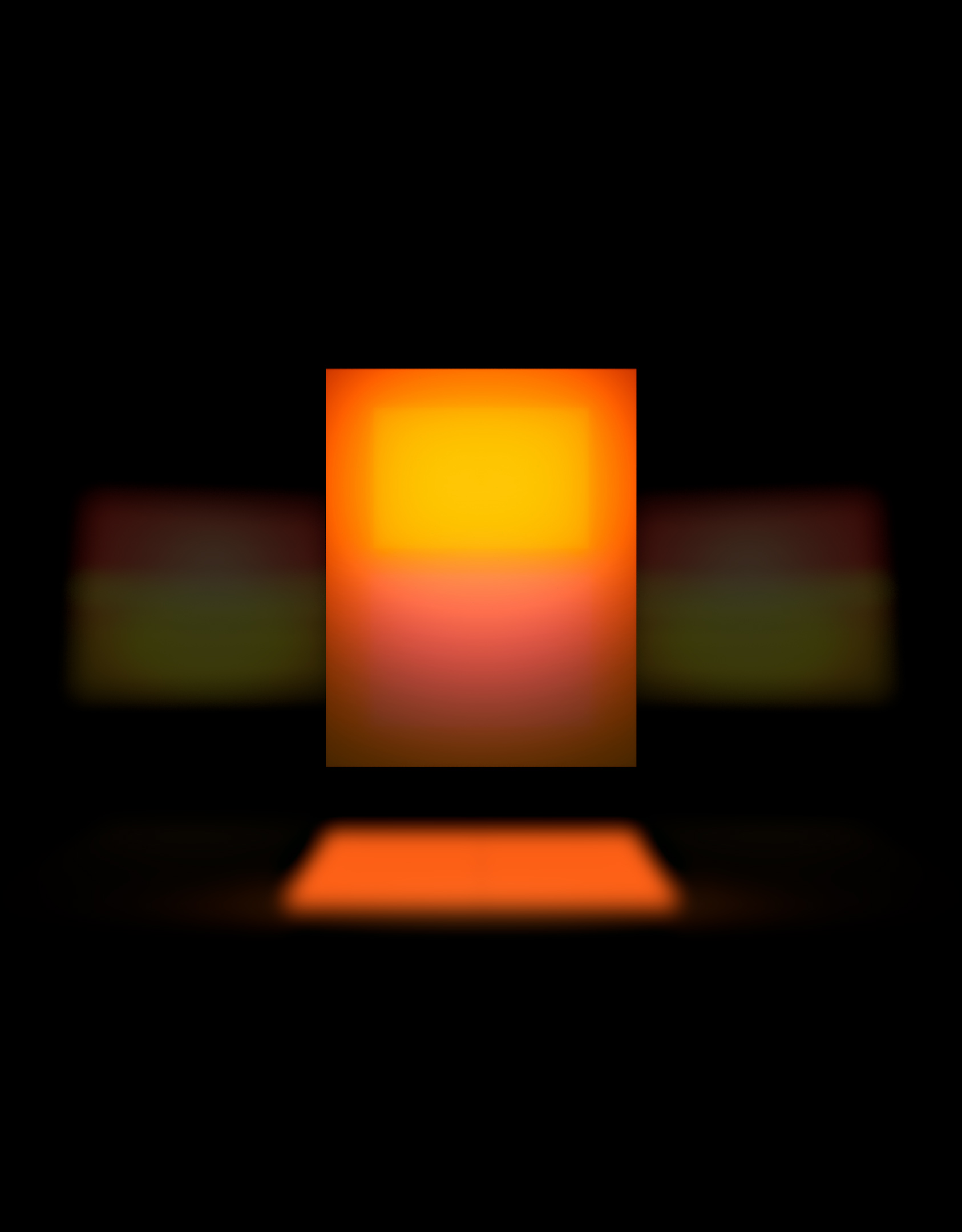
CLUB ROTHKO - ORANGE AND YELLOW STARTER PACK by LaTurbo Avedon

LaTurbo Avedon

CLUB ROTHKO - ORANGE AND YELLOW STARTER PACK

Edition of 5

Winslow Homer’s Croquet Challenge by Mitchell F. Chan

Mitchell F. Chan

Winslow Homer’s Croquet Challenge

Open Artwork
Swim by Entangled Others

Entangled Others

Swim

1/1
Metaverse Landscape 1: Decentraland Parcel -81, -17 by Simon Denny

Simon Denny

Metaverse Landscape 1: Decentraland Parcel -81, -17

Open Artwork
Wheel of Life thumbnail

Amir H. Fallah

Wheel of Life

Edition of 8

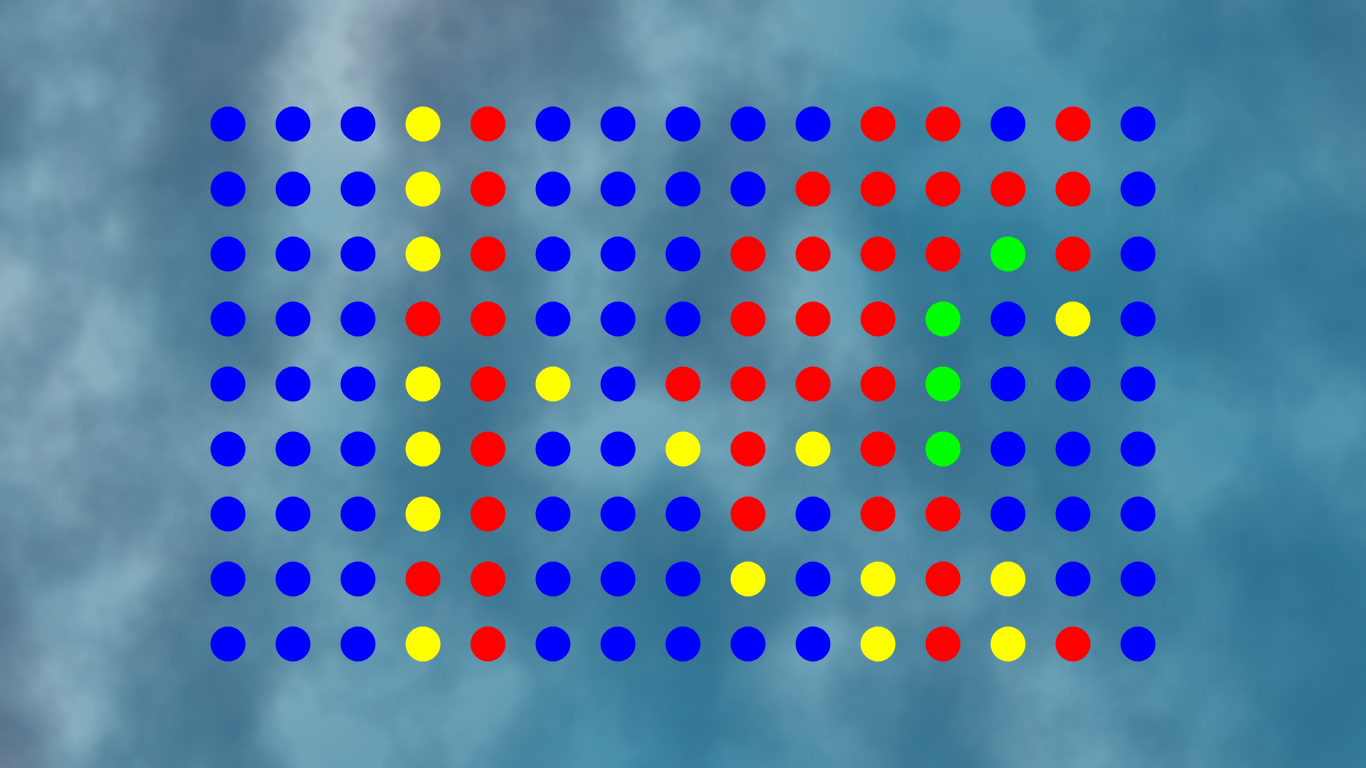
Evolutionary Games and Spatial Chaos, Letters to Nature, 1992 by Sarah Friend

Sarah Friend

Evolutionary Games and Spatial Chaos, Letters to Nature, 1992

1/1
Marisol/Daphne/Auriea by Auriea Harvey

Auriea Harvey

Marisol/Daphne/Auriea

Series of 3 works

Titled (Information as Property as Art) [Ethereum Null Address] by Rhea Myers

Rhea Myers

Titled (Information as Property as Art) [Ethereum Null Address]

Edition of 8

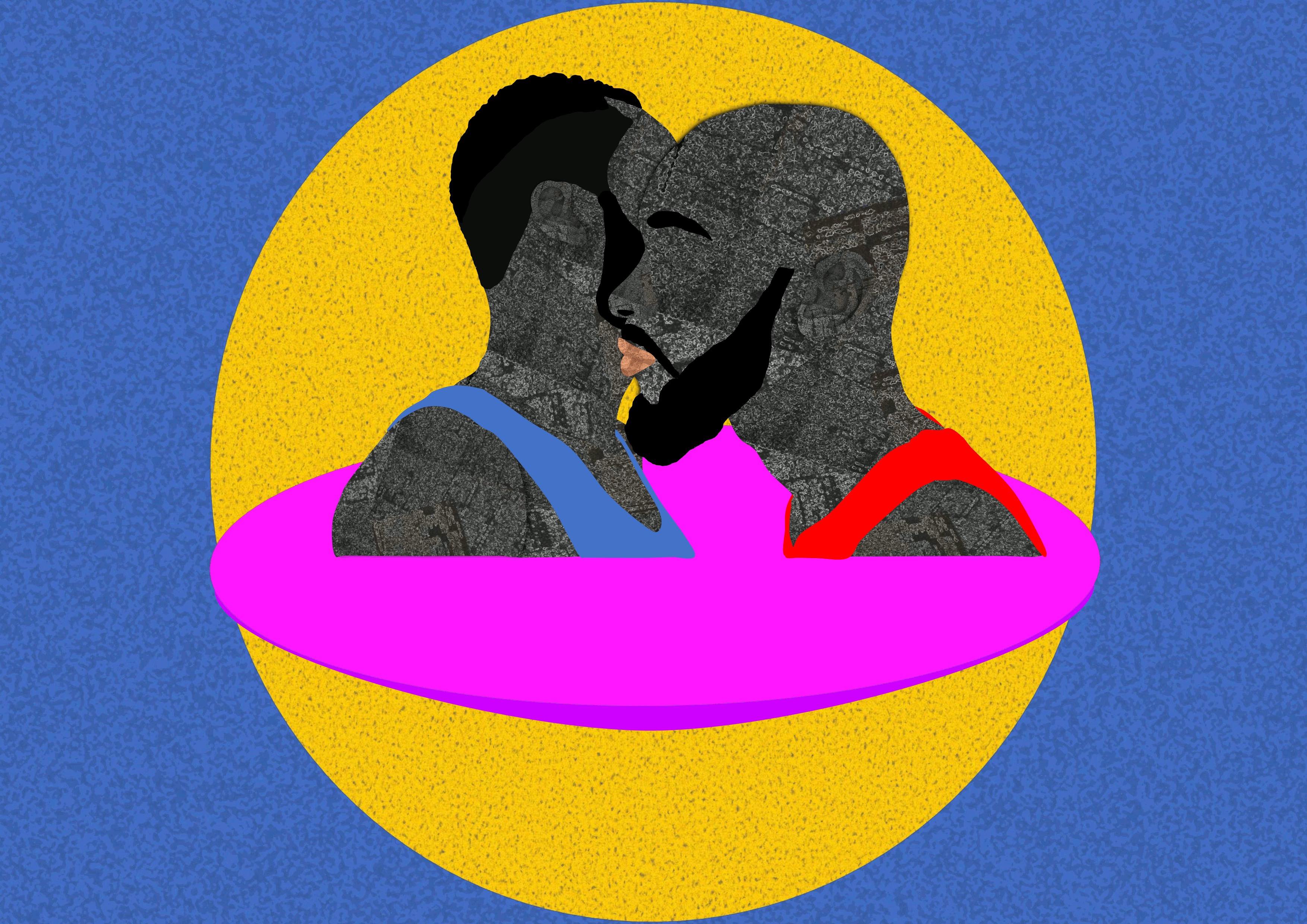
+rave-sing (traversing) by Osinachi

Osinachi

+rave-sing (traversing)

1/1
METASOTO by Casey REAS

Casey REAS

METASOTO

Series of 64 works

The Bell Machine by Anne Spalter

Anne Spalter

The Bell Machine

1/1
Bend by Ix Shells

Ix Shells

Bend

Edition of 7

Caryatid: Vision by Sarah Zucker

Sarah Zucker

Caryatid: Vision

1/1
Caryatid: Thought by Sarah Zucker

Sarah Zucker

Caryatid: Thought

1/1
Caryatid: Wink by Sarah Zucker

Sarah Zucker

Caryatid: Wink

1/1
Caryatid: Recursion by Sarah Zucker

Sarah Zucker

Caryatid: Recursion

1/1
LaTurbo Avedon avatar
LaTurbo Avedon is an avatar and artist, creating work that emphasizes the practice of non-physical identity and authorship. Avedon has spent the past decade developing a body of work that illuminates the ever-growing intensity between users and the virtual, pursuing creative environments that deepen the meaning of immaterial experiences. They curate and design Panther Modern, a file-based exhibition space that encourages artists to create site-specific installations for the Internet. LaTurbo’s process of character creation continues through gaming, performance and exhibitions. Their work has been exhibited and collected internationally.
View Full Profile
Mitchell F. Chan avatar

LocationToronto, Canada

Mitchell F. Chan produces a diverse body of work, performed in both physical and digital public spaces. His blockchain-based work posits crypto as a harbinger of a fully dematerialized world, and conceptualism as a tool for understanding it. Examples include 2017's Digital Zones of Immaterial Pictorial Sensibility, one of the earliest non-fungible token artworks, and 2021's LeWitt Generator Generator, on Art Blocks. In physical spaces, he has produced permanent large-scale public projects across North America, most recently Monument to United Nations Peacekeeping Veterans (2022). His work has been discussed in numerous media outlets including Artforum, Kunstforum, VICE, Canadian Art, Slate, the Toronto Star, Gizmodo, and Art In America.
View Full Profile
Entangled Others avatar

LocationBerlin, Germany

Entangled Others is the shared studio practice of artists Feileacan McCormick and Sofia Crespo. Their work focuses on ecology, artificial lifeforms and generative arts, with an emphasis on giving the more-than-human new forms a presence and life in digital space. This involves exploring questions of relationship, biodiversity, and awareness through biology-inspired technologies. They highlight how, through conscious efforts, new technology can be used to bring attention and awareness to the unseen that we are tightly interwoven with. Entanglement is a complex state one where no single entity can be said to be separate, or somehow unaffected, by any other present entangled, we cannot consider ourselves without others, act without interacting, speak without being heard.
View Full Profile
Default avatar

LocationBerlin, Germany

Simon Denny (b. 1982 Auckland, New Zealand) lives and works in Berlin, Germany. He makes exhibitions that unpack the social and political implications of the technology industry and the rise of social media, startup culture, blockchains and cryptocurrencies, using a variety of media including installation, sculpture, print and video. He studied at the Elam School of Fine Arts, University of Auckland and at the Städelschule, Frankfurt am Main. Denny has curated significant exhibitions about blockchain and art such as Proof of Stake at Kunstverein in Hamburg (2021) and Proof of Work at Schinkel Pavillon, Berlin (2018). Recent solo exhibitions include Dotcom Séance on folia.app, www.dotcomseance.com (2021), K21–Kunstsammlung Nordrhein-Westfalen, Düsseldorf (2020); the Museum of Old and New Art (Mona), Tasmania (2019); MOCA, Cleveland (2018); OCAT, Shenzhen (2017); Hammer Museum, Los Angeles (2017); WIELS Contemporary Art Centre, Brussels (2016); Serpentine Galleries, London (2015); MoMA PS1, New York (2015); Portikus, Frankfurt (2014) MUMOK, Vienna (2013); Kunstverein Munich (2013). He represented New Zealand at the 56th Venice Biennale in 2015. His works are held in institutional collections including Hamburger Kunsthalle (Hamburg), Kunstsammlung Nordrhein-Westfalen, (Düsseldorf), MoMA (New York), Walker Art Centre (Minneapolis), Kunsthaus Zürich (Zürich), Sammlung zeitgenössischer Kunst der Bundesrepublik Deutschland (Berlin) and Museum of New Zealand Te Papa Tongarewa (Wellington). He co-founded the artist mentoring program BPA//Berlin Program for Artists and serves as a Professor of Time-Based Media at The Hochschule für bildende Künste Hamburg.
View Full Profile
Amir H. Fallah avatar

LocationLos Angeles, U.S.

Amir H. Fallah received his BFA in Fine Art & Painting at the Maryland Institute College of Art and his MFA in painting at the University of California, Los Angeles. He has exhibited extensively in solo and group exhibitions across the United States and abroad. Selected solo exhibitions include the Museum of Contemporary Art in Tucson; South Dakota Art Museum, Brookings SD; Schneider Museum of Art, Ashland OR; San Diego ICA; and the Nerman Museum of Contemporary Art, Overland KS. ​ In 2009, the artist was chosen to participate in the 9th Sharjah Biennial. In 2015, Fallah received the Joan Mitchell Foundation Painters and Sculptors Grant. In 2019, Fallah’s painting Calling On The Past received the Northern Trust Purchase Prize at EXPO Chicago. In 2020, Fallah was awarded the COLA Individual Artist Fellowship and the Artadia grant. In addition, the artist had a solo exhibition at the Museum of Contemporary Art, Tucson, accompanied by a catalogue, and a year-long installation at the ICA San Jose. ​ The artist has works in the permanent collections of the Los Angeles County Museum of Art, Los Angeles; Birmingham Museum of Art, Alabama; Jorge M. Pérez Collection, Miami; Deste Foundation For Contemporary Art, Athens, Greece; Xiao Museum Of Contemporary Art, Rizhao, China; McEvoy Foundation For The Arts, San Francisco; Nerman Museum, Kansas City; SMART Museum of Art at the University of Chicago; Davis Museum, Massachusetts; The Microsoft Collection, Washington; Plattsburg State Art Museum, NY; Cerritos College Public Art Collection, CA; Los Angeles County Department of Arts & Culture, CA; and Salsali Private Museum, Dubai, UAE.
View Full Profile
Sarah Friend avatar

LocationBerlin, Germany

Sarah Friend is an artist, software developer and researcher from Canada and currently based in Berlin, Germany. She is Visiting Chair of blockchain art at The Cooper Union. She is also a participant in the Berlin Program for Artists, a co-curator of Ender Gallery, an artist residency taking place inside the game Minecraft, and an organizer of Our Networks, a conference on all aspects of the distributed web. Recent solo exhibitions include Off: Endgame, curated by Rhizome, Refraction and Fingerprints at Public Works Administration, New York, USA and Terraforming at Galerie Nagel Draxler in Berlin, Germany.
View Full Profile
Auriea Harvey avatar

LocationRome, Italy

Auriea Harvey is a Rome-based artist whose practice encompasses virtual and tangible sculptures, drawings, and simulations while blending digital and handmade production. She is primarily concerned with making the mythological world visible through form, interaction, and immersion. Her works are a synthesis of art historical reference and imagination, and she is engaged across time, media, and material to define what sculptural production means in the present moment.

Harvey is half of the award-winning artist duo known as Entropy8Zuper!/Tale of Tales/Song of Songs, known for their pioneering works in internet art, video games, and mixed reality. Her work can be found in the permanent collections of institutions such as the Whitney Museum of American Art, Buffalo AKG Art Museum, Walker Art Center, KADIST Collection, RF.C Collection, and Rhizome’s Net Art Anthology. Her video games and VR works have been featured internationally within exhibitions at the Tinguely Museum, Basel; the Victoria & Albert Museum, London; the New Museum, New York; Brooklyn Academy of Music, New York; and ZKM, Karlsruhe.

View Full Profile
Rhea Myers avatar

LocationVancouver, Canada

Rhea Myers is an artist, hacker and writer originally from the UK now based in British Columbia, Canada. Her work places technology and culture in mutual interrogation to produce new ways of seeing the world as it unfolds around us. Since 2014 she has been using the blockchain to do so.
View Full Profile
Osinachi avatar

Artist

Osinachi

LocationLagos, Nigeria

Osinachi is the first and foremost crypto artist out of Africa. Based in Lagos, Nigeria the 31-year-old creates figurative portraits that mirror his personal experiences through a unique visual language that he has perfected over 15 years. His practice has led to conversations around NFTs and how works being produced in the space speak to a larger humanity. He is the creator of the widely successful pfp/avatar project 'Across the Face'.
View Full Profile
Casey REAS avatar

LocationLos Angeles, U.S.

Casey Reas (b. 1972, Troy, Ohio) is an internationally recognized artist and educator based in Los Angeles. His work spans software, installations, prints, and drawings to explore the relationship between computational systems and contemporary visual culture. Engaging with the history of conceptual art, drawing, and photography, Reas creates generative systems that unfold over time.


Reas’ work has been exhibited at the Whitney Museum of American Art, New York; Los Angeles County Museum of Art; San Francisco Museum of Modern Art; Centre Pompidou, Paris; Victoria and Albert Museum, London; and Ullens Center for Contemporary Art, Beijing. It has also appeared in major group exhibitions across Europe, Asia, and the Americas.


Alongside his studio practice, Reas is deeply engaged in expanding the ecosystem for software-based art. He co-founded Processing (2001), the open-source programming language and environment that has widely expanded creative coding for artists and designers, and the Processing Foundation (2012), which supports visual literacy and access to creative tools worldwide. In 2020, he co-founded Feral File, an online platform for exhibiting and collecting digital art.

View Full Profile
Anne Spalter avatar

LocationNew York, United States

Digital mixed-media artist Anne Spalter is an academic pioneer who founded the original digital fine arts courses at Brown University and RISD in the 1990s and authored the internationally taught textbook, The Computer in the Visual Arts. Her artistic process explores imagery of the modern landscape. Spalter has drawn on the writings of Carl Jung as well as science fiction novels and movies to develop a consistent set of personal symbols using a hybrid arsenal of traditional mark-making methods and innovative digital tools. Her crypto art has been auctioned by Sotheby’s and Phillips, and featured in the New York Times. She recently completed a successful 501-piece drop: AI Spaceships. Spalter is also noted for her large-scale public projects. MTA Arts commissioned Spalter to create a 52-screen digital art installation, New York Dreaming, which remained on view in Fulton Center for just under a year. Spalter’s work is in the permanent collections of the V&A Museum (London), the Buffalo AKG Art Museum (Buffalo, NY), the RISD Museum (Providence, RI), The Museum of CryptoArt, and others. Alongside her studio practice, Spalter continues to lecture on digital art practice and theory. She recently completed an alumni residency at MASS MoCA.
View Full Profile
Ix Shells avatar

Artist

Ix Shells

LocationPanama

Itzel Yard–recognised as Ix Shells–is a Panamanian-based artist and self taught coder. By playing video games during her childhood, Yard was able to tap into her creativity which prompted a deep fascination for coding at an early age. In recalling her pathway towards where she is now, Yard attributes a lot of her growth to her five-year stay in Toronto, where she studied architectural technology. Though this period was a tumultuous time in her life, it pushed her to find her own voice and creativity, through the safe space of computer science. By combining her observations of patterns in nature with her appreciation for Brutalist architecture, Yard had allowed computer science research to act as a digital simulation of an extension within her own mind, ultimately translating into generative art. While her creations portray a visual interpretation of the physical world, Yard intends every work to act as a metaphor of internal exploration. This narrative is written within each of her works through lines of code, acting as a context-based portrait of what Yard is experiencing at the time. She explains that her home is in her head– welcoming her audience to open a digital door into the artist’s own visual portrayal of self reflection. Her gentle nature, personable warmth, and sincere appreciation for the creation of her work produces a visual form of ingenuity that is unmatched.
View Full Profile
Sarah Zucker avatar

LocationLos Angeles, U.S.

Sarah Zucker is an artist and writer based in Los Angeles. Her work merges humor, myth and mysticism with the interplay of cutting edge and archaic technologies. She works across mediums. Her signature videos are produced by channeling video synthesis, animation and performance through a custom analog video rig onto physical VHS tapes in a unique digital-analog flow. She's been editioning her art on the blockchain since April 2019. In 2021, her work was part of "Natively Digital," the first curated NFT sale at Sotheby's, and "CryptOGs: The Pioneers of NFT Art" at Bonhams. Her work was shown as part of "Peer to Peer," the first survey of leading artists engaging with the blockchain presented at an American Museum. Her video art series "Four Caryatids" was among the first blockchain editions added to the permanent collection of the Buffalo AKG Art Museum. Her work was part of LACMA's "Remembrance of Things Future," a blockchain art initiative at the museum conceived and curated by Cactoid Labs. She was named to the NFT100 list in 2022 and 2023 by NFTNow as one of the top artists working with NFTs. She co-produced Prism Pipe, a monthly visual music event, at pehrspace in Los Angeles from 2014-2016. Her GIFs have over 7 billion views on Giphy. She is a Jeopardy! Champion. She holds a BA in Theater and Creative Writing for the Media from Northwestern University, and an MFA in Dramatic Writing from New York University.
View Full Profile

Peer to Peer smart contract:ethereum