Feral File logoFeral File logo

For Your Eyes Only - Art exhibition on Feral File

Curator’s Note

Domenico Quaranta avatar

Domenico Quaranta

16 December 2021

Notes for a Post-Human Human Vision

“Over the last decade or so...human visual culture has become a special case of vision, an exception to the rule. The overwhelming majority of images are now made by machines for other machines, with humans rarely in the loop,”1 artist Trevor Paglen wrote in 2016. Paglen’s statement doesn’t apply just to machine vision imagery and datasets: any born-digital or digitized image may or may not be seen by human eyes, but would always be seen by a number of machines— the device taking it, the computer we use to archive or edit it, the server where we upload it, and the number of algorithms active at any of these levels. Machines not only see images, they also turn them “operational.” According to Harun Farocki, “operational images” are images “not meant to inform the public or instruct people,”2 but to make something. Images taken by surveillance cameras, or by self-driving cars, are natively operational, but virtually any image gets, by default, “operationalized” at the very moment in which it goes under the gaze of a machine. In short, with the development of machine vision, visual culture has become a contested territory, and the human gaze and intelligence have become the minority group. Being aware of this ongoing process is crucial if we want to preserve what’s inherently human in the act of making, seeing, and interpreting images; if we want to keep hold of the field of vision. What’s at stake is not only the freedom of images—their existence outside of a given function, be it improving our user profile in order to sell us something, allowing other users to tag us in their pictures, training a machine to distinguish between a leaf and a flower, helping the security apparatus to identify a criminal, or the military to bomb a given spot. What’s at stake is also images’ irreducibility to a list of tags or a set of parameters, their ability to be something more than what they represent. What’s at stake is the very existence of human vision. How long will we be able to see and understand images in ways different from those of the machines we trained to see? Will images keep existing as a layered, ambiguous yet extremely rich and powerful, instrument of communication between humans that nobody and nothing else can master and understand as we do? If, according to Paglen, in order to understand machine vision we have to unlearn how to see like humans, this very unlearning only makes sense as the foundation of a recovery, and an improvement, of human vision. How can we do it? No image can escape the gaze of the machine; but images can resist it. They can do it by physically or digitally incorporating features that defy, at least by now, machine vision; by featuring ambiguities and nuances that defy, at least by now, machine intelligence. But more importantly, they can do it by displaying an emotional and semiotic complexity, an “infra-thin” dimension that may only be captured and understood by humans. Yet, in order to resist the gaze of the machine, images have to be crafted with this purpose in mind. Now more than ever, our visual vocabulary and its syntactic structure needs to be improved and turned into an encrypted code whose key cannot be attained by anything inhuman. This bestows image makers, and more specifically visual artists, with an extraordinary level of responsibility as the caretakers of human-readable visual language. For Your Eyes Only is a curatorial concept that aims to stimulate a conversation with contemporary artists about the future of human visual culture, and to investigate how they are working, in different ways, on the development of a visual language capable to resist the machine gaze and its implications, and to improve human visual communication—a post-AI, posthuman human vision. The exhibition includes images of diverse nature and origin, submitted as answers to the questions raised in this text. And yet, images can be used like words, but they are not words. They can be paraphrased, explained, and described, but no description will ever exhaust them. They can be used like answers, but they are rather proofs. They have been sent by a human to another human, each of them carrying much more than what I asked for. They are not delivering an answer, they are the answer. Try to read them, and you’ll soon find out that they have as many readings as readers. Enjoy, they’re for your eyes only.

1. Trevor Paglen, “Invisible Images (Your Pictures Are Looking at You)”, in The New Inquiry, December 8, 2016. 2. Chris Darke, “Images under the lens: A Conversation with essay film-maker Harun Farocki”, in Vertigo Magazine, vol. 2, Issue 5, Summer 2003.

ماه طلعت، Moon-faced by Morehshin Allahyari

Morehshin Allahyari

ماه طلعت، Moon-faced

Edition of 115

Marine Emojidiversity thumbnail

Sara Bezovšek

Marine Emojidiversity

Edition of 115

sextape by Émilie Brout & Maxime Marion

Émilie Brout & Maxime Marion

sextape

Edition of 115

Ganxillo by Anna Carreras

Anna Carreras

Ganxillo

Edition of 115

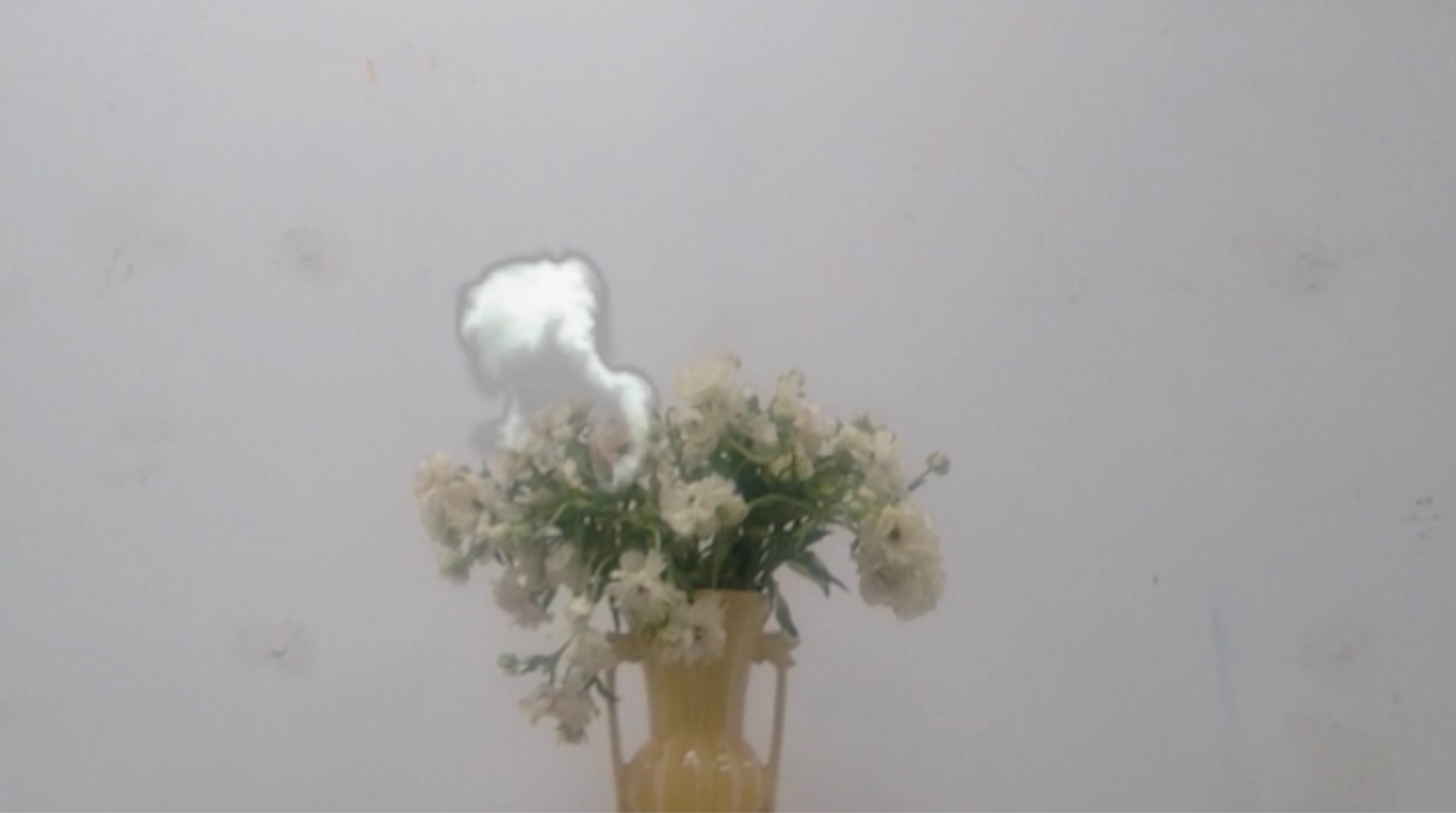
smoking-vase-1 by Petra Cortright

Petra Cortright

smoking-vase-1

Edition of 115

Fractura by Francoise Gamma

Francoise Gamma

Fractura

Edition of 115

Daemon (cene) by Theodoros Giannakis

Theodoros Giannakis

Daemon (cene)

Edition of 115

A Rose by Any Other Name by Kamilia Kard

Kamilia Kard

A Rose by Any Other Name

Edition of 115

Smart Cut by Jonas Lund

Jonas Lund

Smart Cut

Edition of 115

One Million Manga Pages thumbnail

Lev Manovich

One Million Manga Pages

Edition of 115

Daemon (chaos) by Petros Moris

Petros Moris

Daemon (chaos)

Edition of 115

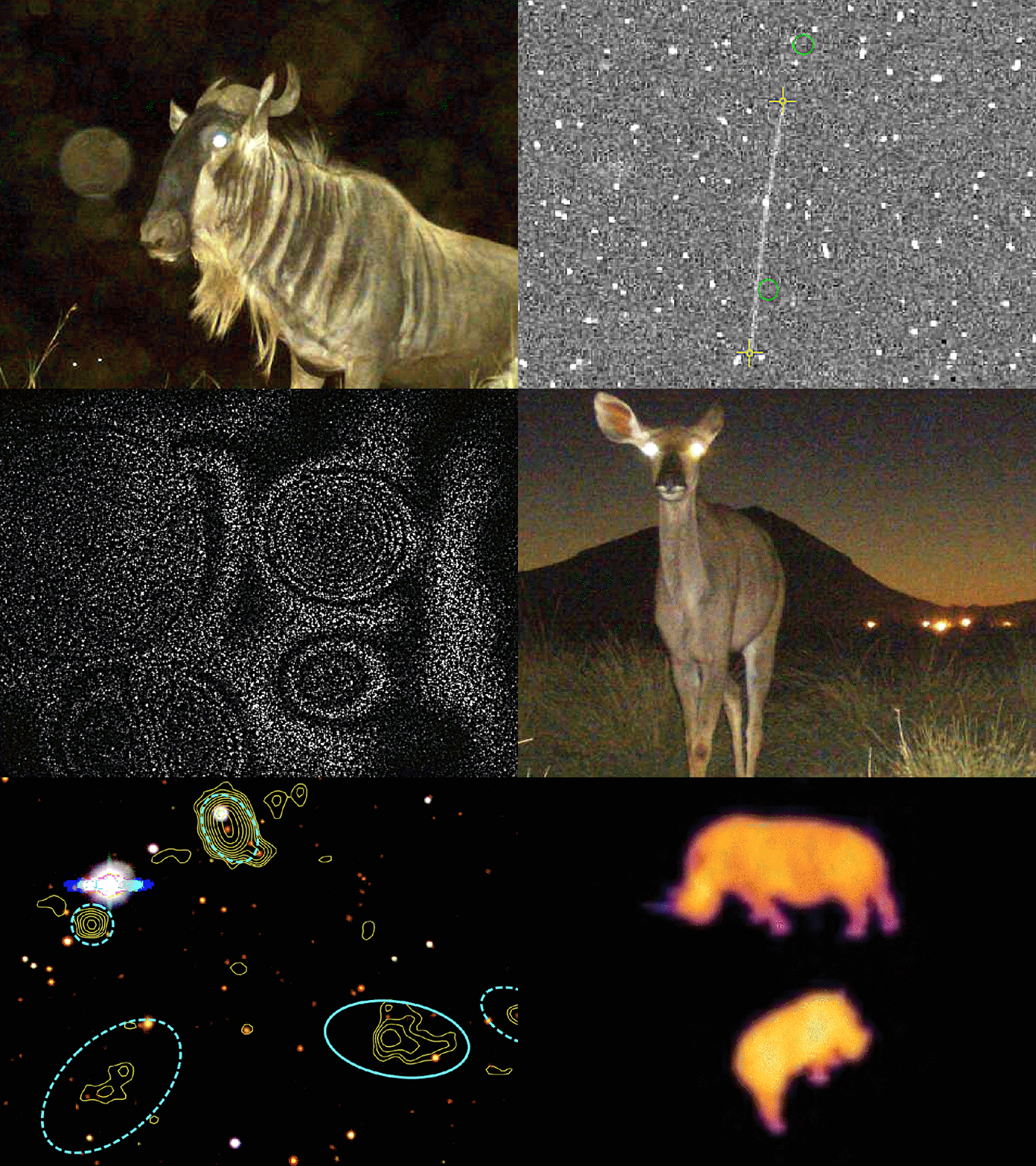
Patterns of Activation (gardens of the galaxy) by Katja Novitskova

Katja Novitskova

Patterns of Activation (gardens of the galaxy)

Edition of 115

ᖴᗩᑕIᗩᒪᔕ I by Jon Rafman

Jon Rafman

ᖴᗩᑕIᗩᒪᔕ I

Edition of 115

Morehshin Allahyari avatar

LocationNew York, U.S.

Morehshin Allahyari (Persian: موره شین اللهیاری‎) (she, her) is a NY-based Iranian-Kurdish artist using 3D simulation, video, sculpture, and digital fabrication as tools to re-figure myth and history. Through archival practices and storytelling, her work weaves together complex counternarratives in opposition to the lasting influence of Western technological colonialism in the context of SWANA (Southwest Asia and North Africa). Morehshin has been part of numerous exhibitions, festivals, and workshops around the world including Venice Biennale di Architettura, New Museum, The Whitney Museum of American Art, Pompidou Center, Tate Modern, Queens Museum, Museum für Angewandte Kunst, among others. Her work has been featured in the New York Times, BBC, Huffington Post, Wired, National Public Radio, Parkett Art Magazine, Frieze, Rhizome, Hyperallergic, and Al Jazeera, among others. In 2021, she received the United States Artist Fellowship. Her artworks are in the collection of the Whitney Museum of American Art, San Francisco Museum of Modern Art, and the Current Museum.
View Full Profile
Sara Bezovšek avatar

LocationSlovenia

Sara Bezovšek is a visual artist, active in the fields of new media, experimental film, and graphic design. Her artistic practice is characterized by the exploration, collection, and storage of mostly pop-cultural visual references from various online platforms, films, and TV series. Using a cut/copy-and-paste technique, she combines found digital material into web pages, collages, mashup videos, etc., thus creating new narratives through appropriation. In doing so, she is interested in what people view and share on social networks, how visual material travels the internet, how it changes, and how it affects users. By using digital images familiar to the global internet user, she wishes to depict how internet phenomena, clichés, and iconic pop-cultural references influence our perception. The dense amount of short clips from known series and films, animated GIFs, internet memes, videos, and other images from online platforms creates a feeling of layeredness, as the viewer can read a number of parallel associations, linked to recognizing individual material, in addition to the basic story.
View Full Profile
Émilie Brout & Maxime Marion avatar

LocationParis, France

Émilie Brout & Maxime Marion began their collaboration at the École Nationale Supérieure des Arts Décoratifs in Paris. Their work sits in public and private collections such as the FRAC Ile-de-France and the François Schneider foundation, and has been featured in numerous media outlets including Le Monde, Art Viewer, New York Observer, BBC and Frieze. Previous exhibitions and screenings include Young Art Triennale at Casino Luxembourg; Thessaloniki International Short Film Festival; Louvre Auditorium, Paris; Haus der Kulturen der Welt, Berlin; MAC VAL, Vitry-sur-Seine; Redline Contemporary Art Center, Denver; OCAT Shenzhen; Carroll/Fletcher, London; Moscow Biennale for Young Art; Le Loft - Collection famille Servais, Brussels; Seongnam Art Center; Palais de Tokyo, Paris. They have recently had solo exhibitions at 22,48 m², Paris; La Chaufferie, Strasbourg; Pori Art Museum; Villa du Parc, Annemasse; and Steve Turner, Los Angeles.
View Full Profile
Anna Carreras avatar

LocationBarcelona, Spain

Anna Carreras is a Barcelona, Spain-based creative coder and digital artist whose work focuses on generative algorithms and interactive technology. In addition to working directly with code, Anna develops interactive installations to explore new emerging narratives with an emphasis on audience collaboration. She is interested in the complexity that emerges from small simple behaviors, and she aspires to capture the diversity and richness of complex systems in her works. Throughout the pandemic, she created daily code sketches, which she called “quarantena generativa,” to explore new ideas.
View Full Profile
Petra Cortright avatar

LocationCalifornia, U.S.

Petra Cortright’s core practice is the creation and distribution of digital and physical images using consumer or corporate software. She became renowned for making self-portrait videos that use her computer’s webcam and default effects tools. Cortright’s paintings on aluminum, linen, and paper are created in Photoshop. Cortright lives and works in Altadena, CA. She studied Fine Arts at Parsons School of Design, The New School, New York, NY (2006-2008) and the California College of the Arts, San Francisco, CA (2004). Her works are in the permanent collections of the Museum of Modern Art (New York), The Péréz Museum (Miami), The Bass Museum (Miami), Los Angeles County Museum of Art, the Hammer Museum (Los Angeles), Moderna Museet (Stockholm), MOTI (Breda) in collaboration with Stedelijk Museum (Amsterdam), MCA Chicago, Kadist Foundation (San Francisco), BAMPFA (Berkeley, CA), the San Jose Museum of Art (San Jose, CA), Rhizome’s Net Art Anthology, and MOCA Los Angeles.
View Full Profile
Francoise Gamma avatar

LocationBarcelona, Spain

Francoise Gamma is a digitally embodied entity using the internet to draw GIFs (for Netscape 3.04). His work has appeared on Kanye West’s blog, in solo exhibitions, and all around the WWW. Francoise is a member of the online art collective Computers Club, and his work is featured on Foundation.app, a platform for live auctions of digital art and NFTs. He’s known for his digital drawings of animated, contorted, and mutated bodies; this has been his main form of experimentation with narrativity —also an object of investigation —while immersed in Literary Studies at the University of Barcelona. He started to create internet art when he met the enigmatic secret art group HELL.COM in 2001. Francoise has worked professionally on the internet since 1995.
View Full Profile
Theodoros Giannakis avatar
Theodoros Giannakis is a graduate of the Athens School of Fine Arts and the MA program in digital media management of the London Metropolitan University. He is a Ph.D candidate at the Athens School of Fine Arts. He has presented his work in solo exhibitions at Union Pacific (London), Eleni Koroneou (Athens), Radio Athenes (Athens), and SPACE (London), and has taken part in international group exhibitions in art venues, museums, and institutions such as the New Museum in New York; the National Museum of Contemporary Art; Delphi Archeological Museum; Fondazione Prada; Ontario College of Art and Design; V22 Collection; and Futura Center for Contemporary Art. As a member of the art collective KERNEL, he has curated exhibitions and events and has lectured on his research at ICA London, the National Museum of Contemporary Art, the National Hellenic Research Foundation, and at the Athens School of Fine Arts.
View Full Profile
Kamilia Kard avatar

LocationMilan, Italy

Kamilia Kard is an artist and researcher whose work explores how hyper-connectivity and new forms of online communication have modified and influenced the perception of the human body, as well as our gestures, feelings and emotions. Her practice spans from digital paintings to websites, from video installations to 3D printed sculptures, from animated gifs to interactive virtual environments. She has exhibited internationally in museums, galleries, public spaces and online venues, including Careof, Milan (2021); Marséll, Milan (2021); Galerie Odile Ouizeman, Paris (2020); Dimora Artica, Milan (2020); Metronom, Modena (2018, 2019, and 2020); EP7, Paris (2019); Victoria and Albert Museum, London (2018); Fotomuseum Winterthur (2017); La Quadriennale di Roma (2016). She edited the book Alpha Plus. An Anthology of Digital Art (Editorial Vortex 2017) and she often lectures about her artistic practice and research. She is a PhD candidate in Digital Humanities at the University of Genoa and teaches Multimedia Communication in Milan and Carrara, Italy.
View Full Profile
Jonas Lund avatar

LocationAmsterdam / Berlin

Jonas Lund creates paintings, sculpture, photography, websites, and performances that critically reflect on contemporary networked systems and power structures of control. His artistic practice involves creating systems and setting up parameters that oftentimes require engagement from the viewer. This results in performative artworks where tasks are executed according to algorithms or a set of rules. Through his works, Lund investigates the latest issues generated by the increasing digitization of contemporary society, such as authorship, participation, and distribution of agency. At the same time, he questions the mechanisms of the art world; he challenges the production process, authoritative power, and art market practices. Lund has had solo exhibitions at The Photographers' Gallery (2019); Whitechapel Art Gallery, London (2016); Steve Turner, Los Angeles (2016, 2015, 2014); and Showroom MAMA, Rotterdam (2013). Group exhibitions include Centre Pompidou, Paris; Schinkel Pavillon, Berlin; ZKM, Karlsruhe; and the Stedelijk Museum, Amsterdam, among others.
View Full Profile
Lev Manovich avatar

LocationNew York, U.S.

Dr. Lev Manovich is an artist and a theorist of digital culture. He was included in the list of "25 People Shaping the Future of Design" in 2013 and the list of "50 Most Interesting People Building the Future" in 2014. He is the author and editor of 14 books including Cultural Analytics, AI Aesthetics, and The Language of New Media, which was described as "the most suggestive and broad-ranging media history since Marshall McLuhan." Manovich is a Presidential Professor at The Graduate Center, CUNY, and a director of the Cultural Analytics Lab. His digital art projects have been shown in over 100 group and personal exhibitions worldwide at venues that include New York Public Library, Google's Zeitgeist 2014, Shanghai Art and Architecture Biennale, Chelsea Art Museum, ZKM, The Walker Art Center, KIASMA, Centre Pompidou, and ICA London.
View Full Profile
Petros Moris avatar

LocationAthens, Greece

Petros Moris is an artist based in Athens. He has presented solo exhibitions in galleries and art spaces including Galeria Duarte Sequiera (Braga), Project Native Informant (London), Point Centre (Nicosia), Union Pacific (London), LilyRobert Gallery (Paris), ROOM E-10 27 (Berlin), SPACE (London), The Cyprus Embassy (Athens), and Onassis Culture (Athens). He has participated in group exhibitions including the 2021 Athens Biennale - Eclipse (Athens), the 2019 Singapore Biennale (Singapore), the New Museum Triennial - Songs for Sabotage (New York), The Tides of the Century (Ocean Flower Island Museum, Hainan), the 7th Thessaloniki Biennale (Thessaloniki), Still Here Tomorrow (Stavros Niarchos Foundation, Athens), Digital Gothic (Centre d'art Contemporain, Delme), Tomorrows (Le Lieu Unique, Nantes), Geometries (Onassis Culture, Athens), The Same River Twice & The Equilibrists (Deste X New Museum, Benaki Museum Athens). He has been nominated for the Deste Prize 2015 and has been awarded the SNF Artists Fellowship, the Onassis Foundation Scholarship, and is a Delfina Foundation Alumni. He has curated exhibitions and events at the Chisenhale Gallery, the Whitechapel Gallery, and Circuits and Currents as part of the curatorial collectives SIM and Radical Reading. He has been part of the art collective KERNEL and co-runs the publication project AM.
View Full Profile
Katja Novitskova avatar

LocationEstonia

Katja Novitskova lives and works in Amsterdam. Novitskova researches ongoing ecological transformations of living, social, and informational processes in the present world, developing personal strategies to render its complex forms. Her works include sculptures generated from online imagery and text, installations and artist publications. In 2011, Novitskova published her first artist book Post Internet Survival Guide 2010. Her work has been exhibited internationally in solo and group exhibitions including Kunstfort bij Vijfhuizen (2021, solo); Belgrade Biennal (2021); Migros Museum, Zürich (2020); Sharjah Art Foundation (2020); Powerlong Museum, Shanghai (2019); Hamburger Bahnhof, Berlin (2019); Whitechapel Gallery, London (2018, solo), the Estonian Pavilion at the 57th Venice Biennale (2017, solo); The Public Art Fund, New York (2017, solo), The Museum of Contemporary Art Kiasma, Helsinki (2017); and Greene Naftali, New York (2016, solo). Her work is in various public and private collections, including: Museum Ludwig, Cologne; Moderna Museet, Stockholm; Boros Collection, Berlin; CC Foundation, Shanghai; Fondazione Sandretto Re Rebaudengo, Turin; Rubell Family Collection, Miami, and many others.
View Full Profile
Jon Rafman avatar

LocationLos Angeles, U.S.

Jon Rafman was born in 1981 in Montreal, Canada. His artistic practice spans film, sculpture, photography and installation, incorporating the rich vocabulary of virtual worlds to create poetic narratives that critically engage with the present. His works have been featured in prominent international exhibitions, including the 58th Venice Biennale (2019), and is represented in the permanent collections of the Museum of Modern Art (New York), Stedelijk Museum (Amsterdam), Moderna Museet (Stockholm), and many more. Rafman's recent solo exhibitions include Dream Journal 2016 - 2019, Centraal Museum, Utrecht; The Mental Traveller, Fondazione Modena Arti Visive (2018); Dream Journal 16' - 17', Sprueth Magers Berlin (2017); I Have Ten Thousand Compound Eyes and Each is Named Suffering, Stedelijk Museum, Amsterdam (2016); and Westfälischer Kunstverein, Munster (2016).
View Full Profile

For Your Eyes Only smart contract:ethereum