Feral File logoFeral File logo

The Long Cut - Art exhibition on Feral File

Curator’s Note

Iris Long avatar

Iris Long

10 August 2021

A Tale of Wayfinding the Virtual 游弋虛像迷宮

Topology-mancer:“Why can’t you understand that I cannot draw you a map?” Progress-tracer: “I don’t request a detailed map, you only need to draw me a rough one, and then I can identify the paths myself.” Topology-mancer: “Isn’t the world I live in built by you? All the connections, information portals, signal channels, cables, bricks, shortcuts, and encrypted pathways—this entire intricate digital palace was constructed with your hands. Why do you need me to draw you a map?” Progress-tracer: “Our blueprint has been invalidated already. We built this place based on it, but now that construction is finished, we’re trapped inside—it’s like how the ancient aristocrats buried the workers who built their tombs.” Topology-mancer: “You just mentioned you’re ‘trapped inside,’ so what’s outside?” Progress-tracer: “A place similar to this, but not entirely habitable. I only started to memorize the details of that place since I became confined here. This place feels like a mirror image of the ‘outside’; perhaps the main difference lies in the density of time. Time here flows faster than my own blood—my skin overflows with it, and my mind is engulfed by its pulse signals… look at this place, how does it resemble the blueprint at all? There is no orientation, no coordinates, nothing like our crystal-clear plan!” Topology-mancer: “Poor man. But I still don’t understand why I need to draw this map for you.” Progress-tracer: “You are not like us. You were born here, and are indigenous to this place. Although we came into existence before you, you're more geographically ‘authentic’ than we are. Anyone who’s seen the blueprint will be inscribed with a tremendous number of details of this place’s alleys, pathways, and structures—we are human beings after all, and are genetically inclined to remember shortcuts and instructions, and to ‘figuring out the environment.’ This is the gift and curse brought by ‘evolution.’ Once we are inscribed with blueprints, we are no longer able to generate alternative maps; instead, we crave optimal solutions, but optimal solutions won’t get us out from this place—blueprints are deadfalls in this world.” Topology-mancer: “You should know that… it’s more difficult for me to draw a map than for you to find your way out on your own. I have no idea of orientation or coordinates… I can’t generate a ‘bird-view’ from within my mind. Even if I try to draw you a map, I doubt you could read it. It’s a pity that I’ve never been to the ‘outside world,’ otherwise I might just walk you out.” Progress-tracer:“Sounds like my ancestors. They used to walk through the jungles and wilderness.” Topology-mancer: “So what happened to them afterwards?” Progress-tracer: “Then they invented a blueprint.” Topology-mancer: “Then?” Progress-tracer: “Then… blueprints became everything. Everything passed through a blueprint, and was derived from one. Precise clocks, modelled furniture, accounting machines, electronic pets, cannon balls that fall ‘on-time,’ roaring rockets, financial transactions conducted in milliseconds, communication across continents… everything, including this simulated world.” Topology-mancer: “Your ancestors seem to be marvellous. I don’t think I could ever invent a blueprint, since I can’t even figure out the landscapes here.” Progress-tracer: “Ah, let’s forget about the older generations and whatever stories they may have told. How about you just walk me around, as you know how it feels to wander around here. I somehow remember the intersection area of the two worlds… if we run into the brane borders, I can get us out.” Topology-mancer: “Sounds good, I know how to take a walk.” Progress-tracer can’t remember how long they wandered in this place, but the endless walk inflicted pain on his skin caused by the fleeing signals. The voltage difference also felt more bearable as time moved on. Over time, he realised that their walk could not be measured by distance or even directions; instead, it was full of zigzagging, sudden pauses, and unpredictable trajectories. If they walked in one direction for too long, they would end up back at the starting point. He gradually found out that this world did not betray the blueprint, it only grew organically into a topological version of it. All the data points in the original blueprint were replaced by the relationship of planes, and hence, all shortcuts were invalidated—the only way to “figure it out” is to explore without a map. The moment of realization became the moment of escape, and he finally found his way home. What about the Topology-mancer? He never left his own place. He did not even go for the walk—all he did was become engulfed in a nice, long dream.
This story is a re-imagination of “shortcuts.” Shortcuts are fast leaps across information scaffolds, and cartridges for accelerated time. Shortcuts imply lower costs, since they train us to become beings who are not used to staying still, pondering, or meandering. Shortcuts symbolise strategic success, and energy-saving efficiency. But, one reminder that we were given in the year 2020—a time of global uncertainty —is a new perspective on “what we shortcut into.” The lesson is that perhaps we need to rethink our priorities, and develop an alternative blueprint that does not prioritize shortcuts. The exhibition “The Long Cut” features works that investigate the remote, latent, and liminal space of technologies, and how this awareness can trigger alternative pathways and maps for our shared technological reality. More importantly, it investigates how artists navigate between the perspectives of the “Progress-tracer” and “Topology-mancer” in order to find their own way of living with the hybridity of the physical and the digital. *The text is also inspired by Franco ‘Bifo’ Berardi’s writing, “Breathing: Chaos and Poetry,” which explores the relationship between the acceleration of cyberspace and the rhythm of mental time. 拓扑梦游者:“你为何听不懂,我没办法给你画一张地图。” 进程追踪者:“我不要求这张地图有多细致入微,只要告诉我大致的方向排布,我便能找到路径。” 拓扑梦游者:“我生活的地方,不就是你们建出来的世界吗?这里所有的链接、信息中转站、信道、电缆、一砖一瓦、快捷方式和加密栈道,如此庞杂繁复的宫殿,是你们亲手设计,为何来问我要这里的地图?” 进程追踪者:“我们的蓝图早就失效了。我们照着它的模样,建成了这里,没想到就像古代修墓葬的人一样,墓修好了,修建者被反锁在里面。” 拓扑梦游者:“你方才说,这里是里面,那么外面是什么?” 进程追踪者:“一个和这里类似的地方,虽说也不是非常适合我们居住,我也是困在这里后,才回想起那边的种种。怎么说呢,这里有些像是外面的一个倒影,但区别在于,这里的时间密度过于高了,呆在这里,时间每天都给皮肤过电,比血流还快,脉冲信号卷着我走,可别说什么蓝图了,当时那蓝图画得干干净净、明明白白,你看看现在这里的样子,早偏离了蓝图的方向,连东南西北、上下左右都对不上。” 拓扑梦游者:“我还是不懂,为何需要我再来画一张这里的地图?” 进程追踪者:“你和我们不同,你诞生在这里,是真正的原住民。虽然在时间上,我们先于你而存在,但在地理上,你才是这里的主人。看过蓝图的人,脑中都会被印刻上那一条条明栈暗道的走向,我们是人类,我们会自觉地在地图上寻求捷径——这是进化教会我们的。而一旦大脑被印刻上捷径,地图的信息便会缩减,我们的大脑现在无法再建构关于这里的,不同于最优解的地图,而最优解恰恰是我们被困在这里的原因,蓝图成为了我们的陷阱。” 拓扑梦游者:“可你要知道,画地图这事,对我来说可比你们找出口还难。你们说的东南西北,我可并无概念,地图不都是从上往下看的吗?我没办法在脑中创造这个视角,即便我真画,多半也会画出张你们见所未见的地图。只可惜我没去过外面世界,不然,我带着你们走,反倒快些。” 进程追踪者:“我们的祖先在那个世界,也是像你这样过来的。他们总是在丛林和荒漠里走,一个人带着一个人,一群人引着一群人。” 拓扑梦游者:“他们后来如何了。” 进程追踪者:“后来他们发明了蓝图。” 拓扑梦游者:“再后来呢?” 进程追踪者:“蓝图成为了万物。万物也因蓝图而得以传递。精确的钟、千奇百怪的家具、会记账的机器、会自己走路的电子狗、准时落下的炮弹、不懈登天的飞船、微秒级的金融、跨大洲的传讯、还有这里。” 拓扑梦游者:“你的祖先听起来很厉害,我不觉得我能发明出蓝图,我连这里的地貌都搞不清楚。” 进程追踪者:“啊,别太计较祖先的故事了,不如你带着我们随意游走。反正,你知道在这里行走的感受,而我们记得两个世界交界处的样子,如果无意中碰到了,那我们就能出去了。” 拓扑梦游者:“也好,走路我会。” 进程追踪者在这个世界里,走了不知道有多久,漫长的行走冲刷了他肌肤表面信号流窜的疼痛,空气的电压差,似乎也变得可以忍受起来。他发现这段行走,全然没有方向可言,时进时退,时左时右,有时沿着一个方向太远,反而会回到原点。他倏尔意识到,这个世界其实并没有脱离蓝图,它只是逐渐生长成了蓝图的拓扑——所有原图上的距离数值都被位面的关联所替代,所有的捷径都不再是捷径,他倒是就这样,头歪歪闯到了这个“电子世界”的出口。 拓扑梦游者自始自终没有离开原地,只是做了个梦而已。
The Long Cut是对「快捷方式」/「捷径」的重新想象。「捷径」是信息栅格之间快速跃迁的方式,也是加速时间的弹药。「捷径」意味着较低来去成本,它把我们训练成不善停留和蜿蜒的物种。「捷径」也象征着策略性的成功,节能而有效。2020年给我们的一大提醒,则是「捷径」对象的悬置乃至落空,当全球性的不确定性蔓起,我们需要的或许是一种去捷径化的蓝图。 「Long Cut」关注那些试图思考技术所容许的遥远、潜在、阈限地带的作品,观照创作者如何在对技术本身保有自知的前提下,就这个世界提出多样的路径和「其他的地图」, 更重要的是,「置身其间」的第一经验。
The One Who Lived Yesterday by Cao Shu

Cao Shu

The One Who Lived Yesterday

Edition of 75

Abstract Oracle Miner 0009328437 by Guo Cheng & Weihao Qiu

Guo Cheng & Weihao Qiu

Abstract Oracle Miner 0009328437

Edition of 75

E-dream: We’ll stay, forever, in this way (2020 selected) by He Zike

He Zike

E-dream: We’ll stay, forever, in this way (2020 selected)

Edition of 75

Free Fall Study III by Shi Zheng

Shi Zheng

Free Fall Study III

Edition of 75

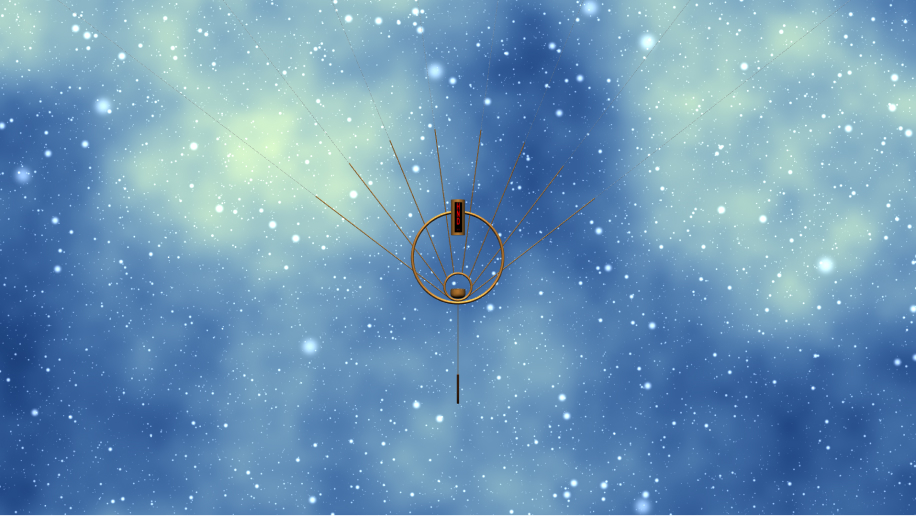
Satellite by Lin Ke

Lin Ke

Satellite

Edition of 75

In endless flow of absolute truth, there are innumerable relative conjecture. by In_K

In_K

In endless flow of absolute truth, there are innumerable relative conjecture.

Edition of 75

Steering Pixels by Studio Above&Below

Studio Above&Below

Steering Pixels

Edition of 75

Cao Shu avatar

Artist

Cao Shu

LocationHangzhou, China

Cao Shu mainly works in new media art, and is based in Hangzhou, China. More recently, Cao Shu has begun to use personal and historical memory as a work interface, while continuing a creative practice that includes a variety of media-based interactions. In recent years, Cao Shu has been an artist in residence at atelier Mondial in Basel, Switzerland(2017), Koganecho Bazzaar Art Festival, Yokohama (2019), and Muffatwerk, the venue for international art and culture, in Munich (2020). Cao Shu’s works have won such awards as the Exposure Award 2021 of PHOTOFAIRS Shanghai, the New Narrative Award from the Long Week of Short Films, and the Beijing International Short Film Festival Award for Outstanding Artistic Achievement. Recent exhibitions include Cao Shu Solo Exhibition-The Ocean of Solaris(Zhejiang Museum,Hangzhou,China,2019);Cao Shu Solo Exhibition-Flux(ShanghaiTech University,Shanghai,China); Solo Programme-Monster outside the windows(Koganecho,Yokohama,Japan,2019), and others. 曹澍1987年出生,他所运用的媒介包括且不限于数字模拟影像装置、空间环绕式配乐以及互动游戏装置等,他通过对日常经验的跨媒介转化和数字空间搭建来构造出潜在的关联,称自己的工作类似于一种在迷宫中不断迷失并寻找线索的侦探行为。曾于浙江美术馆,上海科技大学展览厅,日本横滨太平庄等地举办个展和个人项目。曹澍近年分别作为瑞士巴塞尔Atelier Mondial (2017),日本横滨黄金町艺术节(2019),德国Muffatwerk文化艺术中心(2020)驻地艺术家。曾获2021PHOTOFAIRS|Shanghai曝光奖、上海短片电影周新叙事奖、北京国际短片联展杰出艺术探索奖等。近期作品展出于UCCA沙丘美术馆,亚洲协会香港中心,北京民生美术馆,OCAT 深圳馆,汉堡法尔肯贝格大厅等。除此之外,曹澍的作品也在世界各地的影展主竞赛单元展出,包括莱比锡纪录片与动画电影节,米兰电影节,昂西国际动画节,渥太华国际动画节,汉诺威国际短片节等。作品收藏于澳大利亚白兔美术馆、以色列尧山当代艺术基金会、浙江美术馆等。现生活工作于杭州。
View Full Profile
Guo Cheng & Weihao Qiu avatar

LocationShanghai, China & Irvine, USA

Guo Cheng 郭城 Guo Cheng is an artist currently living and working in Shanghai. His practice mainly focuses on exploring the mutual impacts and influences between established/emerging technologies and individuals in the context of culture and social life. In recent years, his practice has dealt with themes such as the Anthropocene and second nature, digitized interobjectivity, and the ideologies behind various infrastructures. Guo Cheng's works often use humorous yet calm language to link grand issues with seemingly arbitrary objects, and to provide critical perspectives for discussion. His recent solo exhibitions include: Almost Unmeant (Magician Space, Beijing, 2020), Down to Earth (Canton Gallery, Guangzhou, 2019). Group exhibitions include: Terminal>_ How Do We Begin? (X museum, Beijing, 2020), The Eternal Network (exhibition of Transmediale 2020, HKW, Berlin), The Process of Art: TOOLS AT WORK, (Power Station of Art, Shanghai, 2019), Notes from Pallet Town(UCCA Dune, Qinhuangdao, 2019), Open Codes. Connected Bots (Chronus Art Center, Shanghai, 2019), and others. Guo Cheng has obtained such awards as Ars Electronica Honorary Mentions, Linz (2020); CAC://DKU Research & Creation Fellowship, Shanghai (2020); STARTS Prize Nomination, Linz (2020); the Digital Earth fellowship (2018-2019); the Special Jury Prize of Huayu Youth Award, Sanya (2018); and the Bio-Art & Design Award, The Hague (2017). 郭城1988年生于北京,现工作生活于上海。先后获得上海同济大学学士学位(2010)与英国皇家艺术学院硕士学位(2012)。他的艺术实践着眼于既有/新兴科技对社会与文化方面的冲击与影响,以及置身其中的个体与社会生活之间的关系。郭城的作品常以雕塑/装置的形式呈现,他经常使用幽默又冷峻的形式语言,将宏大议题与看似随意的日常物品相连结,为想象和讨论提供了批判性的视角。 郭城近期的个展有:“近乎无意”,魔金石空间,北京(2020);“地气”,广州画廊,广州(2019)。群展包括:“终端>_How Do We Begin?”, X美术馆,北京(2020);“永恒网络”,世界文化宫,柏林(2020);“平行,似存在,未完成:行进的艺术工具”,当代艺术博物馆,上海(2019);“真新镇日志”,UCCA 沙丘美术馆,秦皇岛(2019);“机器人·间”,今日美术馆,北京(2019);“开放代码.连接机器人”,新时线媒体艺术中心,上海(2019);“追踪末日松茸”,泰康空间,北京(2019);“魔都の鼓動”,当代艺术博物馆,熊本(2018);“Life Time”, MU空间,埃因霍温(2017);“时间的狂喜”,何香凝美术馆,深圳(2017)等。 郭城曾获得奥地利电子艺术奖荣誉奖,林茨(2020)、STARTS奖提名,林茨(2020),CAC://DKU研究与创作学术奖金,上海(2020),数字地球学术奖金(2018-2019)、华宇青年奖评委会特别奖,三亚(2018)、生物艺术奖,海牙(2017)。 郭城曾任上海新时线媒体艺术中心执行总监(2015-2017),荷兰自由大学环境与健康学院访问研究员(2017),并从2013年起兼职任教于上海同济大学至今。 Weihao Qiu 邱伟豪 Weihao Qiu is a California-based media artist. He has been practicing visual art creation with creative computation since completing his undergraduate study in Computer Science. Weihao works with photography, data, algorithms, data visualization, and interactive installation. His works have been exhibited in the Wolf Museum of Exploration and Innovation and the Beijing Times Art Museum. Weihao is currently a Ph.D. candidate in the Media Arts and Technology (MAT) program at the University of California, Santa Barbara. His research focuses on AI-based art with movement data. 邱伟豪是目前位于南加州的媒体艺术家。自完成计算机科学本科学习以来,一直致力于通过创造性计算进行视觉艺术创作。 他的热情在于摄影、数据和算法,并从中获取灵感用于创作数据可视化和交互式装置。其作品曾在The Wolf Museum of Exploration and Innovation和北京时代美术馆等地展出。 邱伟豪目前是加州大学圣巴巴拉分校媒体艺术与技术 (MAT) 项目的博士候选人。他目前的研究重点是基于人工智能和人体运动数据的艺术。
View Full Profile
He Zike avatar

Artist

He Zike

LocationBeijing, China

He Zike is an artist currently based in Beijing. Her works focus on personal perception, an individual’s fate under the flow of information, and the uncertainty of narrative and meaning. Her recent projects explore patterns, visions, and imagination through the lens of digital and consumer life—specifically in relation to databases, material libraries, memory, and the physical and temporal extension of all three. Most of her works take the form of video, writing, installation, and computer programs. Her works have been exhibited in shows including “AI Delivered:The Abject" (Chronus Art Center, Shanghai, 2021), “Hic sunt leones" (798 Art Center, Beijing, Surplus Space, Wuhan, 2019), “Lying Sophia & Mocking Alexa" (HYUNDAI motorstudio Beijing, 2019, Yuz Museum, Shanghai, 2020), “Gender Travel" (Hongcheon Museum, Korea, 2019), “Sichtbarkeit" (Museum für Neue Kunst, Freiburg, Germany, 2017), and others. 贺子珂是一位艺术家,1990年生于贵阳,现工作生活于北京和贵阳。作品关注信息流动下个体的感知与命运,以及叙事和意义的不确定性。近期项目围绕特定的数据、记忆和素材库展开,探索其在物质和时间维度上的延展,以及数字和消费生活中的模式、愿景与想象。媒介包括影像、文本、装置、计算机程序等。作品曾参与的主要展览包括”人工智能的兑现:卑弃“(新时线媒体艺术中心,上海,2021),“此地有狮”(画廊周新势力单元,798艺术中心,北京,剩余空间,武汉,2019),“撒谎的索菲亚和嘲讽的艾莉克莎”(现代汽车文化中心,北京,2019,余德耀美术馆,上海,2020),“Gender Travel”(洪川美术馆,韩国,2019),“Sichtbarkeit”(弗莱堡当代美术馆,德国,2017),“朋友圈+:文化馆线上艺术计划”(OCAT,上海,2017),“为什么表演?”(明当代美术馆,上海,2016),“你正常吗?”(博而励画廊,北京,2016)等。 贺子珂2018年获中央美术学院未来媒体艺术专业硕士学位。2017年于德国卡尔斯鲁厄艺术与设计学院媒体艺术系学习。2012年毕业于中国传媒大学,获数字电影制作学士学位。
View Full Profile
Shi Zheng avatar

Artist

Shi Zheng

LocationShanghai, China

Shi Zheng is an artist based in Shanghai and New York. Shi Zheng’s artistic creations range from audio-visual installations, to digital music, to live performance, and demonstrate his ongoing interest in simulation and “machine vision." Shi Zheng further explores the philosophy of technology, digital voyage, and “latent time" by extending the audience's visual and audio experience. In addition to his individual work, Shi Zheng also collaborates with other outstanding artists in various fields. In 2013, the artistic group RMBit was founded by Shi Zheng in collaboration with Nenghuo, Wang Zhipeng, and Weng Wei as a way to focus on the current context of social media. Both Shi and Nenghuo are also members of the audio-visual performance group OSC (Open Super Control). Shi Zheng’s individual and cooperative works have been presented in a wide range of museums, art institutions, and media art festivals at home and abroad—including TANK Shanghai, MOCA Yinchuan, Sound Art China, FILE Electronic Language International Festival, Ars Electronica, Institute of Contemporary Arts London, Castello di Rivara, The Lumen Prize, Shanghai 21st Century Minsheng Art Museum, and OCT Contemporary Art Terminal Shenzhen. Shi Zheng holds a B.A. from China Academy of Art and an MFA from the School of the Art Institute of Chicago. 施政现⽣活、⼯作于上海和纽约。他的创作形式涉及视听装置、电⼦⾳乐以及现场演出,开展⼀系列以模拟和“机器视觉”为出发点的艺术实践,通过扩充观众视听通感体 验,体现其对技术哲学、数字漫游和“潜在时间”的持续思考。 施政在集中创作个⼈作品的同时,也和其领域内的优秀艺术家进⾏合作。2013年他 与能⽕、王志鹏、翁巍共同成⽴媒体艺术⼩组 RMBit(⼈⺠⽐特),结合当下的社交媒体现 象进⾏创作。他和能⽕也是 Audio-Visual 演出团体 OSC(Open Super Control)的成员。 其个⼈与合作作品也曾多次出现在国内外重要的美术馆、艺术机构、媒体艺术节中, 包括上海油罐艺术中⼼、银川当代美术馆、Sound Art China(中国声⾳艺术⼤展)、FILE Electronic Language International Festival、Ars Electronica(奥地利电⼦艺术节)、伦 敦当代艺术中⼼、都灵Castello di Rivara美术馆、伦敦The Lumen Prize、上海⼆⼗⼀世纪 ⺠⽣美术馆、 OCT当代艺术中⼼深圳馆。 2014年毕业于中国美术学院跨媒体艺术学院,2019年获得芝加哥艺术 学院硕⼠学位。
View Full Profile
Lin Ke avatar

Artist

Lin Ke

LocationShanghai, China

Since 2010, artist Lin Ke has turned his attention to the behavioral science of the computer age by making himself his own guinea pig. Converting his laptop into a studio, Ke extracts material from computer software and the internet as the fodder and form for his art. The mundane act of exploring the vicissitudes of the world wide web and various applications becomes the catalyst for art making and self-portraiture. He records operational behavior and conceptual images by using screenshots and screen recording software. His work takes the form of installation, image, sound, text, video, and computer painting. In his work, Lin Ke uses software to set its various functions free from their original purpose in the same way that language is liberated from its communicative functions when it becomes poetic. If poetry expresses the joy of language, Lin Ke’s work brings out the pleasure of the graphical user interface. Lin Ke has gained major critical acclaim for his work by winning the OCAT - Pierre Huber Art Prize in 2014, and the Chinese Youth Artist Award of the 9th AAC Art in 2015. His work has been shown at ZKM, Karlsruhe; Museum Folkwang, Essen; Museum of Contemporary Art Tokyo, Tokyo; Minsheng Art Museum, Shanghai, Museum of Contemporary Art Cleveland; Centre for Chinese Contemporary Art, Manchester, and Ikon Gallery, Birmingham. His work is featured in the collections of M+ Museum, Hong Kong, The New Century Art Foundation, Beijing; and K11 Art Foundation, among others. 从2010年开始, 林科将自己变成自己的实验对象,投身于计算机时代的行为艺术之中。林科将笔记本电脑作为其艺术工作室,从计算机软件和互联网中提取素材作为其艺术作品的素材与形式。日常互联网的探索和对应用软件的操作催生出他的艺术创作和自画像。他使用屏幕截图和 屏幕录制软件记录操作行为和概念图像。他主要的作品形式为装置、图像、声音、文字、视频和 电脑绘画。 在他的作品中,林科以非常规的方式使用电脑软件,在软件原本设计的意图之外寻找新的功能,从而使的语言从基本的交流功能中得以解放而获得诗性。如果诗歌表达了语言的乐趣,那么林科的作品则呈现了软件用户图像界面的愉悦。 林科的创作实践为他赢得了2014年OCAT-皮埃尔·于贝尔奖与2015第九届AAC艺术中国年度 青年艺术家大奖。他的作品曾在,OCAT当代艺术中心,ZKM媒体艺术中心,Folkwang博物馆, 东京都现代美术馆,民生美术馆, 上海当代艺术博物馆,何香凝美术馆,克利夫兰当代艺术博物 馆,曼切斯特华人当代艺术中心,伯明翰 Ikon Gallery等艺术机构展出。他的作品亦被广泛收藏, 香港M+视觉文化博物馆,北京新世纪基金会,及K11美术馆馆藏。
View Full Profile
In_K avatar

Artist

In_K

LocationBeijing, China

Bi Zhenyu, aka In_K has been using computer languages to create his artworks for the past 10 years. His works usually involve computer algorithms, programmatically generated visuals. AI algorithms are also being used in his new works. In 2011, In_K established visual group “Neuron” which has performed at underground parties, music festivals, and other events in different scales. In 2017, In_K formed a new media art group “DROWYEK.” The works are combined with diverse forms such as audiovisuals, interactive images, immersive installations, and more. In_K pays a lot of attention to “technology.” He believes that technology is not only a creative tool but also an extension of our senses. Together with technology, he believes we are shaping and expanding the boundaries on both two sides. Through programming and real-time image generation, In_K is continuing his creations including audiovisuals, interactive & immersive installations, VR, MR, AI art, and more. 毕振宇(In_K)在过去十年一直使用计算机创作艺术作品。他的创作通常包括计算机算法和基于程序生成的视觉表达。他新近的作品中也会运用到人工智能技术。2011年,In_K创立了视觉艺术小组“Neuron”,在地下派对、音乐节和其他场合进行过不同规模的演出。2017年,In_K创立了新媒体艺术小组“DROWYEK”。他们的作品结合了不同的形态,包括声音视觉,交互图像,沉浸式装置等等。 In_K对“科技”有深度关注。他相信技术不仅仅是创造性的工具,也是我们感知的延伸。他和科技一起工作,并坚信我们在双向地塑造和扩充边界。通过编程和实时的图像生成,In_K持续在声音视觉,交互和沉浸式装置,虚拟现实,混合现实,人工智能艺术等领域进行工作。
View Full Profile
Studio Above&Below avatar
Above&Below is a London-based art and technology duo made of Daria Jelonek (DE) and Perry-James Sugden (UK), working together since graduating from the Royal College of Art in London. Their digital artworks combine computational systems, speculative storytelling, and data in order to draw together unseen connections between humans, machines, and the environment. Over the last years the duo has created groundbreaking artworks using immersive technologies such as AR and XR with live data inputs in order to make the invisible visible and give our environment a voice to express itself. Their work has been shown internationally at institutions and festivals including the Royal Academy, Tate Late, V&A London, Nottingham Contemporary, Photophore during the Venice Biennale, Today Art Museum, WRO Biennale, WIRED Japan, HeK Basel, and Sonar+D. Previous prizes and fundings include Broadway’s NEAR NOW fellowship, Collusion commission, Lumen Prize (shortlisted), Bloomberg Bursary, the Battersea Sculpture Prize, Factory Berlin x Sonar+D Artist in Residency and the S+T+Arts City of the Future prize. Above&Below是一个位于伦敦的艺术与科技小组,由Daria Jelonek和Perry-James Sugden组成。他们自毕业于皇家艺术学院后,一直一起工作。他们的数字艺术作品包含运算系统,思辨叙事和数据研究,以架构人类,机器和环境之间的不可见的关联。在过去的几年,他们一直运用增强现实和混合现实创造作品,并运用实时数据输入,将无形转为有形,并让环境拥有自我表达的声音。 他们的作品在全球多个机构和艺术节展出,包括皇家艺术学院,泰特美术馆,诺丁汉当代艺术中心,威尼斯双年展Photophore项目,今日美术馆,WRO双年展,日本《连线》项目,巴塞尔电子艺术指甲和Sonar+D艺术节。他们曾经获得的奖项和自主包括百老汇“接近当下”奖项,Collusion委任项目,Factory柏林和Sonar+D艺术家驻地项目和S+T+Arts未来城市奖。
View Full Profile

The Long Cut smart contract:ethereum