
Topology-mancer and Progress-tracer
10 August 2021
Topology-mancer and Progress-tracer
The Long Cut curator Iris Long discusses the evolution of intelligent systems and the role of artists in questioning our technological reality.
This conversation between curator Iris Long and editor Willa Köerner took place over a shared document in August of 2021.
Who are the “Topology-mancer” and “Progress-tracer” conversing in your curator’s note?
The story is about a conversation between native intelligence that emerged from a simulated system (the “Topology-mancer”), and a system engineer (the “Progress-tracer”). The encounter between the two protagonists reveals tension around the topics of mechanical precision and the possibility for intuition to be generated from complex systems.
How do you see the Topology-mancer and Progress-tracer showing up within the works of The Long Cut? What do they represent in terms of the works in the exhibition?
While the characters represent two attitudes towards the evolution of intelligent systems, it’s worth noting that their approaches are entangled, not binary. The Progress-tracer may end up stuck in a world constructed via their own blueprint, and the digital-native Topology-mancer may never realize that the outside world exists.
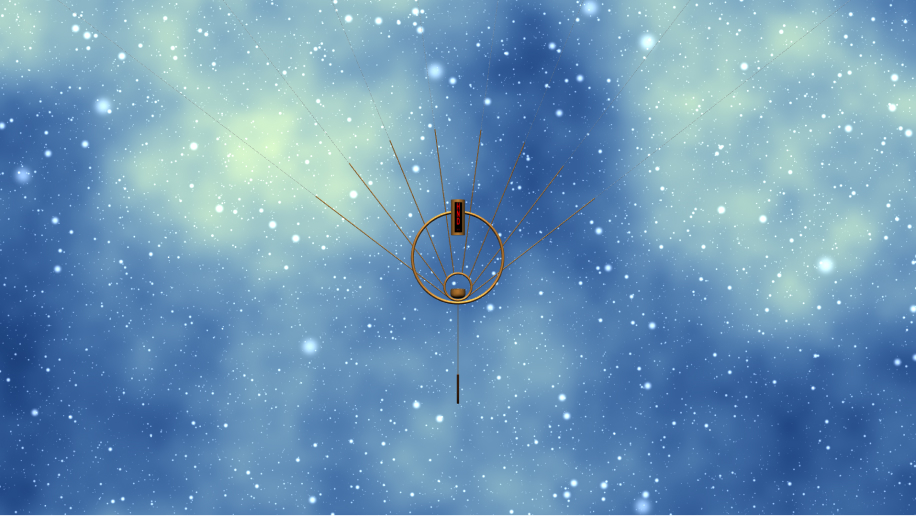
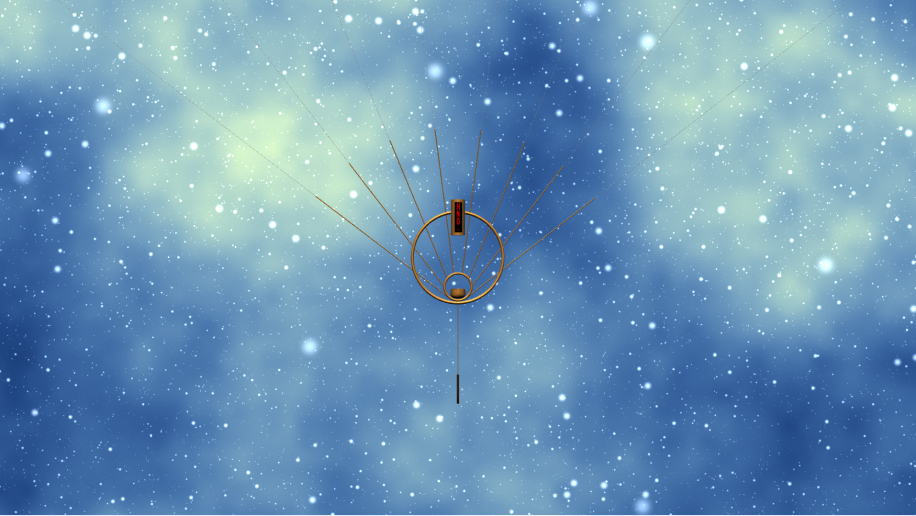
The exhibition’s featured artworks mostly incorporate coding, specific models (GAN, GPT-2, face detection, etc), or simulation technologies. However, with a serendipity offset from the “real” and the “precise,” they discuss topics such as our experience of dreams, time, memory, oracles, ever-changing water surfaces, ever-changing nature, human authenticity, and a satellite fading away into deep space. These are the realms that contemporary technologies still cannot entirely depict, simulate, explain, or predict. The ambiguous and uncertain space emerging from these works is where a progress-driven person may get lost, until a moment of re-realisation snaps them out of it.
What do you think this exhibition teaches us about how we can and should engage with technology? Is there a human level that we tend to overlook when focusing too closely on technological progress?
While I’m not sure if “teach” is the right word, I think the artists in The Long Cut present sincere reactions to the techno-milieu. For them, technology is not merely a tool but also a subject for contemplation, confusion, and even suspicion. While humanistic narratives can exist in the conceptual frameworks of many technology firms, they tend to be monotonous. Artists, on the other hand, can offer alternative narratives to the landscape that are sensorial, diverse, and sometimes ontological. They are like the Topology-mancers in the story—not critiquing the techno-milieu from an external, non-relevant standing point, but instead taking a more “in-situ” approach.
What role do you think artists play in showing us how technology is affecting human consciousness?
Many of the featured works question the notion of our technological reality as something that can be observed from the languages employed by game engines, AI companies, and so on. Today’s technological systems are picking up not merely factual data, but also behavior patterns and psychological data harvested from our daily usage. Because of this, they’re more capable of simulating our cognitive “real” than ever before. Artists detect and reveal the glitches on the surface of our constructed technological reality, and question to what extent we should yield our conscious world to computational constructions that are becoming more and more “intelligent." Again, this is not a binary situation, but rather a situation that’s full of multi-angled inclinations, and artists are well suited to illustrate those subtle dynamics.
In your curator’s note, the idea of the “blueprint” is interesting. It comes to represent something that’s both necessary for forward progress, but also limiting. What do you hope viewers of the show will take away from this idea?
We live in a time of planetary engineering, where we’re focused on converting the environment into a more habitable state. This also implies the duplication/iteration of our societies as we reach towards life on other planets. This is a “blueprint” not merely on the scale of a product, community, or society—but rather a more ambitious and expansive blueprint that reaches towards the cosmos. The show takes a cautious mindset towards this kind of linear progression and single-directional, accelerated expansion. I hope viewers resonate with how the artists’ works react subtly to this topic.
Can you share how some of the works in The Long Cut play with or critique the idea of a blueprint?
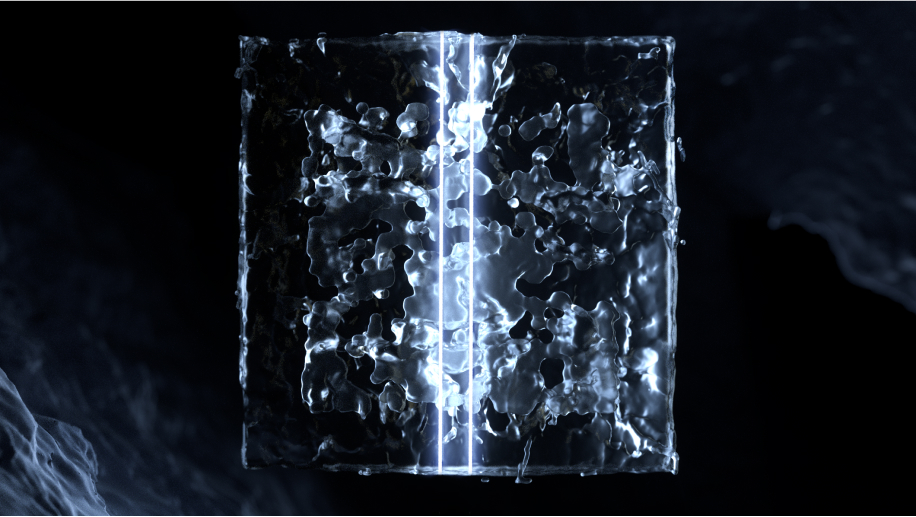
One interesting reaction is that a “Blueprint” isn’t necessarily motionless; instead, it could inherit and internalize real-time data (that’s how our simulation can become more and more “real”). However, instead of proceeding strictly as a blueprint might illustrate, artists tend to offer alternative interpretations, even when working with the same kinds of analytical and data-processing technologies. For instance, the work “Steering Pixels” created by Studio Above&Below inherits the real data of water surfaces, but then evolves into something mythical and quintessentially unseen.
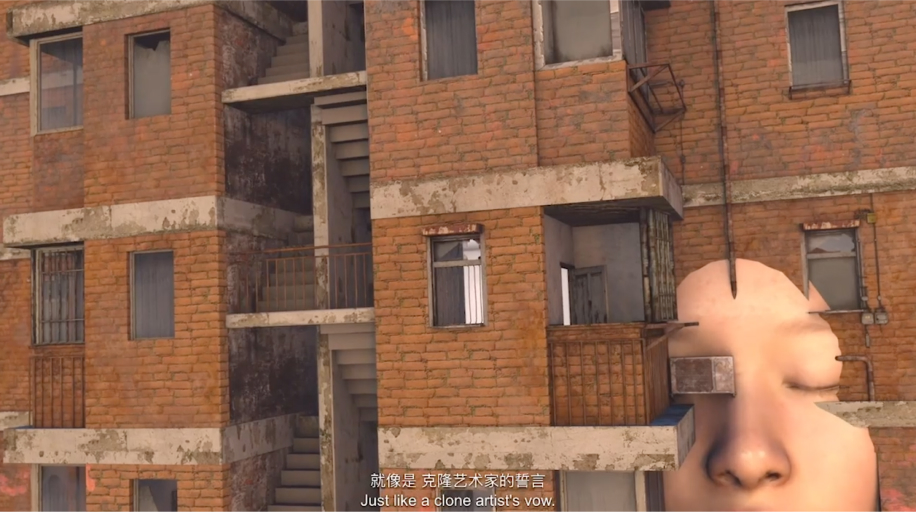
In this way, blueprints can be inhuman just as algorithms can sometimes go beyond their presets. Shi Zheng’s “Free Fall Study III” questions our “observed, studied, and analyzed world” (blueprint logic). The falling masks symbolize an over-simplified version of reality by erasing all human details. By setting us in this uncanny situation, Zheng reminds us what is at risk when we delegate the handling of everything to machinic blueprinting.
Blueprints may also transform. He Zike’s “E-dream: We’ll stay, forever, in this way (2020 selected)” hints at the autonomy of an intelligent system picking up knowledge and common sense from internet data. Started as a “Progress-tracer” intending to capture and mirror the world, the piece may transform into a “Topology-mancer” at any moment.
What was the most surprising part of curating The Long Cut? What came up while working with the artists, or with Feral File, that you weren’t expecting—but that ended up being a bonus of curating the show?
The platform encourages artists to think about file formats and offers the possibility to include in-progress and accompanying materials in the distribution of their work (such as a .psd file, a web page bundle, artwork statements, or source code). Most of the works have been adapted to fit with the showcasing logic of Feral File, a process through which the artists and I collaboratively discussed the pros and cons of presenting and distributing their work via a purely web-based channel.
One surprising bonus within the show is the work “Abstract Oracle Miner 0009328437” (Guo Cheng & Weihao Qiu), which not only plays with the browser container, but also extends the discussion towards the hardware/software hybridity of our internet environment. By making visible the hardware performance and physical reactions of each user’s computer, the work provokes the material infrastructure of our network systems. Through this, we come to realize that the materverse is never floating on a real cloud; instead, it still operates within the parameters of geological forces.
How do you hope to see digital artworks and digital exhibitions evolving in the near and distant future(s)? What’s your hope for the digital art space?
Digital exhibitions can create alternative experiences of time and navigation. I am interested in exploring how digital artworks can be interwoven into unseen stories via viewing order, metadata, entry/exit design, navigation, and audiovisual information—fully utilising the platform’s features and, in turn, even creating new features. I also hope to see further engagement with creative communities in ways that can refresh the presenting/perceiving structure of digital exhibitions.



