

Imaginative Truths
02 February 2023
Imaginative Truths
On the occasion of the exhibition I Know - On the Aesthetic of Truth, curator Giorgio Vitale speaks with Lívia Nolasco-Rozsas, scientific associate of Hertz-Lab at ZKM Karlsruhe, and Boris Magrini, head of program and curator at HEK (House of Electronic Arts Basel), about the entanglements of politics and aesthetics, the role of new technologies in regards to social issues, and which problems NFTs have the potential to solve.

Giorgio Vitale: The “truth” considered in I Know is not a scientific or academic one, but rather an imaginative one. It is based on the slow unfolding that viewers experience when they sit with an artwork. My blind faith in the power of art to move things, thoughts, and people. With I Know, I didn’t want to represent the dichotomies of the enlightenment philosophers for whom art and truth are two faces of the same coin. I wanted to brush up the spirit and revitalize the essence, though, as it seems needed these days. This spirit is here revisited in light of Pasolini’s imaginative truth. I also did not attempt to define what truth is or should be, but rather where truth should stand by. In my curatorial text I write “I Know embraces oddities” because it often feels odd to sit on the side that makes most sense when it comes to racial and gender issues nowadays for example. Can you comment on the importance of artists engaging creatively and critically with the realities we face every day, and how relevant this is to the times we live in? And maybe share some thoughts on some of the artists and artworks in the exhibition?
Boris Magrini: I like the expression “imaginative truth,” and the reference to Pasolini's thought. I am also convinced that there is no truth understood as an ontological entity, I think truth is merely a judgment of conformity of discourse with events. Nevertheless, in a more free artistic discourse, we can reinvent the concept of truth and use the term in a more poetic way. We also must consider, however, that those who speak of truth often misuse the term and actually want to impose a personal and convenient version of the facts. This seems to me to be the central theme that the artists in the exhibition I Know take up. It is important to discuss the ways in which the description of facts are constructed and how facts are judged, especially in an age such as ours of hyper-information and the easy manipulation and fabrication of knowledge. Think, for instance, of the increasingly convincing deep fakes or specific artificial intelligence programs for image and text creation, such as Midjourney and ChatGPT. It is important that artists continue to engage critically and creatively with all these realities. AES+F’s works in the exhibition allegorically represent the idolatry of technology and the manipulative power of those who hold a monopoly on information. Yehwan Song’s beautiful and subtle interactive websites show how technologies are often discriminatory and exclude certain segments of the population. Perhaps this is the power of imaginative truth, not a truth to be taken literally, but rather an opportunity to expose the imposture of so-called truths artificially established through normative dynamics.
Lívia Nolasco-Rozsas: Sheer perception is insufficient in understanding our surroundings, yet neither can solely scientific frameworks define what the “truth” may be, especially in an era in which we apparently keep ficting and facting (as Mckenzie Wark put it) and fabricating post-truth via fake news.
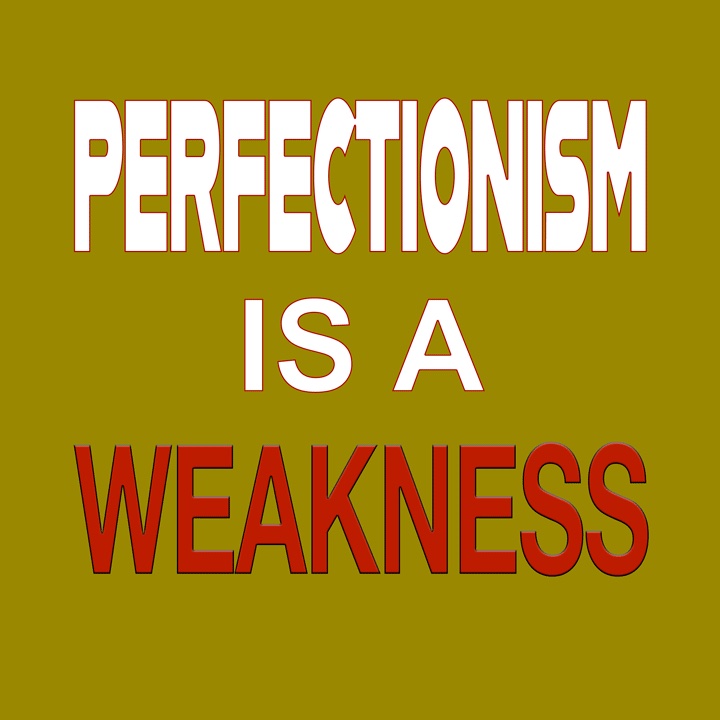
Works of art featured in I Know relate to this on levels that complement each other, even if the topics they touch upon are utterly different. Yehwan Song already indicated with the title her pieces, “Artwork 1 & 2,” that she points at an underlying phenomenon and makes a general statement about the formal aspects of art. They reflect, for example, interactivity: dependency on the viewer’s actions, but also on the interface the work is being accessed on. Access to the interface is analogous to our access to surrounding reality, and thus to our understanding of the truth, which is filtered through our perception and actions. On the completely opposite end of the formalism-activism spectrum, Claudia Hart’s aphoristic statements are based on classical canons of power politics. Visually, they resemble boards from a demonstration, even if the aim of this public gathering is not exactly revealed by them. Comparable to Jenny Holzer’s truisms, these aphorisms neither reveal nor conceal “the truth,” but rather call us out to overcome what our senses dictate and “transcend the pain of being.” Or just put out a statement that may influence power relations: “perfectionism is weakness.” While the aphorisms are meant for human-human communication, “Prophecy, nullification algorithm, shaman, conspiracy” from the artist aaajiao calls out for a new type of activism via interaction with, and an intended confusion about, predictive algorithms.
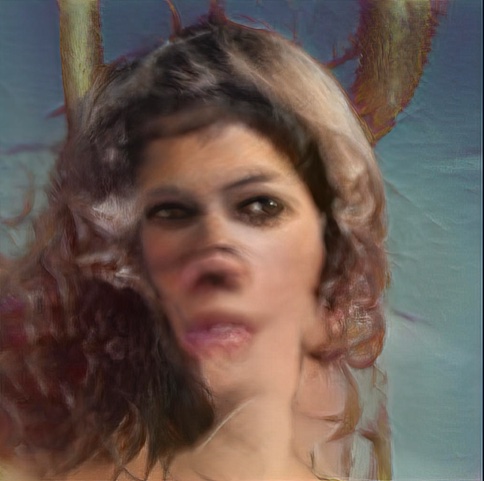
Aside from the formalism-activism spectrum, AES+F’s featured works can be described as manifestations of aestheticism. The NFTs by the collective in the show are excerpts from a large-scale work, thus they only hint at the complexity of the original video-installation. Interpreted independently from “Turandot 2070,” they seem like multiple paraphrases of “The Birth of Venus.” As Renaissance as Botticelli, maybe actually closer to Mannerism, these animated scenes apparently speak of a world order where a woman, rising from a digital lotus flower, attracts all attention, and thus is perhaps in a position of power. The actual social order is still far from this representation, thus it is more imagination than truth, at least in most Western societies. These very same societies punish and marginalize some of us for what we are, or rather for what we represent. Photographic portraits, on the other hand, can hardly represent us. Cibelle Cavalli Bastos therefore uses an entire dataset that consists of their portraits and feeds it to a generative adversarial network, which turns them into … well, portraits, which are supposed to be a synthesis of various other ones, apparently without getting even an inch closer to capturing them as a subject.
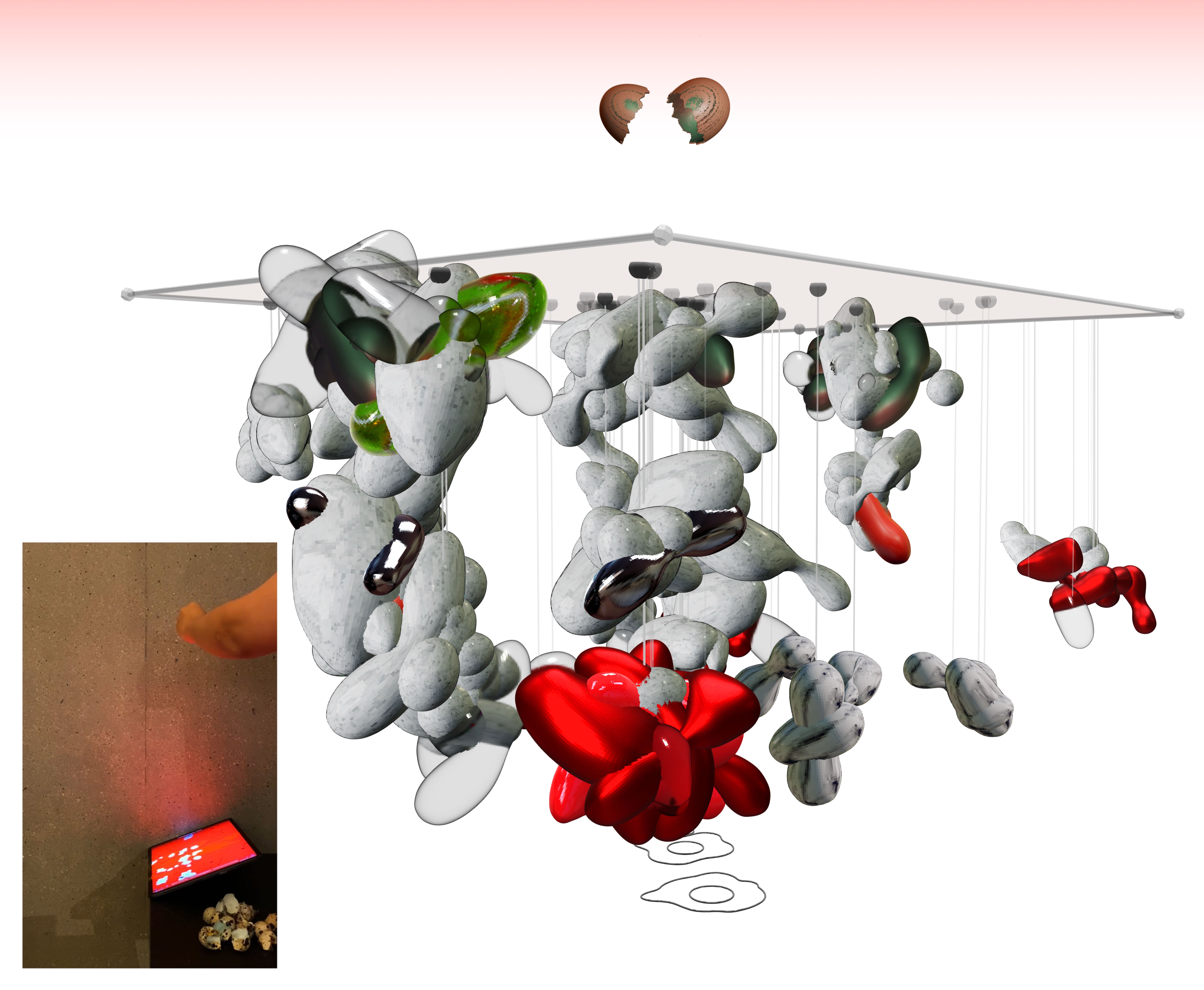
GV: Museums play an instrumental role as places where meaning is debated. Museum collections are displays of power where past narratives are shaped.
LNR: Would you like to imply that museums contribute to construction of truth, or to anything but truth? A museum, as stated in the relatively freshly accepted ICOM (International Committee of Museums) definition, is a “not-for-profit, permanent institution in the service of society that researches, collects, conserves, interprets, and exhibits tangible and intangible heritage." It can’t be repeated enough times. The definition mentions furthermore sustainability, diversity, etc. because museums shall be seen as spaces societies benefit from. Actually, I believe, despite all their flaws, that they truly are. The flaws may be inherited from the history of very Western and intrinsically modernist and colonial cultural institutions, which we need to deconstruct. That is one of the largest tasks of museum professionals for the 21st Century.
Any type of institution — not just museums — where our collective past can be investigated on the basis of assets in order to set up multiple histories of the future might be hegemonic if it spells out definitive answers to the questions it poses. On the other hand, museums that aim at neutrality and offer various narratives and multiplicity of options may contribute to the condition of post-truth. It is definitely a dilemma, but not the only one in contemporary museum practice.
Museums get distributed, they are not bound to one place, but transmogrify into hybrid entities integrating a geographical location with various digital platforms. Instead of a single building, an affluence of exhibition spaces must be taken into consideration while imagining the museum as an extended but also porous system of multiple dimensions. In these circumstances, the museum can be better understood as a system triggered by cognitive processes and based on experiences than a single place bound to a specific location.
I mention this because what is at stake here might be decisive for the topic you raised. The question is, whether it is possible to dismantle power structures preserved by the museum through participatory practices, activated relations, and their reflection, if we move beyond the museum framework and create multiple dimensions in virtual space? Can such a strategy alter the act of representation in the museum, and does this shift feedback into the notion of reality and thus the understanding of what the truth under such circumstance might be?
Some suggest that it is the gamut of current curatorial attitudes that have revolutionized the museum, turning it from a static and monolithic institution offering absolute certainties and authoritative answers to a dynamic and temporal institution perpetually questioning its own role (Karsten Schubert’s The Curator’s Egg). Some suggest we should look at the museum as an organism itself that lives from the flow of relations it generates (Clementine Delisse’s The Metabolic Museum), while some emphasize its political responsibility, offering a more politicized engagement leading to social impact (Claire Bishop’s Radical Museology, or What’s Contemporary in Museums of Contemporary Art?). The plurality of approaches suggests that a contemporary museum is a hybrid entity. The various types of hybridities occurring in museum networks — both technical and actor networks — point toward a dissociation from the modernist framework of the museum. In this context, hybridity thus signifies a step out of modernity, and with it a step out of alienating dichotomies.
BM: We should distinguish between museums and collections. Certainly, there are museums whose collections manifest and celebrate the power of nations, revealing problematic imperialist and colonial practices. Many art museums, however, especially those dedicated to contemporary arts, in my experience, are rather aimed at proposing multiple, integrative, critical discourses. For us at HEK (House of Electronic Arts Basel), a museum dedicated to new media and digital arts, it is crucial to encompass a plurality of viewpoints and opinions rather than to assert a single narrative. This is also reflected in our program and selection of artists. That museums participate in the creation of debates and critical discourse is, in my opinion, to be welcomed. The entertainment industry follows the laws of capitalism and produces what the public easily and massively wants to consume. This logic maintains a cycle that leaves little room for experimentation. Therefore, it is important that there are spaces for promotion and support for those who dare to do what does not conform to easy expectations. The exhibition 'I KNOW' at the synthesis gallery presents artists who experiment with new formats, but above all who question the way in which mass cultural products and popular information channels normalise ethical, aesthetic and social standards. For example, the artist Cibelle Cavalli Bastos in the work "A Picture Can't Take Me" has their portrait reconstructed by a generative adversarial network based on a dataset of images existing on the net, which however no longer correspond to the artist's current non-binary image. This work deals with the well-known issue of algorithm bias, which after all is linked precisely to the issue of normativity defined by the masses. It is a beautiful example of resistance.
“A Picture Can’t Take My Elan Vital” by Cibelle Cavalli Bastos. Image courtesy of Feral File and the artist.
GV: Adorno refers to art as “commentary,” a social one. Ai Weiwei goes even farther, saying “Art is... about morals, about our belief in humanity. Without that, there simply is no art.” I have run into artists who would rather place the accent on beauty and conceptual thinking, with no interest in jumping on the political art bandwagon. Is this another unnecessary dichotomy by and for the art world? How do you navigate it as a curator?
BM: I have ceased to believe in a single, comprehensive definition of art long ago, and consequently I do not believe in a single function of art. The philosopher Morris Weitz applied Wittgenstein’s concept of games and family resemblance, arguing that art is a term that in everyday language is applied to works that share not a set of common characteristics, but rather different aspects, which makes a definition that is both exhaustive and exclusive impossible. Personally, I am attracted to works that deal with topical issues and offer, if not solutions, at least transversal points of view, permitted precisely by that creative freedom that is peculiar to artistic activity. I appreciate artists who dare, who invite us to bring our gaze to debated facts or issues, or who invite different readings of such facts. This is what attracted me to work as a curator at HEK with contemporary artists, and more particularly media art. Many of these artists are characterized by a critical, engaged discourse, sometimes even with works that come close to social activism. On the other hand, I also greatly appreciate works by artists who develop original formal work. And there is nothing negative in that, creating new formal solutions is hard work. Nothing prevents artists who develop critical discourses from combining their work with formal research.
LNR: Yet again we are confronted with a dichotomy, which sprouts from the same root as the previous one. Indeed, it is unnecessary to juxtapose the two, specifically because this particular dichotomy only exists in the Western notion of art from modernity on. If you look at the vast diversity of cultural practices that one navigates as a curator, this dichotomy inherent in the work of art per se is (rather was) valid in a little niche for a short period of time, even if a very influential one.
As a curator, I often find myself in front of a slightly different dilemma: display artworks that are by early adopters of cutting-edge technology, since one might assume that “you have to know how to handle technology if you want to critically engage with it,” or rather give space to reflections that investigate the societal and political impact of new technologies, often via not necessarily the newest media. The question is persistent: which attitude shall be situated where and how shall it be contextualized to have an impact? And in the end, it doesn’t really matter if this impact is being achieved by a direct political or conceptual connotation or a rather visceral experience.
Let’s say that politics are entangled with aesthetics, and vice versa. If so, you may observe one of them in one place and the other — even if situated far away — will instantly change its properties, as if the two are connected by a mysterious communication channel. As described by Einstein as “spooky action at a distance.” The parallel with quantum physics obviously isn’t working flawlessly here, nevertheless it draws attention to the interdependencies of seemingly antagonistic properties that are out there.
“Perfectionism is a weakness” by Claudia Hart. Image courtesy of Feral File and the artist.
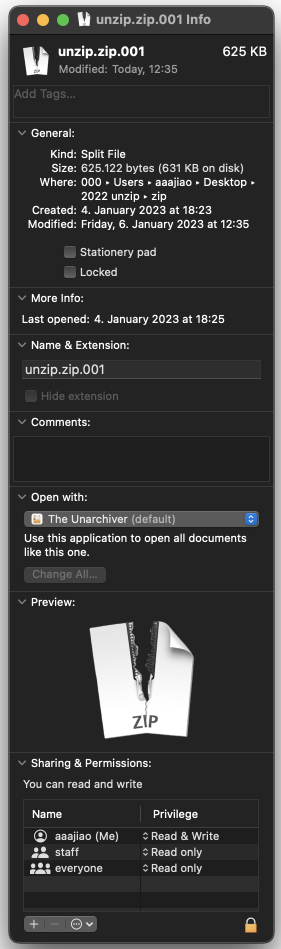
GV: One of the artists featured in I Know, aaajiao, has developed a system that forces virtuous trading, emphasizing solidarity and curiosity in a perhaps desensitized, yet hyper-financialized NFT market. It is by now obvious that NFTs have not fixed the problems in the art world their aficionados aimed to solve at the peak of the hype cycle. Could they represent a step in the right direction, though?
Boris Magrini: I'm not sure what problem in the art world the NFTs were supposed to solve, perhaps the problem of the difficulty of marketing digital art? Or the problem of the allocation of royalties? Certainly, in that sense they had an impact. This is a complex discourse, and there are many articles on the subject, dealing with questions of the stability or otherwise of blockchains, the energy consumption, the problem of whether decentralization is indeed real, and so forth. In spite of the fact that the phenomenon has already undergone several ups and downs, it is nevertheless interesting to participate not only in the discourse concerning the development of these technologies, but also in their creation. It is equally important that artists like aaajiao and many others experiment with blockchain technology in creative and critical ways, with conceptual works that challenge the very commercial dynamics that seem to define the current orientation of these technologies. History has shown us that the development of the internet and its ecosystem has been a story of centralisation rather than the other way around. Today, blockchain advocates promise a truly decentralized web3 future. But in reality, technologies alone do not guarantee that this will be the case at all, so it is essential that the conception and modeling of the future internet is not left in the hands of a select few. Therefore, we are preparing this year a double exhibition at HEK on the topic of blockchain and the development of a future web3 in which we invite artists and theorists to participate in the dialogue and help imagine the future of these technologies.
“Unzip” by aaajiao. Image courtesy of Feral File and the artist.
LNR: aaajiao gives witty and sensitive responses to certain phenomena caused by information technology: what bots or NFTs do to us as humans, and even to our societies. One of his earlier works, “GFWlist,” which is by the way part of the collection of the ZKM | Center for Art and Media, he included a printer that constantly prints an encoded list of URLs that were banned in China at the time the installation was created, shortly after the Great Firewall of China was established. The printer is embedded in a black monolith that resembles the one in Stanley Kubrick’s movie 2001: A Space Odyssey as a sort of higher intelligence from outer space that intervenes in human history.
What a critique! Chinese society (and the statement can be generalized) doesn’t only accept that the free flow of information is restricted in their country by the government but attribute it to a higher intelligence. And thus, it becomes a futile act to fight against something that is beyond, that cannot be influenced. It seems that in this new work too, aaajiao formulates a critical approach, not toward the NFT market per se, but the underlying structure it is embedded in, in order to comment on its possible futility. It’s a sympathetic answer to your question, already provided by aaajiao.



