
Movement | Space | Memory
24 February 2022
Movement | Space | Memory
Artist Sage Jenson and curator Symbios.wiki on their show Primordium, a solo exhibition of Jenson’s work.
Casey Reas: Hi Symbios. You curated this solo show of Sage’s work, and you are also a generative artist and musician. Is this the first time you two have worked together?
Symbios.wiki: Yes, and it’s how we’ve gotten to know each other, too.
Sage Jenson: Yeah, we want to make some work together, too, so it was a way to formalize the introduction. It was probably a little more of a deep dive into my work then was necessary, but I’m very grateful to have Symbios.wiki shape both the theoretic and actual coding material of the pieces. These are my first web-based pieces, probably first of many, and Symbios really guided me along that process.
CR: Sage, I came across your work looking through social media one day, and it caught my attention in a way that work has not caught my attention in a very long time. When I first contacted you in 2020, I wasn’t sure how the work was being made: if it was real time or if it was being rendered. I was so excited to learn that it was indeed real time work. But I think at that moment, it was running on custom hardware, not in the browser. Is that correct?
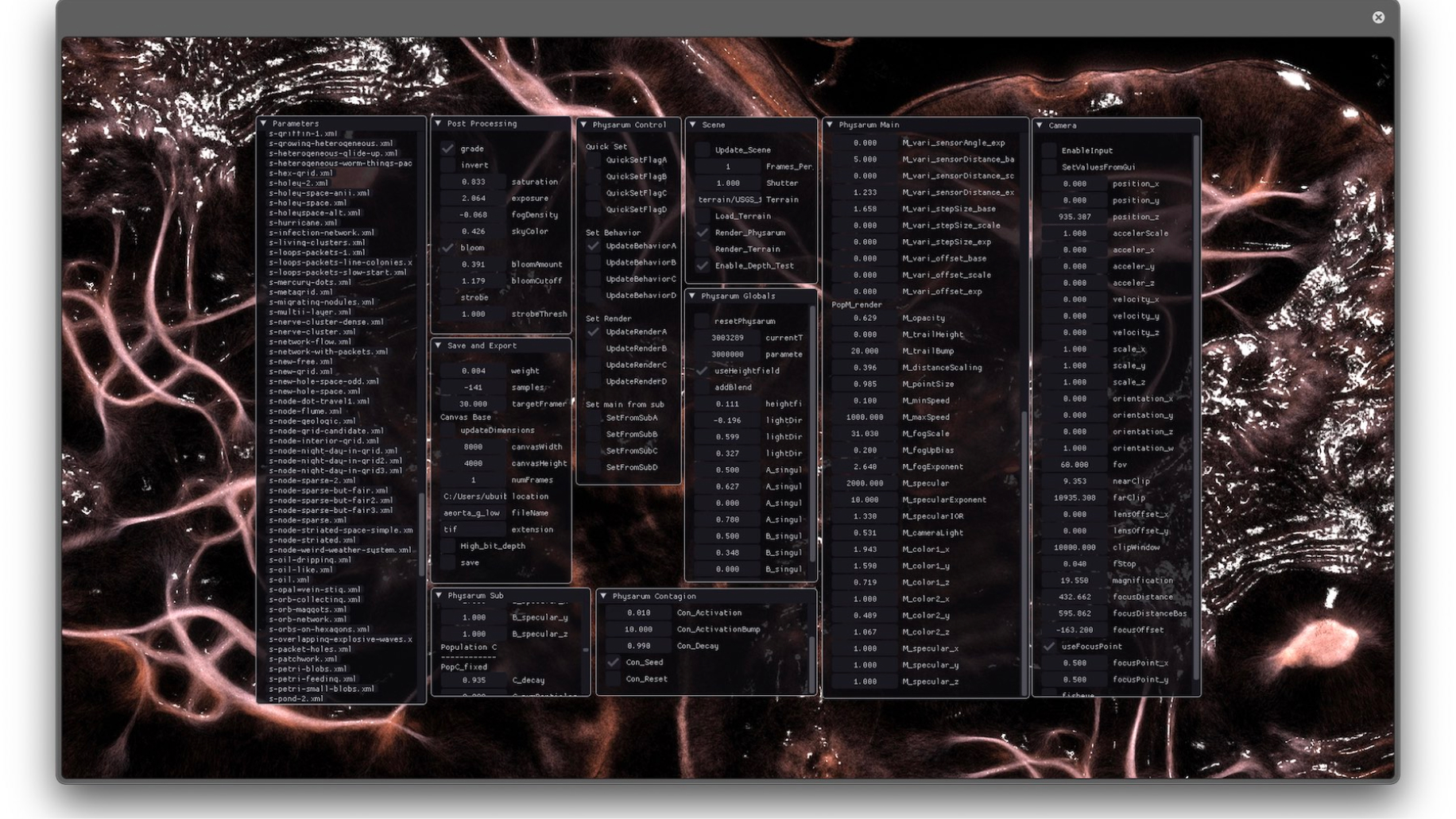
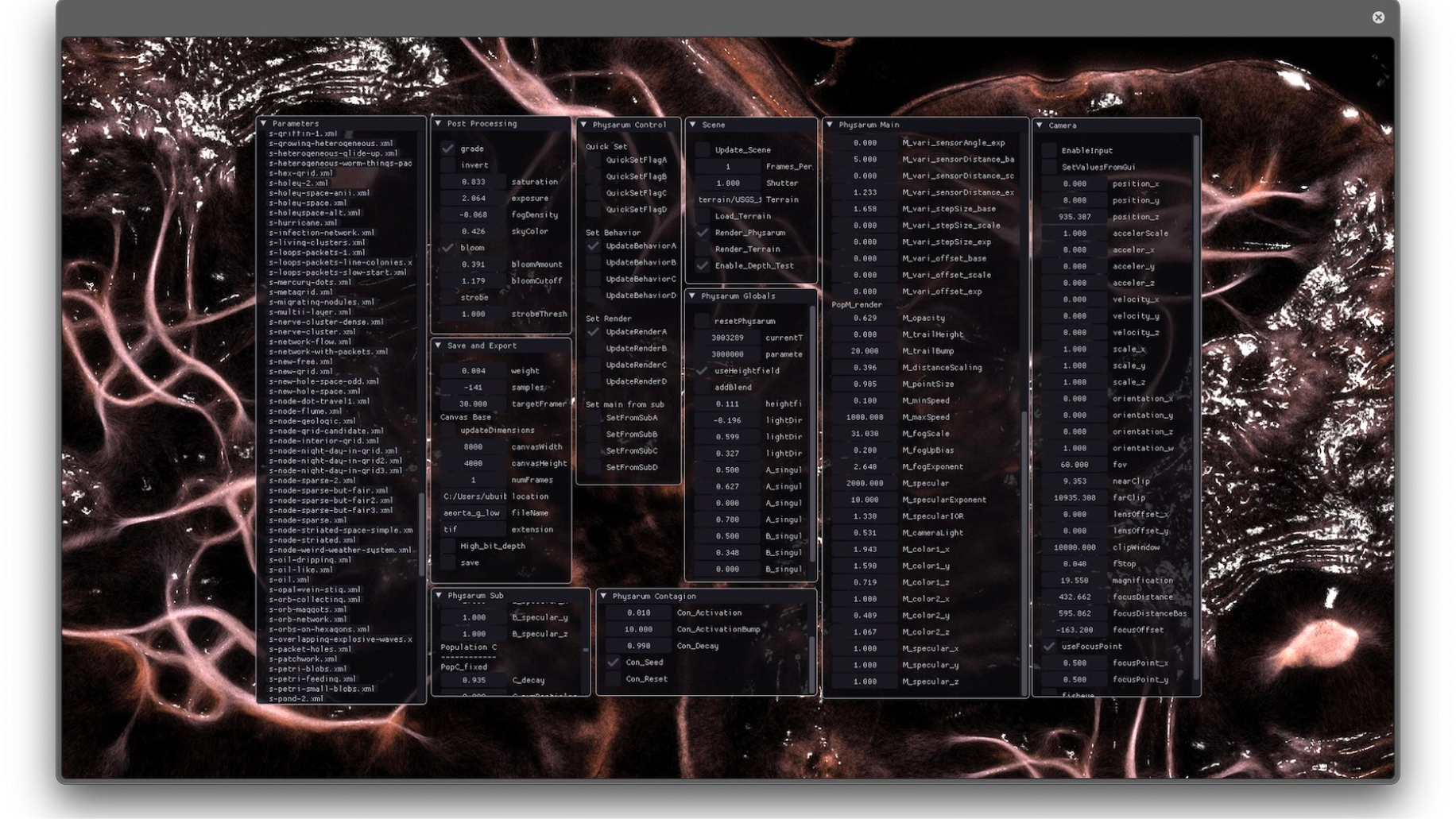
SJ: Yeah that’s right. I think about the process of creating the work itself as an evolutionary process. The loop is that I make a visual instrument with an interface that I can perform with. Then I use that interface to understand the possibility spaces within that instrument, and that always implies a continuation. This continuation then adds another parameter to the instrument, and then I have to relearn the instrument because it becomes something new. So I repeat that process ad infinitum. I think this type of work must exist in real-time, because it requires this evolutionary interactive process to discover and imagine what the work actually is. It’s really a meeting point between me and some other, really vital digital matter.
When you first reached out to me, I was working full time for Neri [Oxman] and didn't have the time to do the show in the way that I imagined it needed to be done. Since Feral File is a web-based gallery, I wanted to create a web-based piece — a video of this work is really not the work. That’s for a couple of reasons: one is the dynamism where each instantiation actually has a lot of particulars that lead to difference between runs with a piece. The other is that the structures that I’m working with are pretty hostile to video compression. So I knew I needed to create a real-time, web-based work, and I couldn’t do it for that show — it just took a few months for me to really get around to doing it.
CR: I like what you said about a space of possibilities. That’s also how I think about my own work — well, I don’t think of them as instruments, I think of them more as systems — but it’s like a space that contains an indeterminate number of options. Through spending time with the work, through performing the work, I explore that space and find areas or zones that I think have a distinct or specific character.
SJ: I think there’s a very specific subset of a system that I’m interested in. I’m not really interested in the full space of possibility. I’m interested in this surface, this n-1 dimension of this system, a traversable fractal topology within the parameter space itself. The systems come to reflect that structure as well. So I sort of cultivate the aspects of the system that lead to this unfolding, and lead to the exciting parts where there’s critical transitions and surprising behavior; the areas where I understand the system on a deeper level than the model itself, where I can connect to it on an emotional level. There’s desire. The structures want certain things. There’s repulsion. There’s life phases. There’s all these things that I can see as reflecting — not imitating but reflecting, rhyming with the processes of nature. This is partially by design, but also through cultivation of different types of relationships between movement and space and memory.
CR: When you’re working on the code that underlies the system, it’s a very rational, intellectual process. But then when the system is running in real time, it can be very much about the experience; it can be very emotional. Getting to the point where you can react to it with your full sensorium and explore performance, is that the place where you want to be?
SJ: Yes!
CR: Your Primordium show is built around a series of artworks that share the name “36 Points.” What are the 36 points?
SJ: I’ve been working with this particular system, or the evolution of this system, since late 2019. I’ve been adding things, taking things away, trying to simplify it when I can without losing expressivity. And throughout that entire process, I’ve been accreting certain states that are for me differentiated from the rest. I save them into a text file and then I can reload them in all sorts of future manifestations of this system.
So the 36 points are different slices, some of them from the first day that I used the system and then some of them from last week. I tried to arrange them in a way that gives a feeling for the breadth of what is possible. By moving through them, you can start to triangulate what the system actually is and what I am trying to tease out of it.
CR: So then each of the 36 points has its specific configuration, a specific...
SJ: I use the word preset, or a point in the parameter space…
CR: So each one has its own preset but then it can be modified as it runs, and anybody who is experiencing the work can explore that?
SJ: Right. So basically, as you move from one point to the next, you see the past historical configuration of the system start to reconfigure and reassemble into the new space. For me, this is the moment of the piece where you actually see what the core of the system is, because this helps you understand the relationship between these points. So there’s like, say, a half-second transition between each of the points where you get a glimpse of how one of the points actually relates to the other one.
Each of these transitions tempers the next state such that there are certain phenomena that can only happen when there are certain sequences that are viewed. That’s where the display edition will come in.
CR: What’s the display edition?
SJ: While everyone can explore the 36 movements and move between them, the display edition will have a specific type of configuration — one might say a line I’ve drawn between all the points. It is a performance, a way to experience the work how I see it.
SW: And to experience it passively. Although it’s necessary to have the interactivity to really explore and understand the underlying space going on, there’s a thing with interactive art that kind of loses the beauty of art, which is to let it passively flow over you. We felt it was necessary for the piece to also offer a way to experience it rather than playing with it.
CR: I think that also ties back to the influence of music, and ways of performing that happen through sound. With this work, there’s a score, but every time it’s performed it’s performed differently — depending on the moment and your mood and the environment. And with the display edition, you will also do a performance that will be encoded and will activate this work.
The exhibition note, mentions your deep love of sound from Ligeti to SOPHIE. Can you talk a little bit about those two different phenomenal composers and how they've influenced your work?
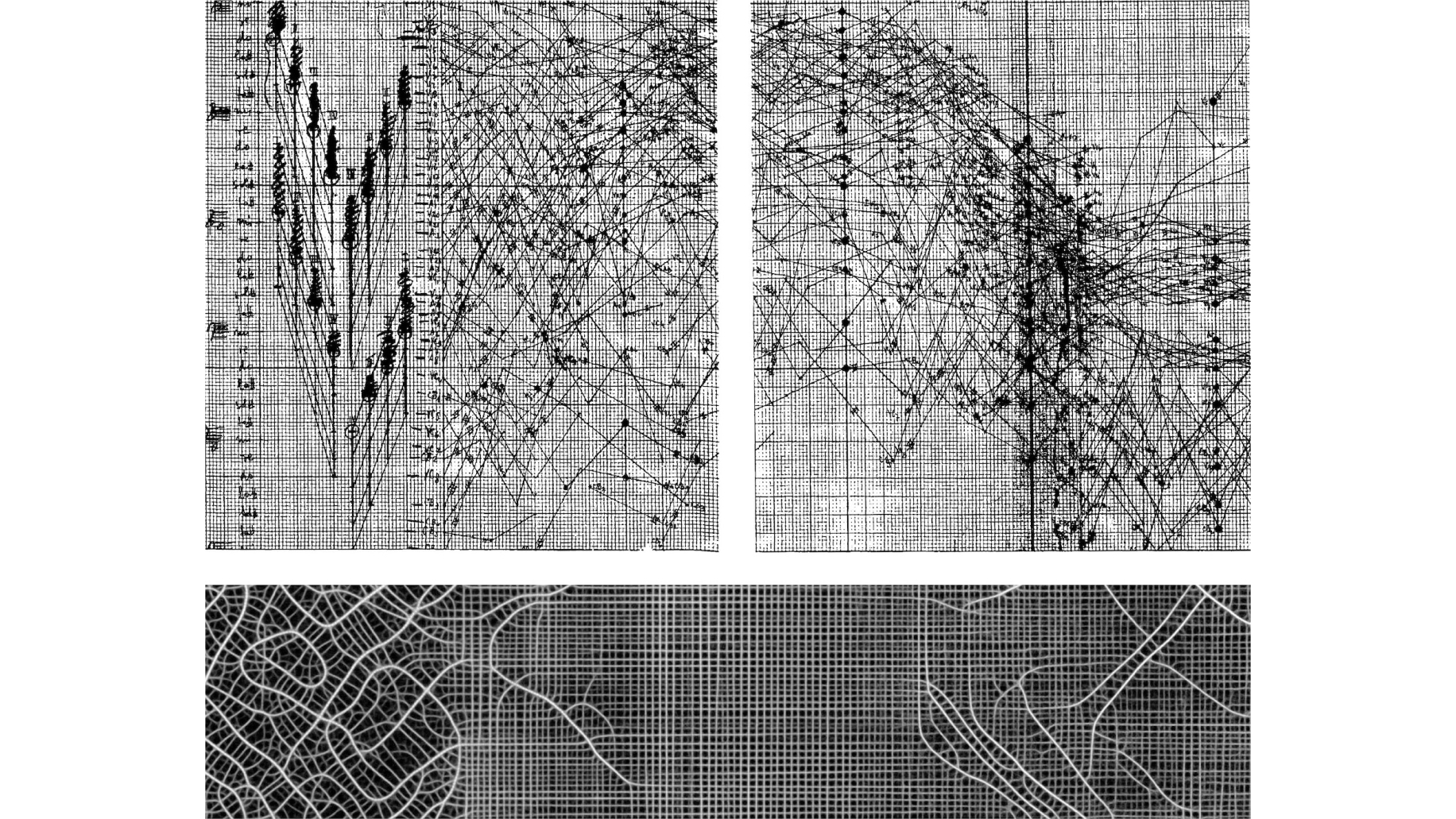
SJ: I studied music composition in school and that was my main focus for several years. I played the violin. Hearing Ligeti’s orchestral work made me understand the whole, and what you can do with a swarm of sound and these types of chaotic nets. He engages with complexity in his music in a very sensory way and sculpts these wholes out of many different, somewhat independent parts. I think of Saariaho and Xenakis also in this vein. Their scores become works of visual art in themselves and a strange mirror of its sound-world. I try to follow this trajectory and imagine what a score could be when it is complete unto itself.
Ligeti was the composer I was attached to when I transitioned from primarily playing music to primarily composing music. And SOPHIE I saw play around 2014. That also unlocked a possibility for me — not in the complexity but in the unity, from a purely material point of view. She was singular in her ability to traverse a parameter space. There’s so many ways to approach SOPHIE’s universe.
CR: You also mention the philosophers Francois Laruelle, Gilles Deleuze, and Felix Guattari. How were they influential to the work and the show?
SW: Laruelle’s non-philosophy is the idea that rather than looking at the world as all of these different things, you’d look at these enmeshed, tangled, all-encompassing things. There’s “the one,” as it’s referred to. Rather than separating the transcendent God, for most philosophers, or the transcendent algorithm, for generative artists, from the real world — where humans live and where aesthetics live and where the artifacts of the generative art algorithm exist—trying to view a world where these are one and the same thing. Deleuze uses the word imminence, which is a loaded word, but that was kind of the explanation of it.
This is a philosophical background that is pretty personal to both Sage and I in terms of our backgrounds, and in terms of how we view generative art. It’s so fundamental having this abstract algorithm, but then also these aesthetic objects, and they’re essential to each other. You can’t really separate them. You can’t really just make generative art that’s chin-stroking and you can’t really just make generative art that’s nice pixel colors, either. It has to be this really intense entanglement of those two things.
CR: Sage, one reason that I responded as I did to your work, when I first saw it, was because I had spent so much time in the 1990s infatuated with and learning about artificial life, or simulating natural systems. My reference point for that was looking at what researchers who were working in biology and ecology were doing. I was thinking about these bottom-up behavioral agent-based systems as a way of making pictures. This long history of image-making has always been my focus. I felt that the work I was seeing from you was related to that exploration but was at a whole other level. I was wondering, what are your reference points within that history?
SJ: That makes a lot of sense that you were thinking of making images. I suppose here I’m thinking about making movements. I don’t think a lot of these points make much sense as freeze frames. They only make sense when you view them over time since they have a sonic orientation.
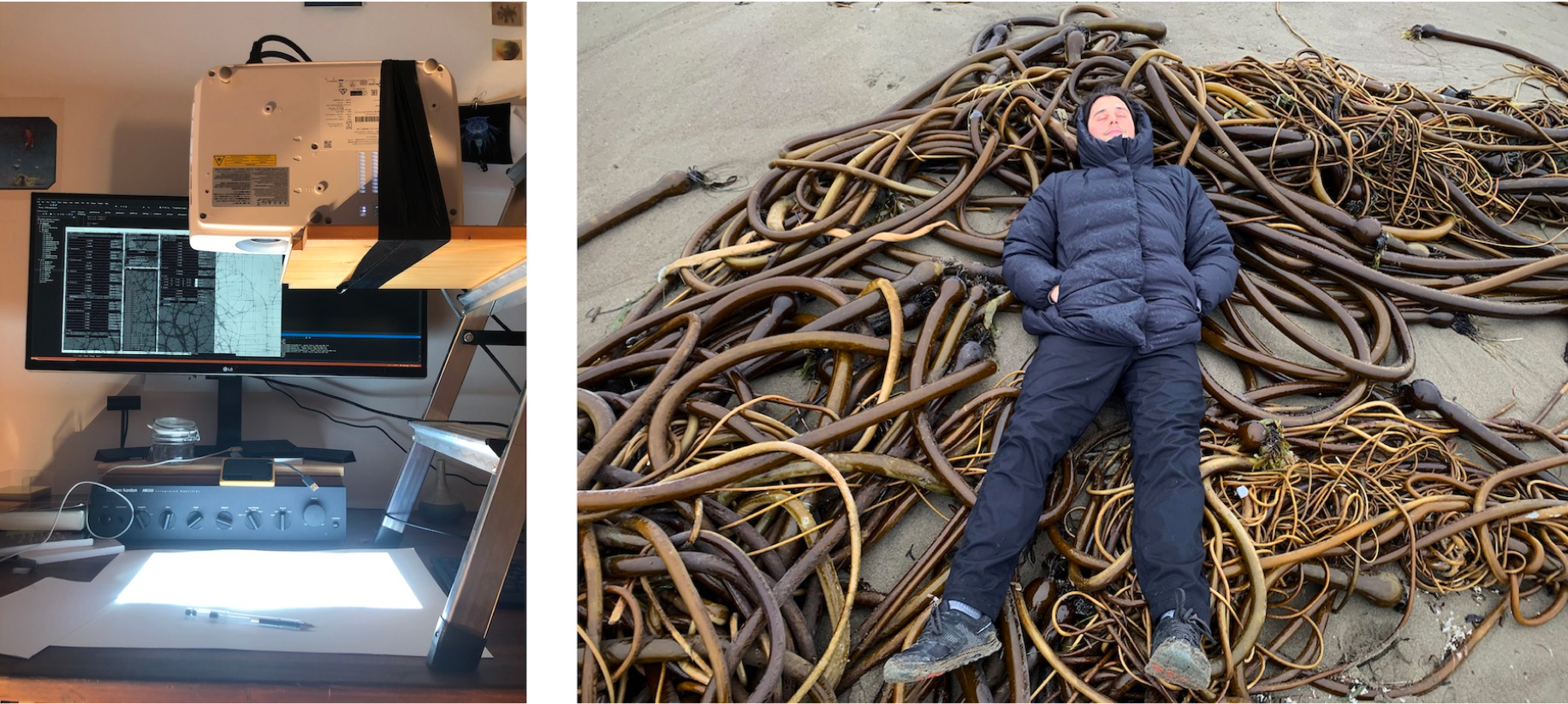
On a very surface level, I was really thinking about, how do you actually transport points around in space? The artificial life community is very inspiring for me, and those researchers, from a certain lens, are closest to what I do. And then from another lens, not really at all, as I think of my work as a performance practice. Soon I’ll be in a space actually performing this and sharing it–reacting and expressing in a way that hopefully gets a few steps less abstract and a few steps more embodied.



