
Sculpted Math
10 November 2022
Sculpted Math
On the occasion of the solo exhibition Gray Matter, artist Auriea Harvey and curator Gaia Bobò discuss expanding the notion of sculpture, circularity of materiality, and polygons as a magical material.
Auriea Harvey: Gaia, you've had a chance to look at the pieces. But for someone who’s not seen this exhibition, I would start by saying that it is a sculpture exhibition. The works take the form of digital sculpture, and that distinction between something that is “Sculpture with a capital S,” as opposed to something seen as purely digital or an NFT — that is an important distinction for me. It’s important to me that people approach the work with the mindset that what they’re witnessing is a sculpture exhibition, and asking, what does it do then that sculpture is digital and interactive?
Gaia Bobò: I would say that I see your works as purely metalinguistics, in the sense that they always refer to sculpture itself, its mechanisms, techniques, history. They are of course within the digital discourse, but I really see how they come from traditional sculpture, and how they reflect on what sculpture is today. In a way, I think they’re challenges to explore the expansion of the notion of sculpture.
Auriea: Very much so. I’m trying to point out that fabrication is something that is incredibly prevalent in what sculpture is today. I’m just taking it and reversing it and putting it on loop. Usually the fabrication elements of 3D scanning and digital sculpting are taken as a step along the way towards a grand thing that is a physical sculpture. Whereas for me, as someone who comes from the digital, that’s absurd. So I play with that absurdity, with the absurdity in the act of taking a physical work, which is where I started all of these pieces (the components of these objects also began digital), and scanned them in, turning them into something digital, and then re-materializing that object. This circularity of materiality that happens is something that is very interesting for me conceptually. Also technically what I am doing is absurd in some ways, presenting the heavy, gray hipoly model in the browser is inefficient yet I am doing this for aesthetic reasons, for the love of 3D polygon. I am not interested in efficiency, I want the polygons enjoyed as I enjoy them, they are like frosting on a cake, they are like the facets of a complicated jewel. And you don’t have to fabricate it to truly see it.
I feel that does point to something interesting about what sculpture is today, but also to what it always has been. Sculpture has always been this transmutation of matter from clay, to a plaster, to a marble or a bronze. But now we happen to be at a time where the digital plays an enormous part in this. It also plays a role in how we encounter sculpture. Of course, there is the usual way of encountering it in a gallery space or museum. And you can look at an image of a sculpture online. But to look at a 3D object online — how is that browsable? How is that viewable? In what ways do you walk around this object?
In the case of this show, you are looking at the “real” sculpture. What you see in the browser is the full resolution original. And you receive that 3D file, my lump of clay so to speak, and I invite you to print it out again and re-materialize the objects in another material that I may know nothing of. Then I want you to hold that object in your hand, I want you to have that physical relationship with the object, not just the digital relationship.
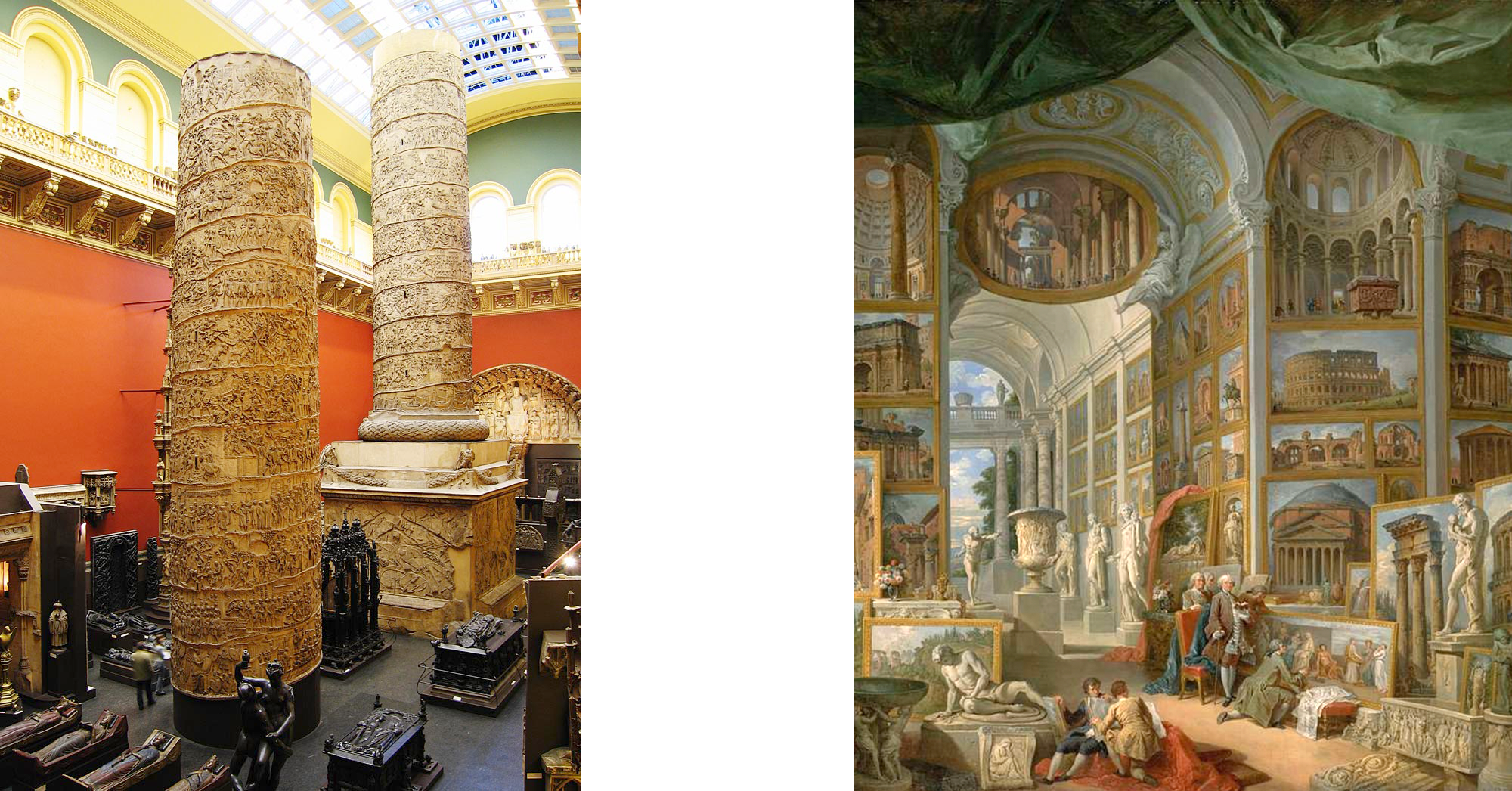
Gaia: What’s also interesting in the process is that every action of scanning, printing and remodeling ends by discarding something of the previous form.
You have a physical object that you're scanning in, and you have the digital file, and then you print it again. When you get to the final sculpture, the first scanned object has already been transformed many times, and the same happens to its digital alter ego. This memory of the digital and of the physical are always mixed with one another. It’s the same with verbal translation: something is acquired and something is lost within the transition from the original language.
Auriea: But it gains a new meaning.
Gaia: Yes, it’s something else.
Auriea: By taking something from the digital into the physical, then back into the digital, and potentially back into the physical again, something is lost and something is gained. Aesthetically, I think that deep down — or maybe not so deep down — I’m a formalist. I enjoy looking at these objects and feeling them and turning them around in my hand and understanding them. When they’re printed, I enjoy their new materiality in whatever format and size they end up being printed in. I think there’s a story that gets accumulated by these repeated transformations of the object. That’s also what I hope to communicate in the digital pieces, because I don’t just present the forms like, “oh here’s a 3D model.” I'm trying to also add a layer to the object by making them interactive. You encounter them with your hands — if you’re on your phone or you're on a desktop with a mouse or trackpad, you’re using your hands to turn this object. I wanted to play with the rules of that, or at least what we perceive as the rules of that. Because right now, the way people look at 3D objects online is pretty codified to a few simple ways. But of course interactivity and the digital allow a lot more possibilities than that. So even though I’m still keeping it simple — it’s my hope to play with the concept of turning the object, experiencing it in the digital and what it feels like to do that, what it means, what it feels like to explore that in your digital hand as opposed to your physical one.
Gaia: When we first started talking about this work, we were focusing on other aspects, and this idea of interactivity is something we arrived at a bit later. I remember you told me that you were intending these as “magical polygons.”
Auriea: Yes.
Gaia: I really liked that wording because it got at that sense of manipulation. This is one possibility of digital sculpture and digital interaction.
Auriea: Polygons are a new material, and it’s one that I take seriously; I guess every 3D artist takes it seriously. It feels very real when you’re making it. It feels just as real as the clay that I use when I make something physical. And that’s why I say it’s magical — it’s basically sculpted math. You can view all of the vertex positions — their X, Y, and Z positions — in a text file. So it feels very much like something that’s at once there and not there, like all things digital, I guess.
Gaia: In a way, the online is always connected with something physical, with something tangible. We see it as immaterial, but at the same time there are physical servers that are allowing us to have this Zoom conversation today. And there’s always the device…
Auriea: Right. When I hold the original sculpture that I made — I’m holding it up now — and then I hold the copy that I printed out, they’re almost identical. Identical enough that it’s almost banal — it’s like, “ok, so you scanned this in and 3D printed a copy.” But then you really look at it and you notice all the little ways the print copy differs from the original. Those differences are digital — but not _just _digital, it can also be artifacts left over from the printing process. Like, there’s a protrusion here on this copy, and that does not really exist on the original. To me, all of these things combined are what is new or interesting or magical about this process.
And then there’s the notion that I can now allow people to take this object and print this object themselves. By now, we’re used to the idea of things being transmitted through servers; that’s the internet. But I think the concept of taking an object and sending it somewhere and then having it rematerialized, that still has a kind of magic today. After a while, maybe this won't be such a big deal, and maybe it already seems banal, but I really love the fact that it can feel like a magic trick to make this object and reproduce it.
Gaia: I don’t think this is banal, in the sense that you’re approaching this process as an artist, with an imaginary, obsessions, and methodology which remain clear and present within all the different virtual-material passages.
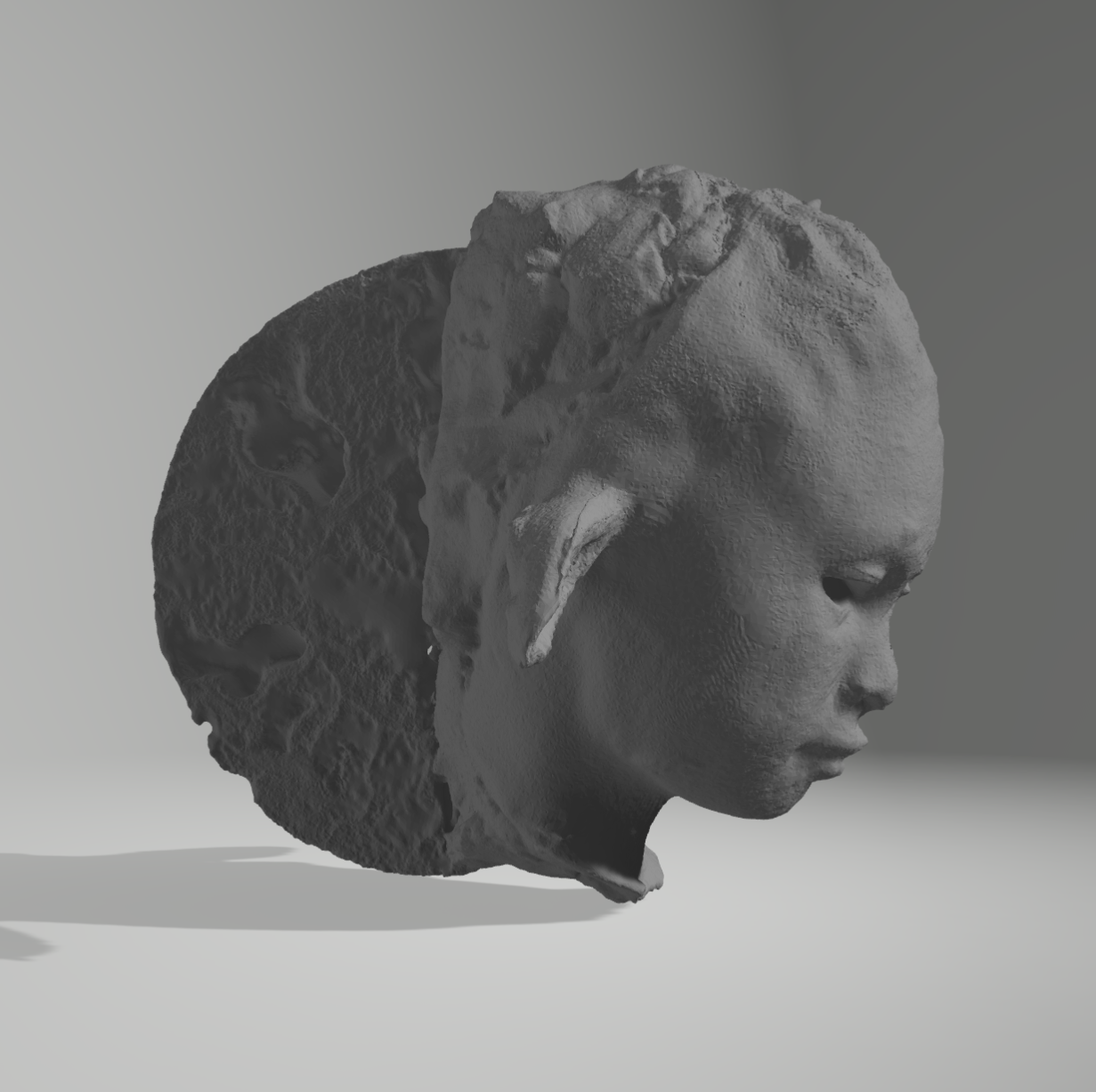
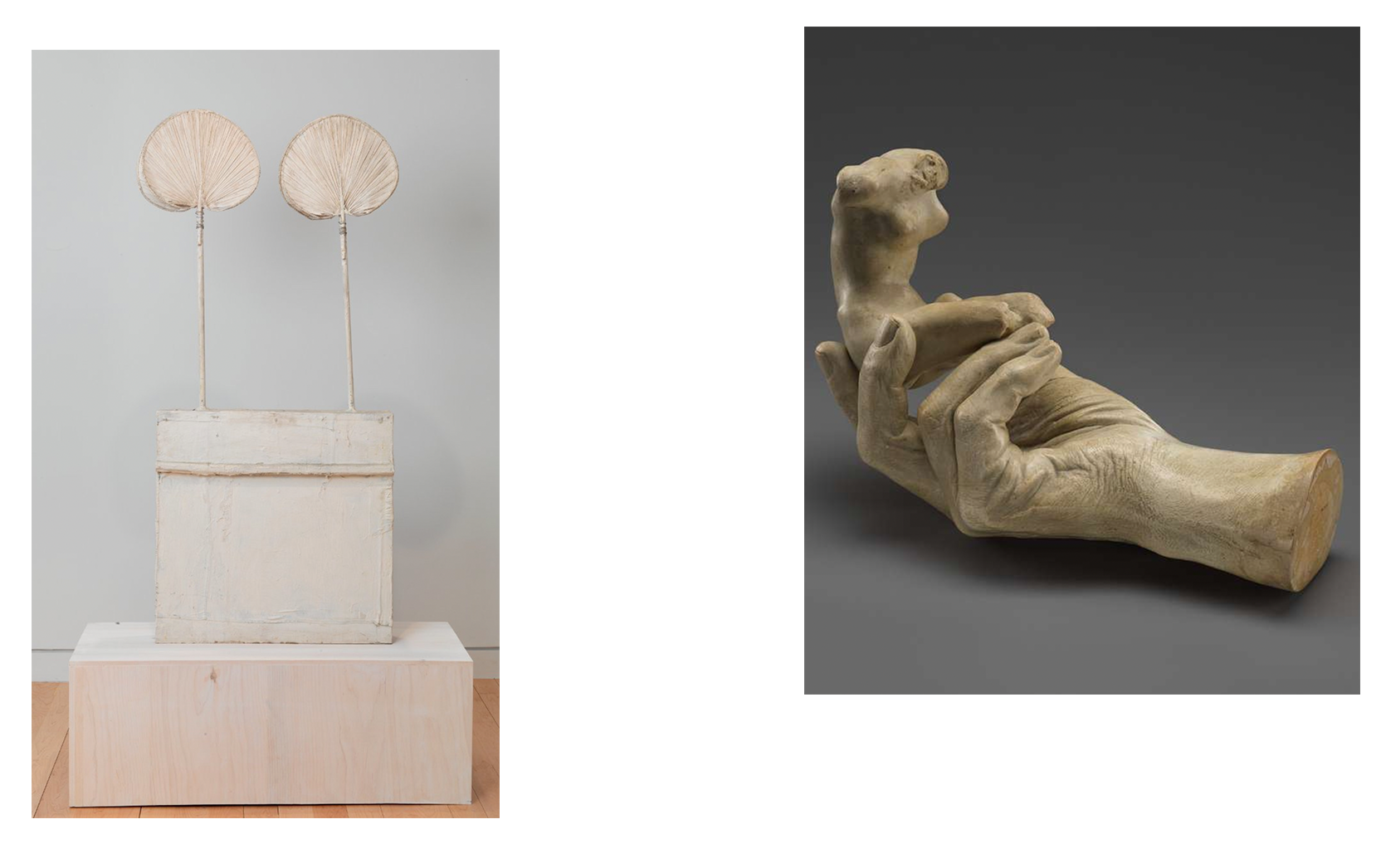
Auriea: Those things come through with the fact that all of these are sculptures made from fragments of my other sculptures. So it’s an obsessive journey into my sculptural practice, and wanting to recombine those already existing objects to say something new. Traditional sculpture artists have of course also reused pieces of work that they've made before or used found objects and combined them into new objects. I think you refer also to my obsessions with Auguste Rodin and how he combined and reused his own statuary to tell different narratives, or Cy Twombly’s sculpture practice where he would transform anything laying around into something classical and fascinating just with a coat of white paint. I think the digital makes it all seem brand new and shiny, though. I cover everything in a coat of gray polygons.
Once they're in the computer, I could do all kinds of things to my sculptures. I could change them entirely. I could make it blend smoothly from one piece into the other. I could clean it up. But for this show, I made a rule for myself not to alter the piece once it was scanned in. I only altered it in the real world before I scanned it in. If there needed to be a change, I had to go back to the sculpture and change the physical sculpture, and then re-scan it.
To me, it was more important that they were physical and that when I scanned them, I picked up all of the textures from what they were made of. If it’s made of stone, if it’s made of plastic, if it’s made of clay. And I hope that in the end that gives the digital object a level of tactility that makes you want to hold it in the physical somehow.
Every one of these sculptures contains a riddle that I hope that the viewer, the collector, has fun unraveling. Because to me, that’s what sculpture is for. When I see sculpture in a real space or online, I just want to sit back and look at it and understand it.
Gaia: This gets back to the absurdity you were talking about earlier. The sculpture gets more and more complex as you look at it, of course, but on another level, your process also highlights how in order to express meaning, sometimes we are forced to do things that are apparently useless. Like, why are you scanning this thing, if it already exists?
Auriea: Different people enjoy this on different levels. A lot of people who are going to be visiting the exhibition are digitally savvy people, but maybe they haven’t even thought about this notion of digital sculpture before. I want everyone to understand that transmitting the sculpture digitally to whoever wants to see it, that is what’s new about this. They will have the power to actually hold that object. And to me, this is a very open-handed gesture. For a lot of artists who are working with digital processes as a method, as a means to an end, they would never allow the digital version to be downloaded, let alone seen online. To me, this is something that tears down walls. This is something between me as an artist and other people in the world. You don’t have to come to a physical space to see this work.You don’t even have to come to a physical space to touch it.
I’m very hopeful that people will take this open-handed gesture, and actually get prints made and feel what these sculptures are all about, because they’re made for their textures and their shapes and their strange enigmatic meanings.
Gaia: The whole process is also directed to a different way of enjoying physicality and the digital. This could open new doors to our perception. Today, we’re never really disconnected from digital media, and this makes me think of something we talked about earlier, about the idea of reproduction and the death of the aura as intended in Walter Benjamin. In this case, the loss of the aura is the very condition that makes this overall process possible, as this all starts from the manipulation and repositioning of the art artifacts and of sculpture itself.
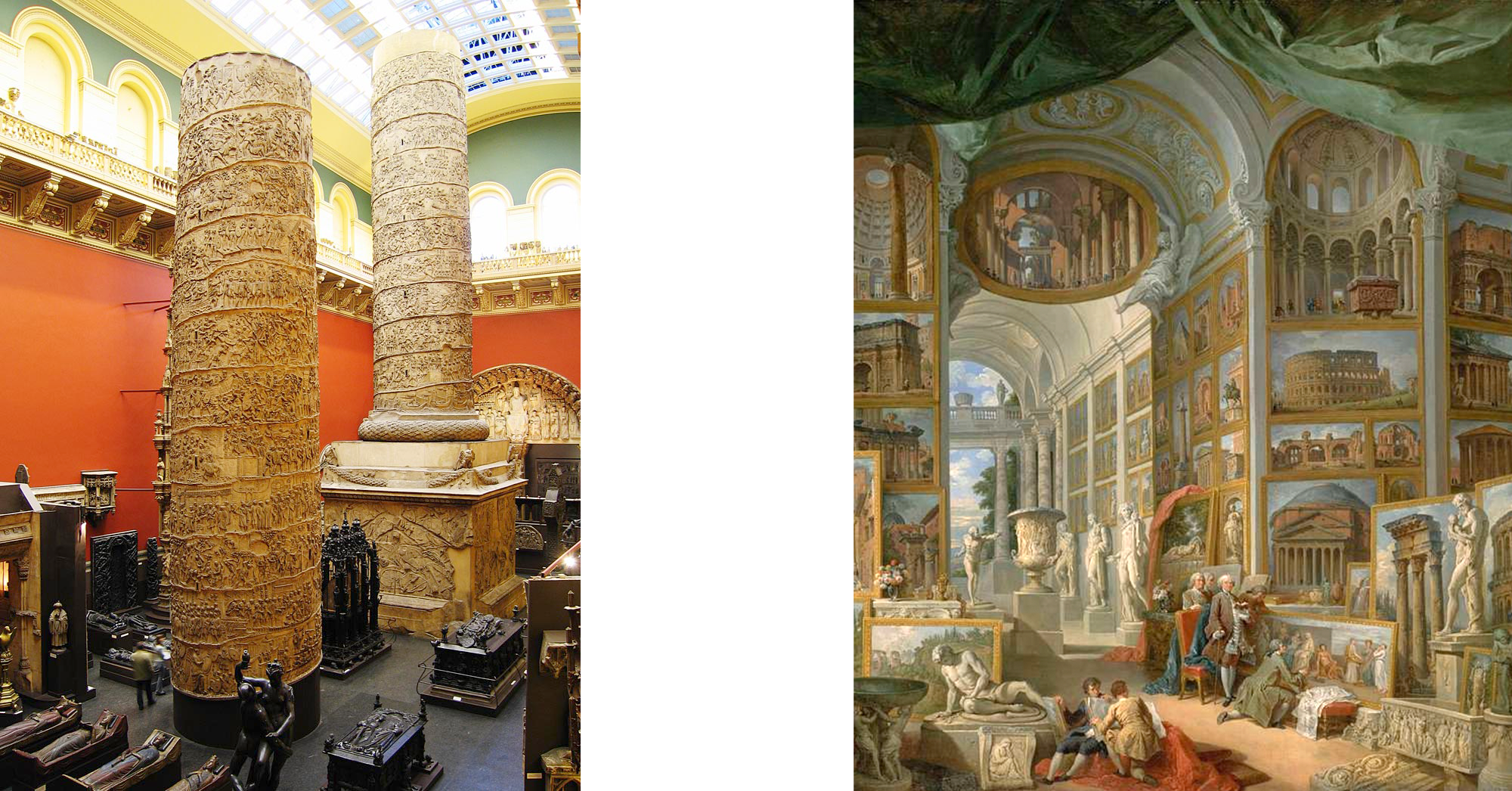
Auriea: I enjoyed the parallel you drew with my work and plaster casting very much, because of this notion of the aura of a sculpture. The reason why cast collections flourished in the 19th century and for many decades after was because people couldn’t make the journey to see the treasures of Rome. So you make a cast of it and then you transmit that cast across the world. It’s the same, in this sense, of what I’m trying to do with this show. It’s really the perfect analogy. If you see a great cast collection, you're just amazed at all these things, all these grand works of art that are in one place. I’m thinking of the V&A and their cast collection there. Who isn’t in awe of that?
My sculptures are cast in polygons and not in plaster, but to be able to transmit this cast of this thing that I’ve held in my hand and that you now can hold as well is something that I think is really magical and amazing. I think it retains that aura, actually; rather than it being a diminishment, it’s an addition. I think that even the digital transmission of that object, the fact that I put this on a server and now you download it and take it through whatever process that you have to go through in order to make a physical object, that becomes part of this story, part of the history of this object, and hopefully it adds to what you ultimately see when you look at it.



