
Whistlegraph: Doodling Clockwork In Lore and Score
20 May 2022
Whistlegraph: Doodling Clockwork In Lore and Score
On the occasion of Whistlegraph’s solo show, “Ten Whistlegraphs”, writer, media maker, and educator Dorothy Rose Howard reflects on the artist groups’ work in relation to temporalities, folkloristics, and the digital.
ASHLAND, Oregon — The smell of distant forest fires lingered in the hot dry air as the sunlight came through branches of cottonwood and alpine trees, scattering on colorfully-filled notepads. A group of people drawing and harmonizing on quilted blankets stretched out on a patch of emerald grass adjacent to a wooded glacial creek in Lithia Park, tucked away in the hills.
I was free sketching in my notepad, but mainly observing members of Whistlegraph and friends rehearsing a TikTok video they ended up posting later that day.
As we were drawing, an older lady dressed in a drapey power blue pantsuit stopped and introduced herself as Cynthia.
“What are you doing?”
There was a moment of pause where folks seemed to be turning over different ways of answering her question.
“Making whistlegraphs.”
They performed what they had been rehearsing on the fly and showed her their method of singing and drawing. It was a moment of sharing, it was a moment of caring, and it forged an all ages connection through communication.
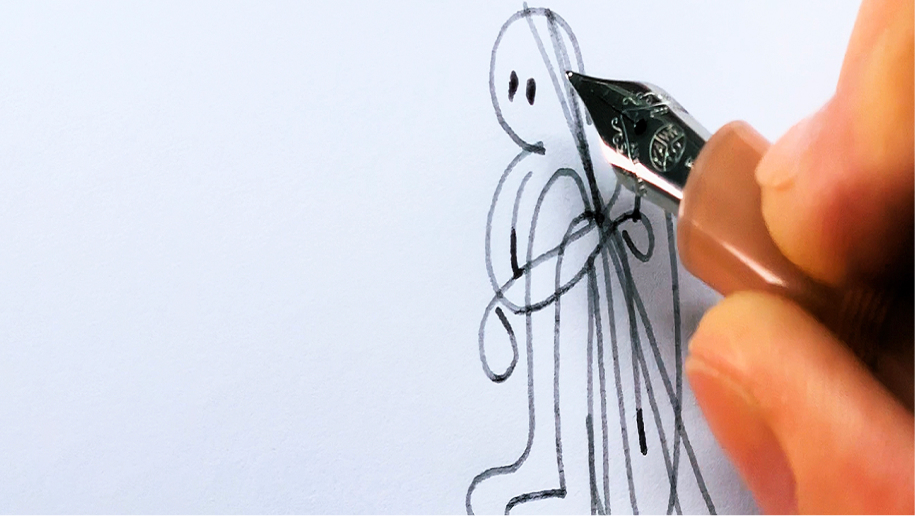
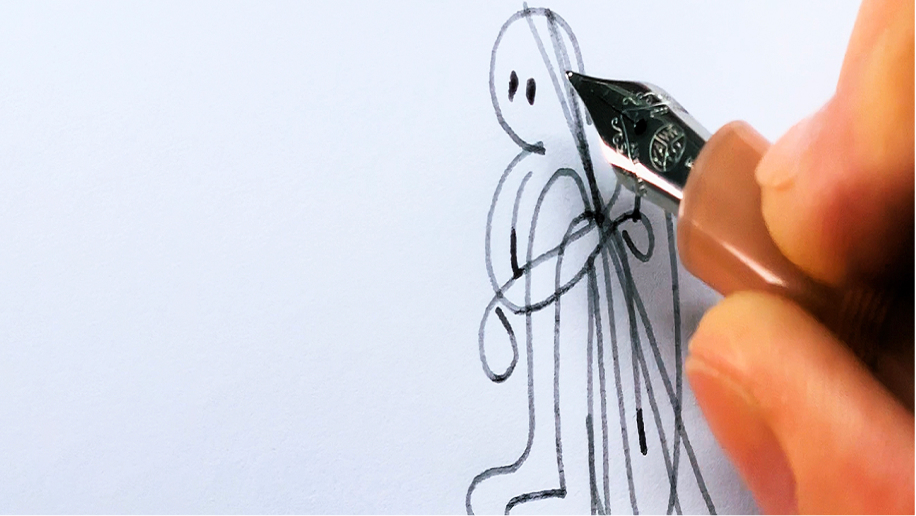
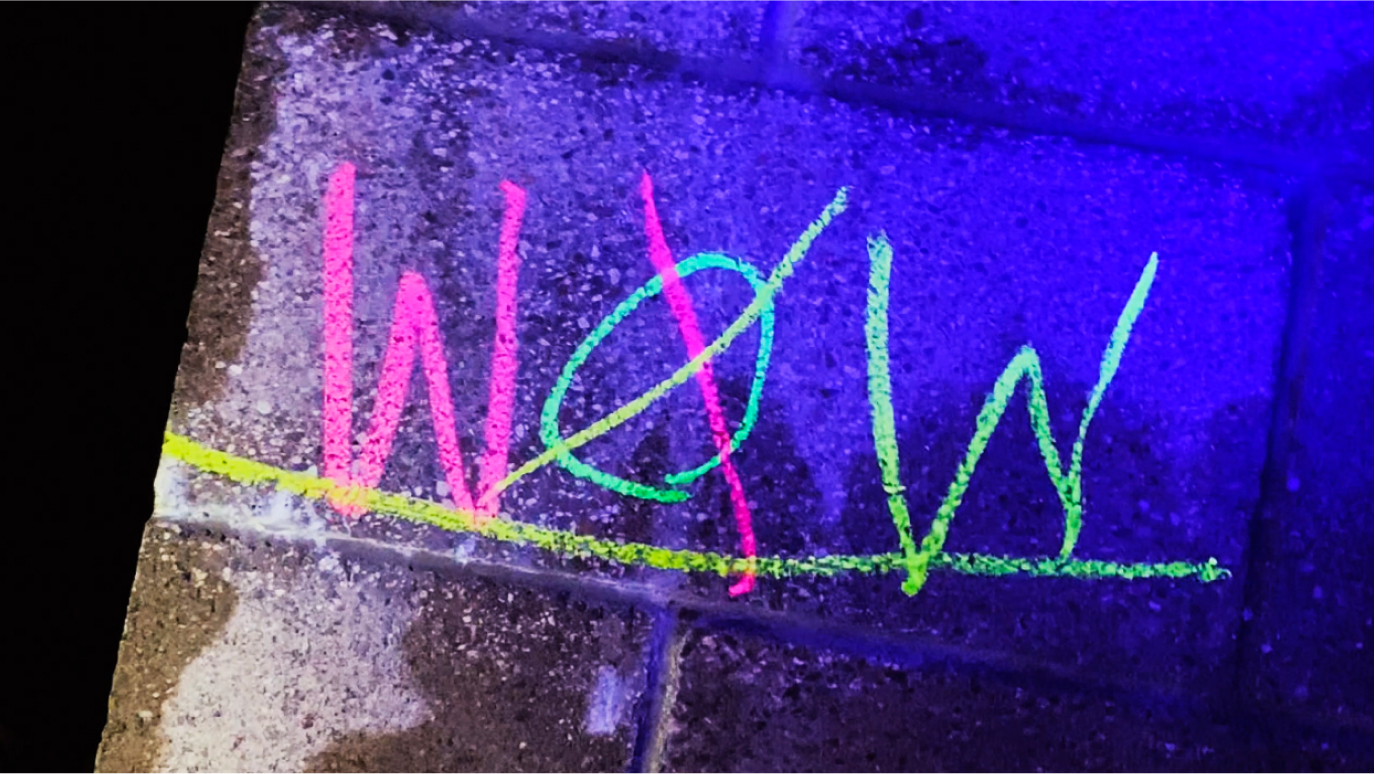
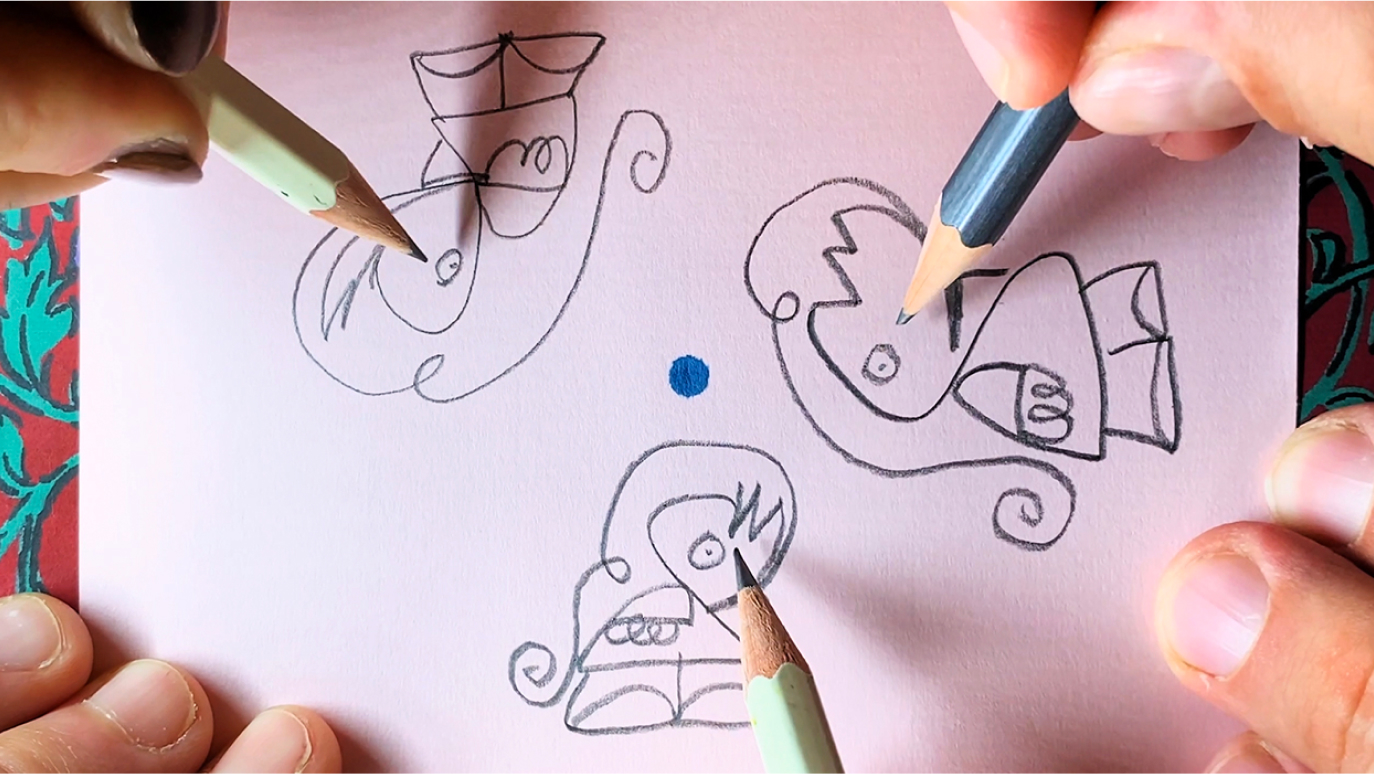
What did they do? Whistlegraphs are a method of combining mark-making and sound that can be performed through associating sung lyrics, sound effects, or even hums with particular lines or marks. They can be made on a piece of paper with readily available school supplies, a sidewalk with a piece of chalk in hand, or typed code stylings.
There’s something about whistlegraphs that makes them contagious. The first time I saw them performed online, I got a serotonin rush. Like when a friend from elementary school learned how to make a cootie catcher and everyone at school thought it was magic. Then we all made cootie catchers too.
Ashland is a new-age-y hamlet in a rugged part of Oregon, just before the switch-backed Siskiyou Pass leads over state lines into Northern California. It is the place that Whistlegraph currently calls home. Downtown Ashland, just below where Lithia Park is carved onto the hills, is a curious mix of touristy Elizabethan facades, organic foods, and deer running through forested enclaves. Although Whistlegraph — Jeffrey Alan Scudder, Camille Klein, and Alex Freundlich — are not thespians in Ashland’s Shakespearean sense, they are thespians in the sense of being versatile performers with a knack for mise-en-scene, in the expanded stage of the digital realm.
At the park, iPhones were being pulled out left and right, and @Whistlegraph later posted a video from the drawing session to TikTok, but the phone use didn’t feel excessive. Although the many millions of likes are not lost on them, they also don’t have a passive relationship with their “fandom.” Their followers are much more like active participants who keep a lore alive. Whistlegraph jams with the community, in the sense of those who have taken up whistlegraphs as a format, like a recipe or open source code that can be riffed upon.
There are a lot more pieces to the puzzle — in the following lines, I will further reflect on Whistlegraph’s whistlegraphs (artist group is capitalized, the artwork style is not), in relation to temporalities, folkloristics, and more. The works exhibited in “Ten Whistlegraphs” are exemplary of the artist group’s experimental style of verbose graphic notation, intricate coding, and lyrical reflectiveness.
Carrying the Tune
In the literary artistic chronotope, spatial and temporal indicators are fused into one carefully thought-out, concrete whole. Time, as it were, thickens, takes on flesh, becomes artistically visible; likewise, space becomes charged and responsive to the movements of time, plot and history. This intersection of axes and fusion of indicators characterizes the artistic chronotope.
Mikhail Bakhtin, “Forms of Time and Chronotope in the Novel” (1937/1938)
Mikhail Bakhtin (1895-1975) is a North Star for thinking about storytelling and genre, and I find his vocabulary as a literary theorist useful to interpret whistlegraphs. Inspired by Einsteinian relativity coming to recognition during his own lifetime, Bakhtin imported the theory of space-time into rigorous writings on genre, medieval folk tales, and the history of the novel. Today, Bakhtin is sometimes buried in linguistics or new media bibliographies. His influence is its own beast that I hope to tackle at greater length in the future.
Bakhtin’s “chronotope” concept addresses how different dialogic forms and motifs in storytelling configure and choreograph space and time relations. Through Bakhtin’s concept of the chronotope, I’ll explore how Whistlegraph translates stories and emotions into a present-day idiom, rendering feelings in the temporal space of multi-layered networked media creation yet folkloric experiences.
Bakhtin wrote about the narrative suspension of time (“adventure time”), how you can compress narrative time, make it loop, or even “waste” it. For instance, gatekeeping monsters in Arthurian romances might suspend the journeys of main characters until they solve a riddle, which breaks a spell and restores more linear timelines. Solving a riddle or venturing through a maze may take a main character 1 year, 100, or 1,000; aging is sometimes suspended and timelines collapse until the riddle is solved and plot restored. “Chronotopes” open up a new temporal context beyond the world where the game isn’t being played, or the riddle told.
What temporalities do whistlegraphs contain and foster? When a catchy song or TikTok video gets stuck in the head, it does more than loop. Repetition can also give way to deeper pondering and imagining, as one rolls through the different patterns of form again and again, tracing branches of potential connotations and making new associations.
Interestingly, one aspect heavily discussed in the field of study known as “folkloristics” is how folklore goes beyond high art. It is about keeping a tradition alive, and returning to a ritual that ties you together with others through everyday creation practices.
Recently, I have been thinking about what “chronotopic” similarities whistlegraphs share with the ballad: a form or style of narrative lyric, calling to mind poetic verse, sung song, or the musicality of storytelling in language. Ballads and whistlegraphs share a highly transmissible nature through clear and specific engagement with relatable affective worlds. This has been recognized by participants through the confirmation of its repetition across mediascapes by folks tuning in.
This perspective into Whistlegraph makes further sense in light of prominent existing discourses on digital art or internet art as folklore. For instance, Olia Lialina and Dragon Espenschied, among others, have addressed how artists have developed visual language within digital environments, taking up the framework of the “digital folklore” in “network culture.” The landmark Digital Folklore Reader (2010) explored this very subject. Whistlegraph engages with the propagation of digital, material culture, what we might call its digital folkloristics — a redux of reflective and highly transmissible stories and open pedagogical methods.
Actually, before writing this piece, and while writing it too, I have been processing some of their compositions myself. For instance, I’ve watched the “Loner” video in this exhibition dozens of times, and have done my best to memorize it, developing a more personal relationship to its story. lt reminds me of learning a cover of a song on guitar, then figuring out how to personally stylistically fork it.
“Loner” is composed and drawn by Camille Klein. In it, a 24-step line drawing results in a solitary figure with the following lyrics sung through:
“sit/ting/curled/up/in/my/self/i/think/of/a/stone/just/wait/ting/ver/y/pat/ient/ly/for/time/to/pass”
Even though Whistlegraph makes it look easy in their videos, “Loner” takes a lot of concentration. My versions were initially messy. It felt like trying to sight-read sheet music, following an entry in my copy of the “American Sign Language Concise Dictionary” for the first time, or going through instructions for making a piece of origami I’ve never tried to fold before. Forms of communication take a while to master, but mastery is not the focus of whistlegraphs. Rather, it’s the act of focusing on the articulation of form and the relationship between the articulation and the meaning.
If you give it a spin, you might find trying to learn a whistlegraph changes your perspective on this form of art and offers a new form of communicative experience, or you might find another use altogether. Whistlegraphs resemble gameplay, involving some dramatic skill and gumption, but no one “wins,” like in a parlor game of charades.
Rather than competition, whistlegraphs focus participants’ creative energies on being part of a communicative experience without a winner, like when “Loner” is performed by the group on their TikTok, rendering a moment of pensive solitude a collective activity. If they were to be categorized as a “game,” whistlegraphs resemble much more the surrealist “Exquisite Corpse” format, in which people collaboratively compose together, each person adding something to a picture or story but alongside rather than against.
If you’ve ever gotten tattooed or even thought about tattoos for that matter, you may have thought about how lines are narrative. Whether the tattoo is representative or abstract, each splotch of ink comes together into the imprint of a story.
Like “Loner,” “Butterfly Cosplayer,” which is composed by Jeffrey Alan Scudder, also contains the clockwork of internal narrative rendered through compositional imprint:
"i'm/a/but/ter/fly/flap/ping/for/you/guys/(it's)just/a/cos/tume/i/put/on/in/my/room!"
On the one hand, as a motif, the butterfly imprints a space of calm yet fluttering insight, or even imagination. On the other hand, “Butterfly Cosplayer” might also be interpreted as a reflection on the performance of the self in everyday life and how people perform for others, even in private spaces like personal bedrooms. Yet another interpretation might be the idea of playing dress-up when no one else is around, trying on versions of the self and owning that.
The inner child’s creative light needn’t be dimmed with age. But unfortunately, a heavily lamented problem among youth about grown-ups — and depictions of kids’ disaffection with adults — is how adults’ sense of play and imagination can decline. Whistlegraph’s artwork on the other hand, contains a palpable childlike quality that is difficult to locate in any one activity, as it is found in multiple arenas of the experimental practice and aesthetic.
For instance, friendship radiates through the trio’s videos and harmonies, as they engage in making playgrounds out of the world through colorful chalk art on a park basketball court, or candid-yet-choreographed performances recorded on their iPhones. As a primary medium of their work, TikTok also contains different associations with age as an aspect of content creation. TikTok has popularized tools for communicating and expressing complex emotions through playful pairings of audio and visual clips, where many TikTok genres bring together intergenerational play, like people of all ages learning dances together.
The poesis of whistlegraphs is also surfaced through this childlike quality, in tradition with other artists whose work nurtures the inner child, or works with the subject of childhood’s creative associations and child-like knowing. For instance, in Mike Kelley’s hobby of collecting stuffed animals that became sculptural materials. Associations offer windows into a world of emotions, including the psychology of processing childhood experiences. A different example is the musical group Toychestra’s compositions with toys, where anything can be an instrument and virtuosity is de-stressed over nurturing emotive expression. Finding a way of bringing childlike imagination into daily reality can somehow, sometimes, get more challenging as we age. Artists like Whistlegraph provide examples of how childhood can remain central to a core of creative action and a window to meaning.
Related to these ideas, I want to talk about how Whistlegraph’s process creates a clockwork space for reflecting on and voicing inner life through directness and through the graphically abstract. I reached out to Goodiepal, a Danish/Faroese composer and electronic musician. Goodiepal provided a quote on the group’s work in relation to his compositional game scenario, and in terms of a “spirit flow" in the form of an audio clip I will excerpt from below:
They [Whistlegraph] took it back into the machine and out of the machine and in and out of the machine and used the camera a lot to bring things back in and out of the machine. So you could say, I took it out of the machine for a while, and they put it back into the machine.
If you imagine it as some kind of a spirit flow of things that pass, then one of my deeds in life was I — that I opened a door for that spirit flow to get out of the machine, and the Whistlegraphers have opened a door where they bring it back into the machine or in and out of the machine you could say… they put things in and out of the machine, so they can do things, that is develop in the machine, but also bring it out of the machine. So, you could say they made a possibility for that spirit flow to go in — back into the machine, but also that it could be out of the machine.
It’s all a floating movement… You’ve got to let the spirit flow through things. That’s more important than anything else.
Goodiepal, March 2022
Too much art that engages with computers gets stuck on production for production’s sake. Computers will let us down if we use them without intentions to see beyond them. Goodiepal’s comments about letting the spirit flow through the machine is a powerful reminder of the entrapments of fetishizing media formats, but also the critical possibilities of using technology as a means rather than an end-all.
But Whistlegraph is not beholden to machines, even though some of its output is captured well in digital art and digital objects. What Whistlegraph makes is a symbolic world and method, a format for communicative experience through creative expression that can be transferred through different permutations of media.
The works in “Ten Whistlegraphs” document ephemeral performance, rather than being the end-all object, like a sheet of music. They speak to existing traditions across Fluxus, experimenting with performance scores and the documentation of movement, and even the more formal study of abstraction in graphic notation among composers.
Whistlegraph’s experiments with compositional strategies and graphic notation are noteworthy in the inventive ways they are building multimodal inputs into code and back out to performance. The software that translates their conceptual methodology into artworks is not an afterthought, but infrastructural handiwork to facilitate this flow of ideas and associations at multiple layers of the stack.
All this to say that, considering Whistlegraph’s technical prowess is coupled with emotional sensitivity and the appreciation for letting the inner child roam, I am excited by the possibilities they have opened up for a community to gather.*~



