
A Journey Toward the Unknown
23 March 2023
A Journey Toward the Unknown
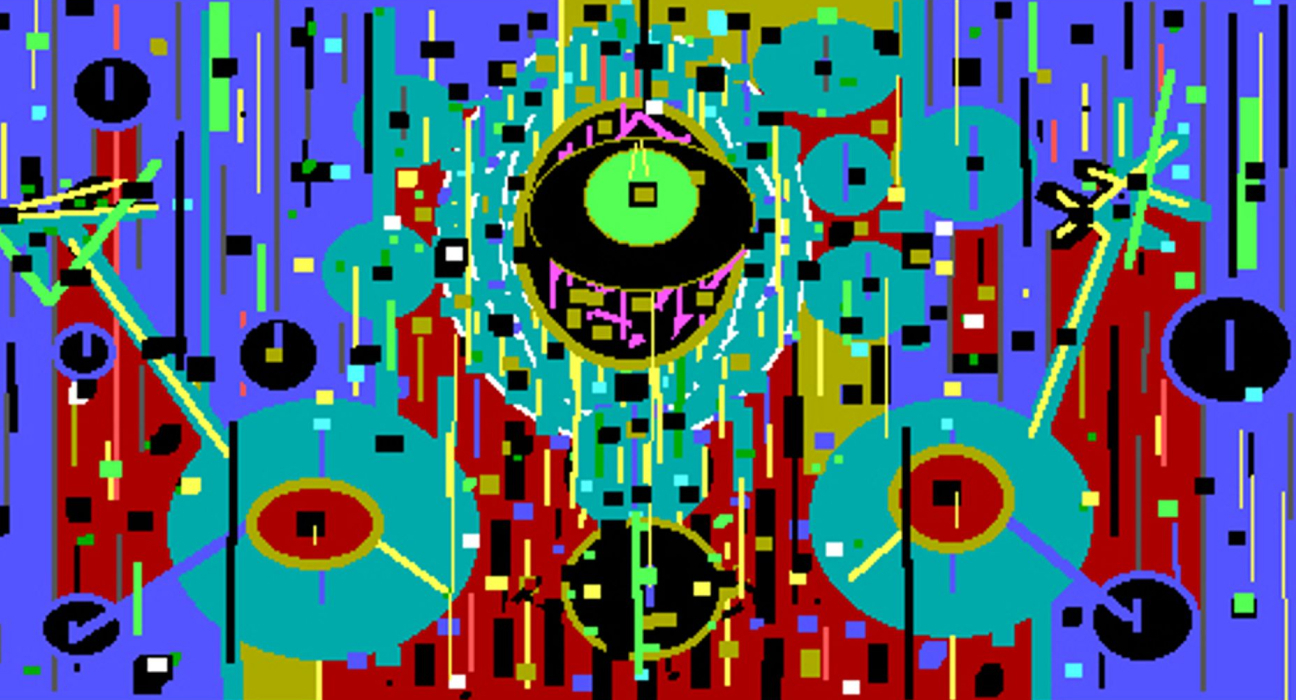
On the occasion of LeeMullican.PCX, curator Anika Meier discusses early computer art and the journey and legacy of the pioneer Lee Mullican with Cole Root, the director of the Estate of Lee Mullican.
Lee Mullican is often referred to as “a pioneer.” At a time when technology is developing rapidly, what do you understand by that term? Can it still be used today?
I think a pioneer is someone who journeys toward the unknown. It is certainly more romantic to view pioneers through a nostalgic lens, but the last two years of being involved in web3 have shown me that there is no shortage of contemporary pioneers. Artists are using technology to create new worlds and go inside them, or generate images based on verbal prompts and I think we’re only seeing the beginning of this exploration.
How was Lee Mullican a pioneer?
When I think of Lee’s journey I think of someone open to new experiences at a time when the world was changing rapidly. Someone who was drawn to new ways of doing things and opened himself up to experimentation. Lee was born in a small town in Oklahoma in 1919 and had a conservative Christian upbringing, but this didn’t close him off, it activated a thirst for what more could be out there.
When and where Lee went to college, “abstraction” was like a dirty word. He wasn’t interested in the popular American Regionalism of the day, he was looking at Picasso, cubism, surrealism, and indigenous artifacts. After going to three different schools he started finding what he was looking for in the army of all places. I think that’s part of being a pioneer, finding inspiration where you don’t expect it. The army allowed Lee to travel, visit museums, and learn about different forms of spirituality. His technical training as a cartographer allowed him to look at the earth from above and the friends he made provided him with a support system outside of Oklahoma.
Lee didn’t conform to what was happening in Oklahoma, or what the painters in New York were doing at the time. He found his own community when he moved to San Francisco after his service. Ultimately, I think Lee was a pioneer in his exploration of self. His pursuit of “innerspace.”
There is a quote from Lee that Carol Eliel references in the catalog for Lee’s 2005 retrospective at LACMA:
“I explored inner-space, outer space. There were walks in landscapes that appeared from the depths of the mind. I found a new planet and there were galaxies to explore. There was an energy that moved from canvas to canvas and drawing to drawing. I am not sure this energy has ever been fully understood. Mystery of everything and a vision of all.”
There it is — Lee was looking for something no one had seen before but could be understood through a visual experience.
If Lee Mullican were alive and working as an artist today, where would you see him in the NFT space? Active, less active? Would he join discussions on Twitter? Would he advocate for NFTs or would he be critical of NFTs?
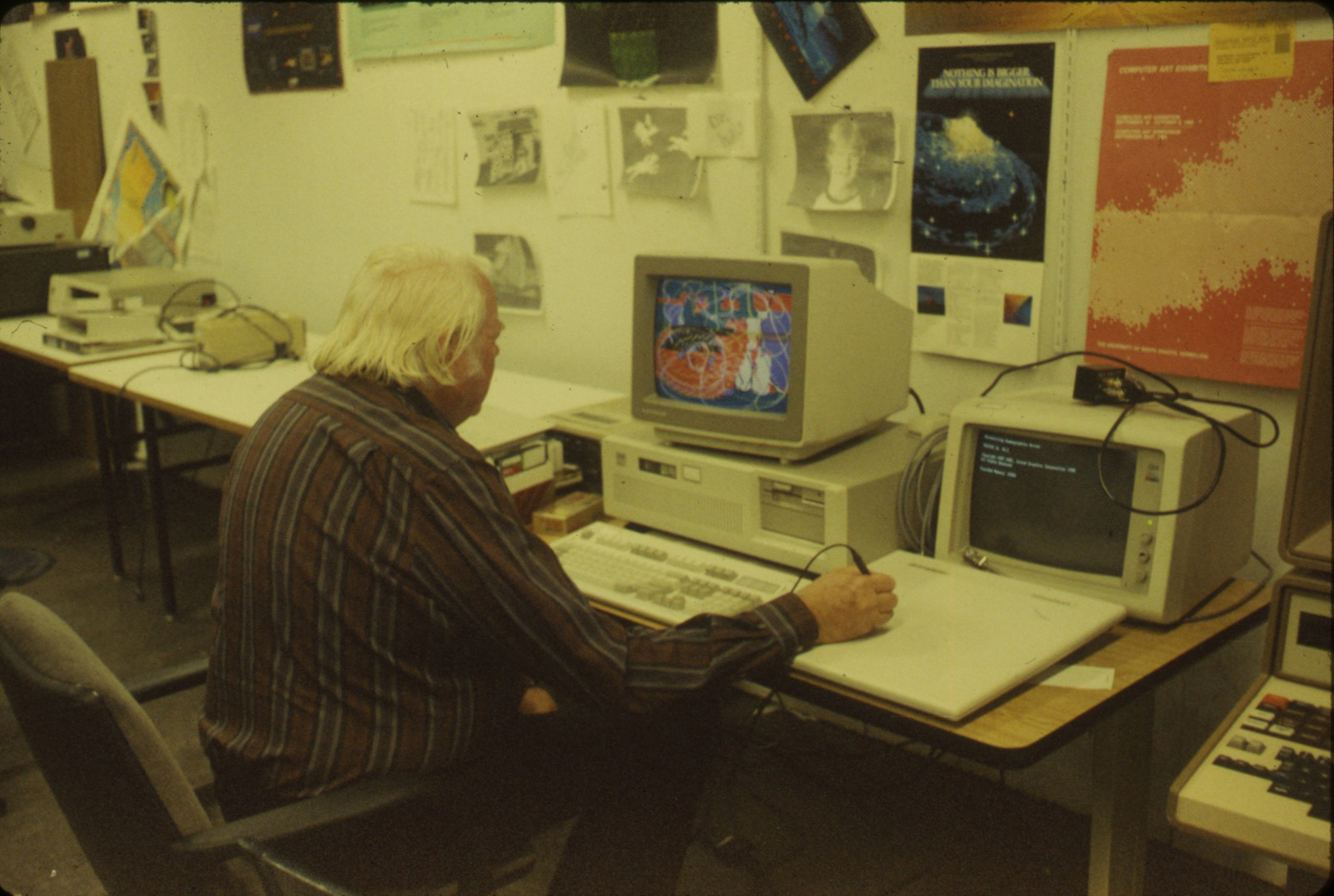
It’s always tough to say what Lee would do in today’s climate, but there are things about Lee I know for certain. He supported other artists. Lee taught at UCLA for almost 30 years. He nurtured generations of artists. He was also passionate about helping his students to “learn the computer” as he put it.
The art purist in me wants to think that Lee would disapprove of the commodity “degen” aspects of the NFT space, but I’m not sure that is true. Lee supported his family by selling his work and teaching. I know that wasn’t always easy. I think he would approve of new ways for artists to make a living. I think a very positive aspect of NFT Twitter is that there is a populous of people who are excited to learn more about art and I think Lee would love that.
You are the director of the Estate of Lee Mullican. What does your working day look like?
As the director of the estate, Lee’s (and Luchita’s) artistic legacy is my primary concern. How can I steward the work and the archive in a way that informs more people about Lee’s work, philosophy, and lifestyle? How can we use the resources we have to further the research and understanding of the Hurtado-Mullican family?
That concern for growing legacy is what has brought me to the NFT space. I saw a community of artists and collectors who were interested in digital abstraction, I think withholding Lee’s work from this space would be unfair to his legacy and to the digital art community as a whole. Some of the proudest moments from my job are when our Twitter gets tagged in posts from contemporary artists talking about Lee and his work.
So, I do a lot of different things. Our team is small and we go from working with our galleries to organizing and digitalizing analog documents to building websites and social media.
We just moved the estate to a new facility we call HQ or Hurtado-Mullican Head Quarters so a lot of my work lately has been overseeing a physical move and remodel of the space. It’s the first time all of the family’s artwork, library, and collection have been in one place. We’re excited to open the space to researchers and fans. We have our own “gallery” walls to have viewings. I hope we can also activate the space in other ways as it develops.
How extensive is Lee Mullican’s work? Do physical or digital works predominate?
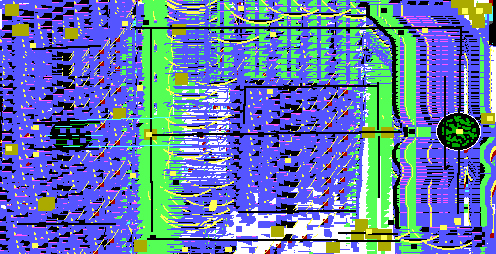
Quite extensive. Lee was a prolific artist. We have many times more physical works; digital works are just one part of the oeuvre. Lee was constantly drawing and filling whole notebooks in a sitting, he made sculptures of clay, bronze, and wood, and we have volumes of plays and fiction.
How did Lee Mullican get into art?
Lee’s mother Zula Jolley Mullican was a hobby painter and nurtured Lee’s interest in art. His mother brought home a Chicago Art Institute catalog of paintings at the Chicago World’s Fair where he was first exposed to modern art (A Century of Progress, Exhibition of Painting and Sculpture, Art Institute Chicago, 1933). That was it, he knew that’s what he wanted to do
And how did he get from painting to computers? Why was Mullican interested in computers? In his time it was rather unusual for an artist.
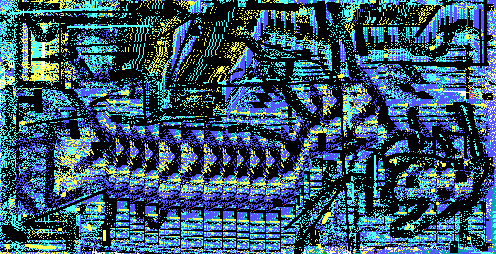
To quote Lee: “I was tempted to begin computer drawing as long as twenty years ago. I felt the technology at that time beyond my comprehension and even though I had access to machines and training at UCLA, actual computer time was arranged for me, I felt that the necessary programming was too difficult. I gave up this opportunity to John Whitney who of course went on to become a master of computer animation.
Two decades later I was suddenly aware there then was a new technology but I was not aware it would mean anything to come. Software was a term worth exploring. I heard of paint systems and eventually saw demonstrations that delighted me.
These physical components offered programs that allowed an artist to draw with line, pattern, geometric shapes, as circle, oval, rectangles, or immediately change color for freed shape, line. What was there could be replaced in an instant. I found that beyond what one thought, the computer as being hard-lined, analytical, and predictable, it was indeed a medium fueled with the automatic, enabled by chance, and accident, discovery of new ways of making imagery. Imagine being able to paint in sweeping gestures with a pattern, throwing out thousands of dots and blots of color that could be cured or erased or changed or kept on a disk to be brought back for further change in the instant or in a matter of weeks or years. I discovered all of this once I was laced into the UCLA Design Research Project and given a computer that would perform for me. This was the fall of 1986.”
What were the reactions to his digital work back then?
I think a lot of people thought Lee was wasting his time. Luchita mentioned she thought he was the only painting faculty that was interested in learning and using the technology. Of course, commercial interest was non-existent. We do know about a few exhibitions in the ’80s and ’90s that featured Lee’s digital work. One was the landmark Computers and Art exhibition curated by Cynthia Goodman. Unfortunately, Lee was left out of that great catalog. I recently learned about another exhibition at New Mexico State University Art Gallery in 1991 curated by Karen Mobley.
Mullican’s work is abstract and yet figurative elements are often found almost as if hidden. He didn’t like pop art. Where did he get the inspiration for his works and why the mixture of abstraction and figuration?
This pull between abstraction and figuration is consistent throughout Lee’s career. Lee considered it a battle between a sense of pure abstraction and a need for some kind of image. Lee found inspiration in patterns found in nature which are representational yet appear abstract. It’s like a need for an element of familiarity that grounds the abstraction.
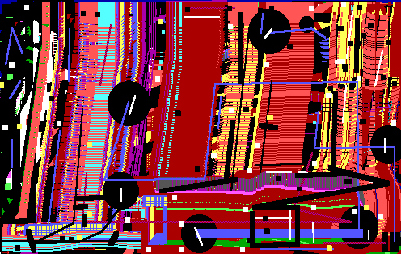
The color palette of his physical works is very different from the color palette of his digital works. If you didn’t know better, you could easily locate his digital work in our time. How did Mullican deal with color? Did he follow a color theory that he stayed true to?
It is true that Lee’s most well-known paintings hold more neutral color palettes, but that is not always the case. In our last gallery show, Lee Mullican: The Nest Revived at James Cohan, we showed paintings from the late ’40s that have these amazing colors; lime green, teal, light pinks, and bright yellows, but with a career as long as Lee’s there are several phases. The physical paintings Lee was making around the same time he produced his digital work were mainly black and white with sparse fine lines of color.
I think that the colors being offered to him through software were also new and exciting to him. The conversion from CMYK to RGB color must have been a revelation. Having endless options of colors that he didn’t have to mix or pay for must have offered him some new freedom.
What some collectors will surely ask themselves: What will happen next with Lee Mullican’s digital work? What plans does the estate have?
That’s a good question and not one we’re ready to answer yet. We’ll have to react based on the reception of the community and market. We always say “one foot in front of the other” and that has been our approach to everything we are doing. When we did our first collection drop it was in tandem with a gallery show that paired Lee’s paintings with projections of digital work. We didn’t know if anyone would care or accept his digital work, but it’s been a pleasant surprise.
We do have more of a traditional art approach to how we mint work and make it available. We don’t mint unless there’s a reason like an exhibition. We’re taking it slow.
We offered a piece to LACMA and I’m happy to say that they accepted the piece to their collection. I would like to place more of Lee’s digital work in museum collections. I think that the historical nature of Lee’s work can offer museums a bridge to collecting more contemporary digital art by today’s pioneers.



