
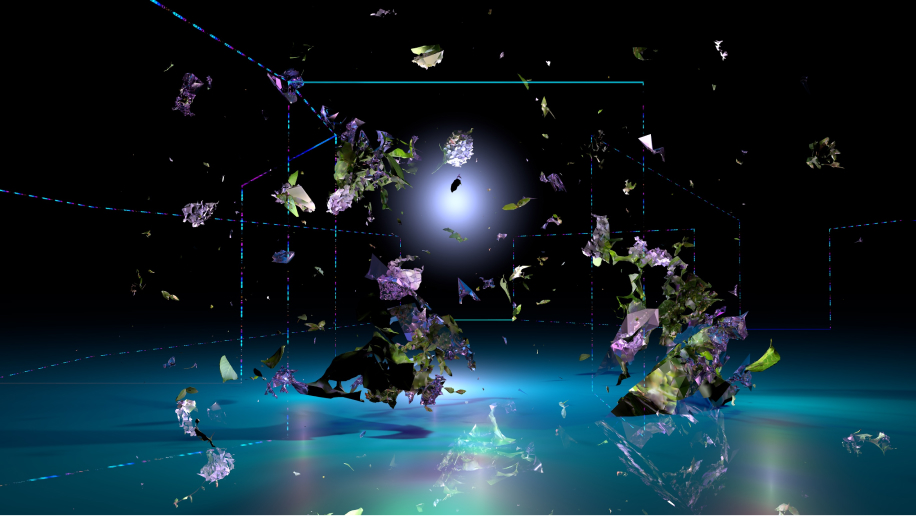
On Using Sci-Fi Plants to Imagine Speculative Futures
28 June 2021
On Using Sci-Fi Plants to Imagine Speculative Futures
Rick Silva, curator of Fragments of a Hologram Rose, discusses the similarities between digital media and seeds, worldbuilding as a creative practice, and how the future can appear both utopian and dystopian at the same time.
This conversation between curator Rick Silva and editor Willa Köerner took place over email in June of 2021.
What made you want to borrow the title of the Willliam Gibson story, “Fragments of a Hologram Rose,” for this exhibition? How'd that idea occur to you?
I was reading the book “Plants in Science Fiction: Speculative Vegetation,” which investigates how sci-fi authors have used plants in their works. One of the stories they mention is Gibson’s “Fragments of a Hologram Rose.” I’m a fan of Gibson and was curious to go read this old story of his, especially because it was actually his first published work. I was taken with the story, the title, and how the idea of a fractured hologram would fit with this exhibition of editioned multiples and digital plants.
In your curator’s note, you write that “when a hologram is cut into pieces, even the smallest section still contains the whole of the image. In a similar way, plant cuttings and an edition of digital works can both hold these mirroring elements of origin and multiplicity.” Can you say a little more about these ideas of multiplicity? Something that caught my attention is how we think of digital media as one of the first kinds of “things” to be endlessly replicable, but maybe, once again, nature figured it out first.
Yes, digital media has this incredible losslessness when multiplied. But also, those digital files end up displayed in such wildly varying formats—the same image can be a background on an Apple Watch or projected on an IMAX screen. Like nature, digital media try and adapt to their environment. But also like nature, it sometimes works and sometimes doesn’t. With this exhibition most of the artists are also including the 3D object files of their pieces in the collectible edition—I see these functioning like cuttings or seeds, which can be dispersed in various new 3D environments.
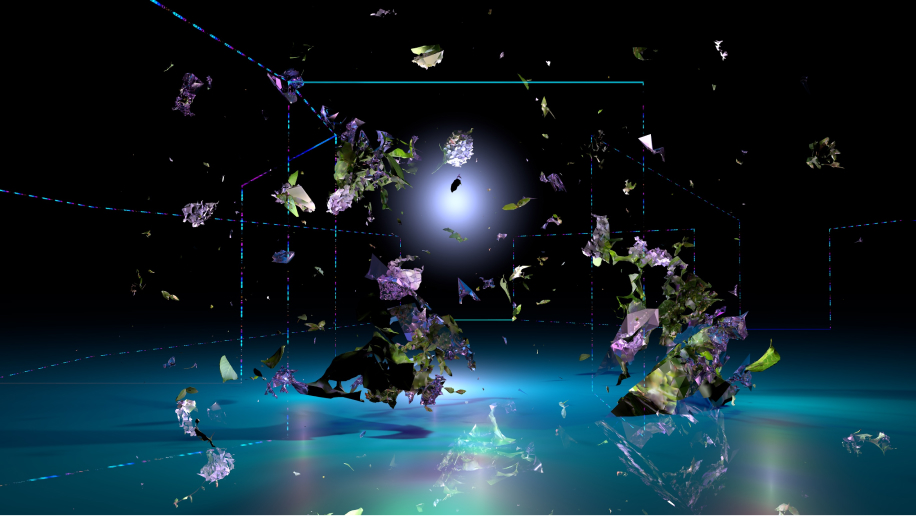
Why sci-fi plants? What do you think is exciting (both to you, and to the artists) about dreaming up new possibilities for otherworldly flora?
Plants, even on earth, have these alien qualities. No one person has seen all plants, and if someone showed you a super weird fantastical looking plant and told you it was real and had some healing, or poisonous, or mind altering properties, you’d be more inclined to believe them than question them. We already have an amorphous sense of plant-ness in the present, so adding a possible future or parallel world to that feeling makes plants that much weirder and full of speculative potential.
I love this idea of using plants as a jumping-off point for imagining alternate futures. What kinds of speculative futures and parallel worlds have the featured artists been excited to think about through the artworks they’ve made for this show?
The works range in scale and time, from micro to macro, and from plant organisms that wrap around and react to human forms to meta deconstructions of technical 3D elements and formats. Some artists took a more scientific, field notes-type approach, designing the formal traits, behaviors, and known habitats of their organism, while others embraced the more narrative aspects of the prompt.
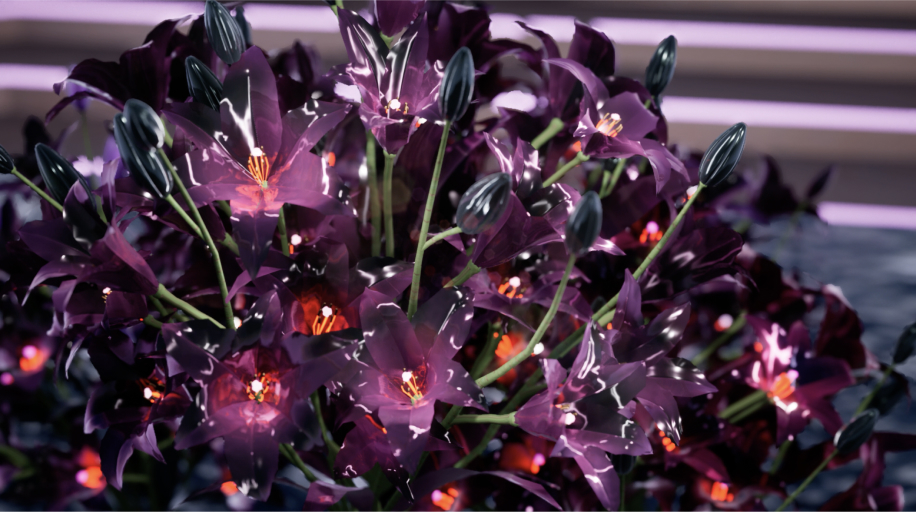
From a technical standpoint, how are digital modes of artmaking important as avenues for thinking through speculative futures?
When it comes to thinking about possible futures, digital modes of artmaking are not that different from other modes of making and inquiry. Writing, drawing, programming, and even music all start with this very open worldbuilding possibility. But there’s also a shared understanding that much of architecture, industrial design, and scientific research start with a virtual 3D version or digital model before becoming a physical object or action. So, I feel the virtual object or scene is always already embedded with the potential to become a physical thing or experience, and to somehow shape new variations of what’s to come.
What’s something hidden or more nuanced about the works in Fragments of a Hologram Rose that viewers might not get right away? Are there any secret ideas or easter eggs embedded in the works themselves, or in the ideas behind the works?
Many of the artists have added bonuses in the download packages their collectors receive—from file format and render variations to added texts and 3D objects. For this exhibition some of the artists are also experimenting with new format directions in their practices: Andrew Thomas Huang, Peter Burr, and Sabrina Ratte all worked with .glb formats for viewing 3D models online for the first time, and Sara ludy—who often uses dense visuals in her works—chose a more minimal text-based approach.
While you’re the curator of this exhibition, you’re also an artist yourself. If you were to create a sci-fi plant to be included, what would it look like? What would its speculative properties be?
Being the curator of this exhibition was its own creative process, and felt similar to being a virtual botanist or digital greenhouse keeper. But in the end, yes, it wasn’t the same as making a work for the show.
The other day I was thinking about the one-to-one cost of creating digital objects online vs. creating physical objects. For example, I could buy and download a 3D scan of a cannabis bud for $70 on a 3D market like Turbosquid, or with that same amount of money, I could order $70 worth of weed online from the shop down my street and have it delivered to me within minutes. So, maybe these would be the starting points for what I would create for this exhibition, and the results might be a Phillip K. Dick-type strain of downloadable/printable weed called “2-3-74 Kush” that adds any paranoid thoughts you have while stoned to a blockchain.
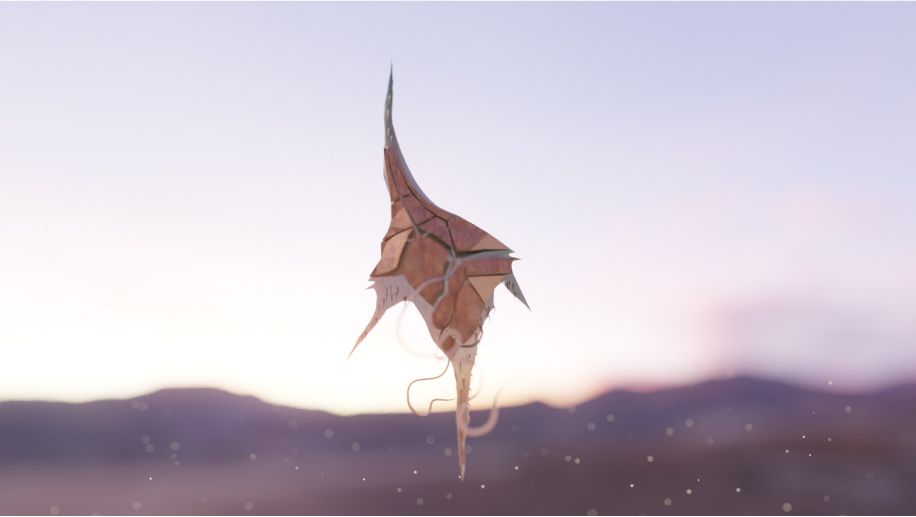
What’s your take on Feral File’s approach to NFTs, where early collectors can purchase editioned artworks at a set price? How do you think this adds to what’s possible in the NFT space?
Editions sold at a set price make it accessible for more people to collect works from some major new media artists, including the ones in this show—many of whom have had a big influence on me. The first NFT I bought was actually on Feral File, it’s Auriea Harvey’s “The Mystery [v5-dv1].” I’ve been a fan of her work since 2001 when I first saw her piece “The Kiss,” which she made as part of her “Entropy8Zuper!” collaboration. Overall, the featured artists, the curation, and varying file formats—including interactive software works—are what set Feral File apart for me.
Collectively, do you think the sci-fi plants in this exhibition present a more utopian or dystopian glimpse into our potential futures/alternate realities?
I would say that overall, it leans towards the utopian, if only because of the fact that there is at least some plant life thriving in these worlds and futures. But then again, that seems like a pretty low threshold for a utopia—so perhaps it’s more dystopian. As you say, each of these speculative plants only presents a glimpse of the worlds they inhabit, and all the works have a time element and amorphous qualities. So maybe, collectively, the line between utopia and dystopia itself is branching between timelines and planes. This aligns with Margaret Atwood’s idea of “ustopia,” which combines both dystopia and utopia by recognizing that each contains versions of the other within itself.



